2026.11.03
 Blog
Content
A paint shop can lose a shift when a cleaning roll leaves lint on a freshly prepared panel, or when a degreasing wipe pushes oil across a surface instead of lifting it. The wipe looks like a low-cost consumable, but in automotive paint prep, battery pack assembly, and maintenance bays, it sits directly upstream of rework, warranty claims, and line downtime. The practical conclusion: for China automotive industry cleaning wipes, specify by process stage and material compatibility, not by the generic label “automotive wipes.” Substrate, grams per square meter, fold, absorbency, lint level, solvent resistance, and dispensing all need to match the job.
Automotive plants buy wipes for at least four different jobs, and one wipe rarely covers all of them well. Paint preparation and degreasing need a cloth that lifts oil and compound residue without leaving fibers or smears. Workshop maintenance needs wet strength and enough durability to handle brake dust, grease, and repeated rubbing. Fluid spills need fast absorbency and retention under pressure. Final assembly and battery-related work usually need low lint, consistent size, and controlled packaging so the wipe itself does not become a contamination source.
China’s automotive supply chain supports a wide range of nonwoven wipes, from heavy meltblown rolls to soft cellulose-polyester blends. That choice is useful only when the buyer ties each product to a defined task. A wipe that performs well in a maintenance bay may fail at the paint line because it sheds fibers or releases a residue that the next process cannot tolerate.
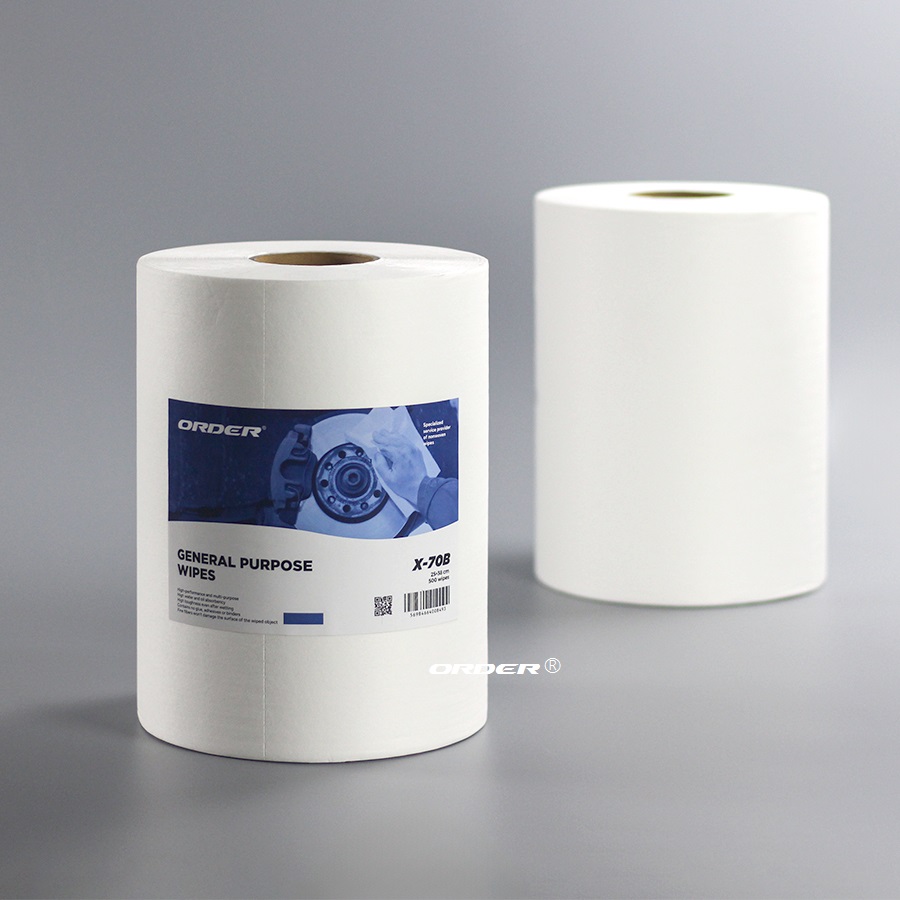
 ORDER® Automotive Surface Preparation Apertured cleaning Cloths Replace Sontara SPS DegreaCustomized size is availableView Product →
The substrate determines how a wipe absorbs, releases, and resists tearing. Meltblown polypropylene is often chosen for oil and solvent work because the fine fiber structure is oleophilic and can be engineered for low lint. Cellulose-polyester spunlace is common for general maintenance and surface prep because it combines absorbency with softness and wet strength. Woodpulp-polyester blends can deliver high absorbency at a lower cost, but they may not suit heavy solvent contact. Apertured or textured surfaces add mechanical action for removing stubborn films, although the pattern and pressure need to match the panel or component.
| Wipe construction | Typical automotive use | Key strength | Check before purchase |
|---|---|---|---|
| Meltblown polypropylene | Degreasing, solvent wiping, oil spill control | Oil affinity, low lint, solvent resistance | GSM, thickness, solvent compatibility, embossing pattern |
| Cellulose-polyester spunlace | General maintenance, surface preparation, assembly support | Absorbency with wet strength and softness | Lint level, binder residue, absorption rate, fold consistency |
| Woodpulp-polyester blend | Workshop cleaning, washing prep, light maintenance | High absorbency and cost efficiency | Wet strength, residue, performance under heavier oils |
| Apertured or textured nonwoven | Paint preparation, film removal, degreasing | Mechanical lift and reduced smearing | Aperture pattern, surface softness, lint, chemical compatibility |
For solvent and oil tasks, ask for a sample that matches the actual chemical mix used on the line, not just water absorption data. A wipe can absorb water well and still perform poorly with a solvent-based panel cleaner. For paint prep, check whether the cloth leaves a visible residue after evaporation. For maintenance, test wet strength after immersion in the fluid it will encounter.
 ORDER PX-3332B Blue Pop-Up Meltblown Solvent WipesPop-up dispenser supports one-handed use; blue low-lint meltblown wipes absorb oils and suit solvent or water-based surface prep.View Product →
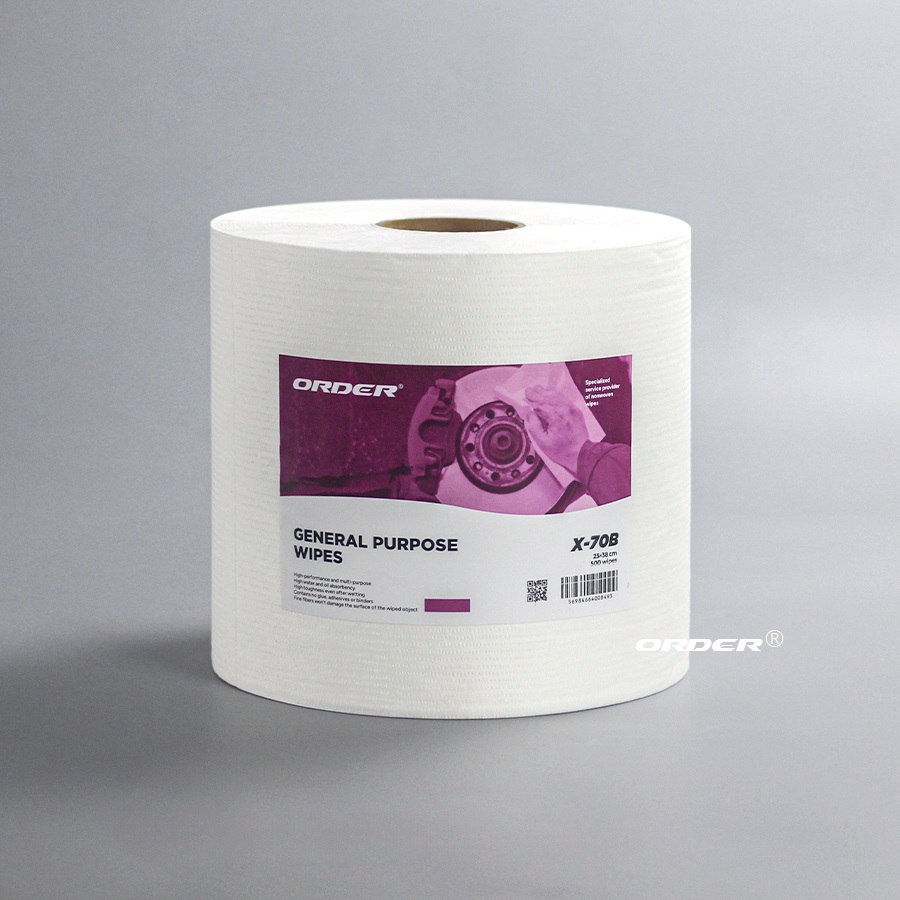
Format affects how many wipes a technician uses, how often the roll is replaced, and whether used cloths end up on the floor. Jumbo perforated rolls suit maintenance bays and large-surface cleaning because they reduce refill frequency and can be paired with floor stands or wall holders. Quarter-fold wipes give controlled sheet counts for scheduled tasks and are easier to place in portable packs. Pop-up boxes work well at workstations where one-handed dispensing matters. Flat-sheet wipes are useful for precision work and controlled application of cleaners.
A dispenser is not a minor accessory. In a busy workshop, a floor stand keeps the roll off oily floors and lets one person pull a sheet without lifting a heavy roll. A wall holder saves bench space in a paint prep area. For a controlled assembly area, packaging that opens cleanly and reseals matters as much as the wipe itself. Buyers should calculate cost per task, not cost per kilogram: a cheaper roll that tears at the perforation or leaves lint can cost more in rework and labor than a slightly higher-priced product.
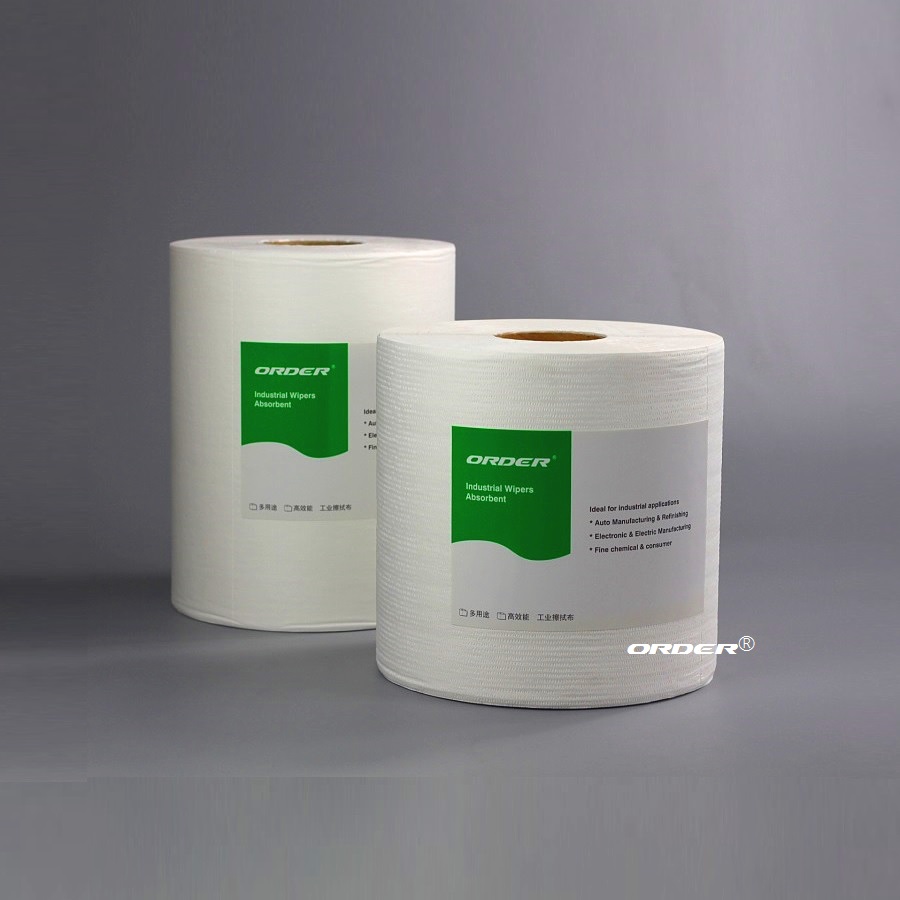
 ORDER X-70 Quarter-Fold Low-Lint Automotive Wipe TowelsQuarter-fold stack box supports mobile dispensing and helps keep wipes clean for automotive and industrial wiping tasks.View Product →
A clear purchase specification prevents most sample-to-bulk surprises. Use the following list as a starting point and adjust it to the process stage:
This industrial cleaning wipe selection guide adds useful context for facility-level decisions, but automotive buyers should still run a line trial. A 30-minute trial on the actual panel, tool, or maintenance task will reveal smearing, tearing, and lint behavior faster than a catalog comparison.
China has many wipe converters, so qualification should focus on consistency rather than the widest product list. Ask how the supplier controls fiber selection, web formation, folding, and packaging. Check whether the same line produces the sample and the bulk order. For custom work, confirm the available range for size, GSM, color, fold, and dispenser compatibility before assuming a low minimum order quantity. A manufacturer with a 12,000-square-meter production base and experience serving more than 30 countries, such as the team behind order-cleanroom.com, can support OEM and ODM discussions, but the buyer still needs a documented approval process.
Before placing a bulk order, request production samples from a current batch, review batch records, and confirm lead time under the expected packaging format. Test cartons for compression and moisture exposure, because jumbo rolls and folded wipes can deform or absorb humidity in transit. If the wipe is used near painted surfaces, ask for material changes to be notified in advance; a fiber or binder change can alter lint and residue behavior even when the GSM remains the same.
Price should be evaluated against rework risk, usage rate, and labor. A low-cost wipe that requires two sheets per task may cost more than a higher-spec wipe that works once. For a sample request and OEM discussion, contact the supplier with the cleaning task, fluid type, target size, and packaging format rather than a vague request for “automotive cleaning wipes.”
The most reliable sourcing approach is to separate paint prep, degreasing, maintenance, and assembly support into different specifications, then verify each one with a sample trial. In China automotive industry cleaning wipes, the winning product is rarely the cheapest roll. It is the wipe that matches the fluid, the surface, the dispensing point, and the contamination limit — and that arrives with the same performance order after order.
If you are interested in our products, please consult us

 contact us


 English
 日本語
 简体中文