2026.10.10
 Blog
Blog
Content
An under-stencil wipe roll costs less than a reel of 0201 chip components, yet it can decide whether a shift ends clean or ends at the rework bench. When the roll leaves lint behind, drags paste into aperture corners, or runs out halfway through a batch, the damage does not appear immediately. It surfaces later as bridging, solder balling and false calls at AOI, long after the boards have been populated.
The short answer for anyone buying a custom SMT stencil clean roll: substrate and edge quality decide how well the roll lifts paste, roll geometry decides whether it fits the printer at all, and solvent behaviour decides whether flux is absorbed or simply pushed around. Nail those three and the roll disappears into the process. Miss one and the savings go straight to the touch-up station.
What follows is the practical version: what these rolls actually do inside the machine, how substrates differ, which dimensions have to match exactly, and what to put on a specification before you ask for samples.
Every modern solder paste printer runs an under-stencil cleaning cycle, usually after a programmed number of prints or when the operator changes paste. The table indexes the roll under the stencil, vacuum pulls the paper against the aperture openings, and solvent is applied either by a spray nozzle or a wet bar. The paper then travels to the take-up spool with the residue locked inside it.
Three jobs have to succeed at the same time. The roll has to absorb liquid flux, trap solder particles instead of releasing them back onto the stencil, and spread solvent evenly across the wipe path. A substrate that is too open lets paste smear back into the apertures as the roll passes. One that is too dense will not wick solvent fast enough, so the stencil leaves the cycle damp and collects dust on the next print.
Fibre shedding is harder to catch than a smear, because the evidence is invisible at normal viewing distance. Loose fibres sit between stencil and pad, print into the joint, or lodge in an aperture until the next wipe cycle. A tape test on the stencil underside, checked under low-power magnification, tells you more about a roll than any datasheet claim of lint-free construction.
Most under-stencil rolls are hydroentangled nonwovens, and the real differences come from fibre mix, bonding method and surface structure rather than from branding. The table below is a starting point for matching substrate to paste type and wipe frequency.
| Substrate | Structure | Typical application | Trade-off to watch |
|---|---|---|---|
| Mesh spunlace | Apertured hydroentangled web | General solder paste wiping, higher paste loads | Stiffer hand, higher unit cost |
| Plain spunlace (viscose/polyester) | Flat hydroentangled web | Fine-pitch work, low-lint requirements | Smooth surface grips paste less aggressively |
| Viscose and cellulose blends | Blended nonwoven, absorbent | Alcohol-based flux, general cleanroom use | Can swell with water-based chemistries |
| Meltblown polypropylene | Fine fibre, high surface area | Flux and oil absorption tasks | Lower wet strength, not ideal for saturated wiping |
Roll geometry is binary. It fits the printer or it does not, and unlike substrate performance there is no partial credit. Check each value against the machine manual and against a physical sample before committing to a production quantity.
Width is the forgiving dimension, and roughly 1 mm of tolerance is workable in most printers. Core diameter and winding tension are not forgiving. If a supplier cannot state both clearly, you are looking at a sample-stage item rather than a production consumable.
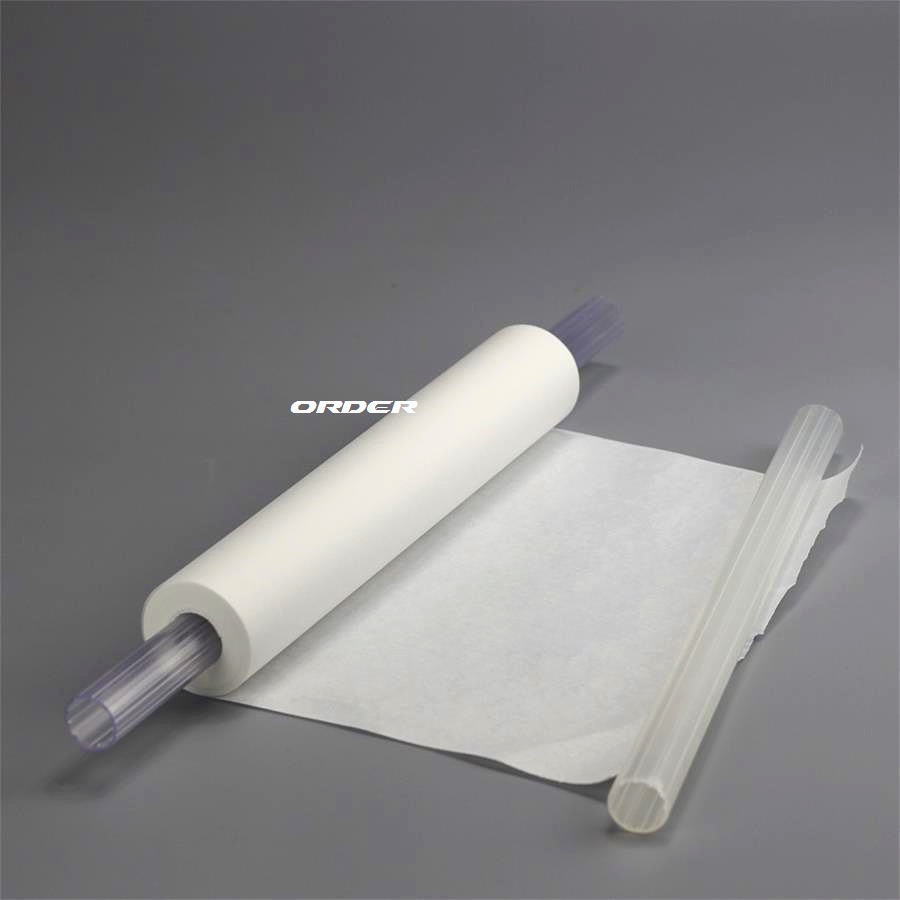 SMT Stencil Cleaning Wiper Rolls for MPM PrintersRoll-format under-stencil cleaning wipes for SMT printers, with customizable widths, cores, and materials; check core and winding specifications before production.View Product →
Under-stencil rolls are usually supplied dry and wetted by the machine. That is deliberate. A dry roll lets the process owner control solvent volume, and it avoids the shelf-life problem of pre-saturated paper, which can lose solvent through packaging or dry out between shifts.
Match the substrate to the chemistry. Isopropyl alcohol and alcohol-based fluxes are the common case, and viscose or viscose-polyester blends handle them well. Water-based and semi-aqueous pastes put different demands on the fibre, because water swells cellulose and can soften a roll enough to distort it under the wipe bar. Aggressive solvents may also attack binder chemistry or leach dye from coloured substrates, which matters when a customer expects zero colour transfer onto the stencil underside.
If paste chemistry changes, retest the roll. A substrate that performed on one flux can fail on another, and the symptom is usually a smear that appears halfway through a run rather than on the first board.
A supplier cannot quote a custom stencil clean roll accurately from a keyword alone. These seven items cover most of what a factory needs to produce a first article:
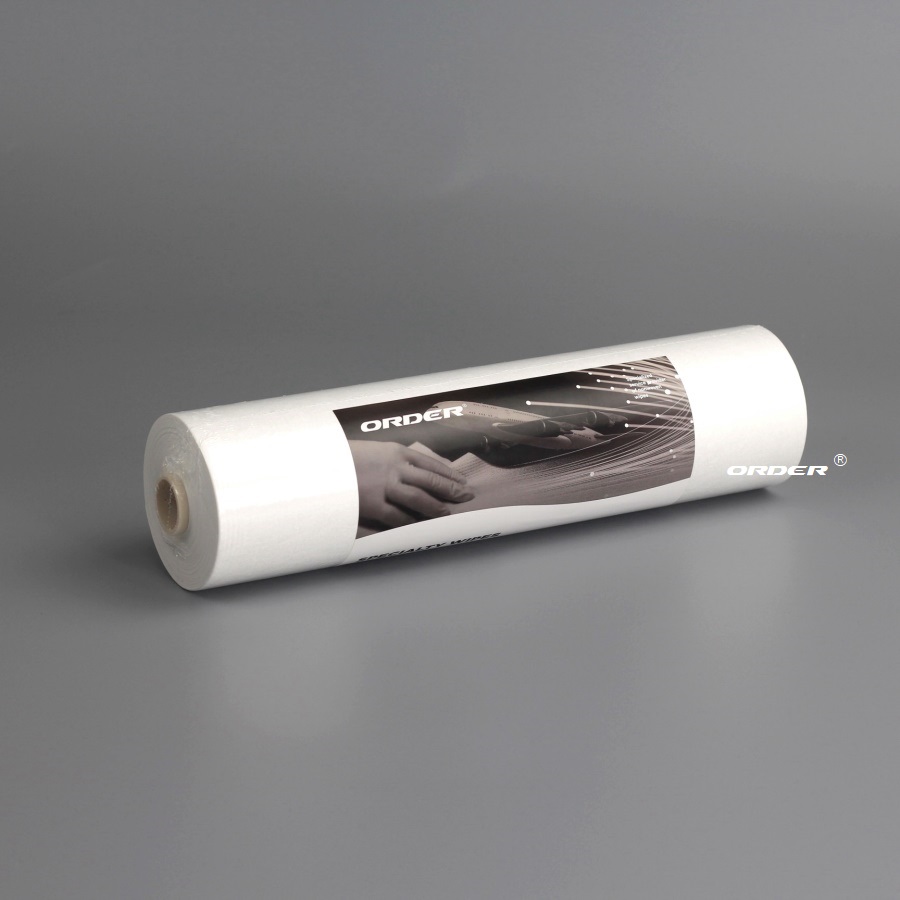 Microfiber Nonwoven Wiper Rolls for Semiconductor Printing Press CleaningRoll-style white microfiber nonwoven wipes for automated printing presses and SMT cleaning; review custom dimensions, PVC core, and quote parameters before trials.View Product →
Paper trials are cheap compared with line trials, and line trials are cheap compared with a scrap batch. Three stages are usually enough to separate a workable roll from a risky one.
Rolls that pass all three stages rarely fail later. Rolls that are only checked on the first hundred boards often do.
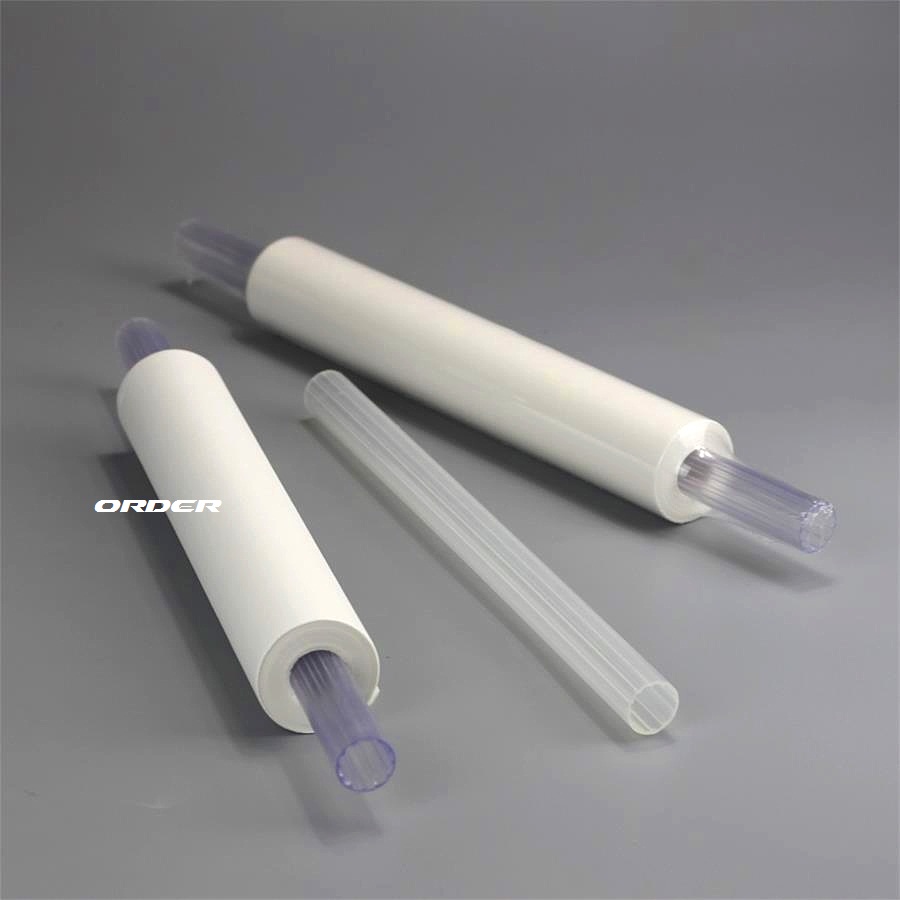 Wholesale SMT Stencil Cleaning Wiper Rolls for MPM and DEKNonwoven roll wipes in cellulose-polyester or custom materials remove solder paste and adhesives; verify core, winding, and defect costs before production.View Product →
Roll price is the smallest number in the equation. A 15 percent saving on a consumable that already costs a few dollars per roll vanishes the first time a bridging defect reaches the rework bench, and it vanishes again every time an operator stops the line to re-thread a roll that jams because of an oval wind or a crushed core.
What you are buying with a custom specification is repeatability: consistent width, consistent winding tension, and a substrate that behaves the same on roll one as on roll forty. That consistency is what keeps the cleaning cycle out of the defect pareto. If you want to see how substrate structure affects wear resistance in stencil cleaning applications, our notes on DEK stencil cloth roll wear resistance dig into the fibre side of the question.
Send us your printer model, roll dimensions and paste chemistry, and we will come back with a substrate recommendation and a sample plan. You can reach the team through our contact page to start a first-article request.
If you are interested in our products, please consult us

 contact us


 English
 日本語
日本語
 简体中文
简体中文