2026.04.22
 Blog
Blog
Content
Conclusion first: For ISO Class 5 and higher cleanrooms, 100% continuous filament knitted polyester is the optimal substrate, offering particle emission levels significantly lower than cellulose-based alternatives. For applications involving oil residues or precision optics, polyester/polyamide microfiber blends provide enhanced contaminant entrapment. For budget-sensitive operations in ISO Class 7 auxiliary areas, polyester/cellulose hydroentangled nonwoven wipes deliver the best cost-to-performance ratio. Natural fiber cotton wipes or general-purpose paper towels should never enter a controlled environment, as they represent a primary vector for cleanroom classification breaches and product yield loss.
The fundamental distinction between a cleanroom wipe and a household cloth lies in fiber morphology and surface energy. Cleanroom wipes are engineered to minimize particle release while maximizing absorbency and chemical compatibility with common cleaning agents such as isopropyl alcohol (IPA) and various disinfectants.
Knitted polyester wipes constructed from 100% continuous filament fibers are the gold standard for stringent cleanroom applications. Because the fibers lack free ends, fiber shedding is exceptionally low. According to IEST-RP-CC004.3 test methodology, high-quality knitted polyester exhibits wet particle emission (≥0.5μm) that can be controlled to minimal levels, making it suitable for ISO Class 3 to 5 environments and GMP Grades A to B . The material demonstrates excellent resistance to solvents, maintaining structural integrity after prolonged exposure, and can withstand multiple controlled laundering cycles without significant performance degradation.
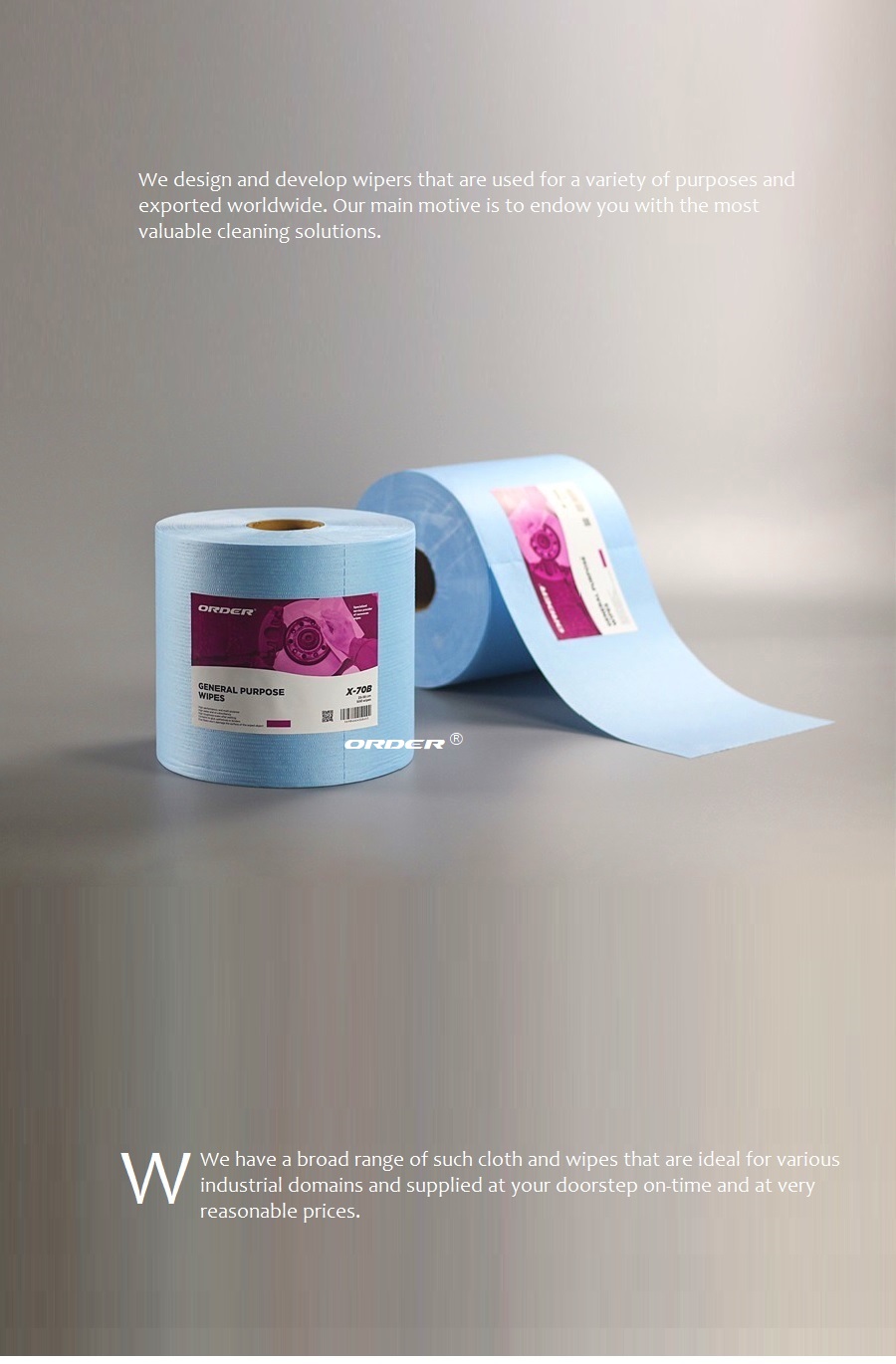
Microfiber wipes, typically composed of a polyester/polyamide blend (e.g., 70% PES / 30% PA or 80% PES / 20% nylon), utilize a unique wedge-shaped fiber structure to enhance cleaning efficiency . Through capillary action and electrostatic attraction, these micro-denier fibers trap and retain oils, residues, and fine particles more effectively than standard yarns. Technical datasheets indicate that hydroentangled microfiber nonwovens can achieve extrinsic absorbency exceeding 320 ml/m² with sorptive rates under 2 seconds [citation:8]. However, proper laundering protocols using deionized water are essential to prevent fabric softener buildup and maintain static-dissipative properties. Microfiber wipes with ultrasonically sealed edges are rated for use in ISO Class 5 environments .
Nonwoven fabrics produced by hydroentangling polyester and cellulose fibers offer a practical balance of performance and cost-efficiency. These wipes are highly absorbent and maintain cleanliness levels suitable for ISO Class 6-8 (GMP Grade C-D) environments. The hydroentangled construction creates a durable, abrasion-resistant sheet that is compatible with solvents while generating fewer particles than pure natural fiber alternatives. They are effective for general surface cleaning, spill control, and disinfectant application.
When evaluating cleanroom wipes, the edge treatment is as critical as the substrate itself. Unsealed cut edges expose fiber ends that release particles during wiping, potentially contaminating critical surfaces .
Wipe performance must be validated against recognized standards, primarily those published by the Institute of Environmental Sciences and Technology (IEST). The key testing standard is IEST-RP-CC004.4, which outlines methods for evaluating wipers used in cleanrooms and other controlled environments .
| Test Parameter | Test Method Summary | Relevance to Contamination Control |
|---|---|---|
| Particle Emission (Wet/Liquid-borne) | Biaxial Shake Test: Wipe agitated in water; particles counted by LPC | Predicts particle release when wipe is saturated with cleaning agents or disinfectants. |
| Non-Volatile Residue (NVR) | Gravimetric analysis of residue after solvent extraction | Measures surface contamination that can cause hazing or interfere with adhesion. |
| Ionic Contamination | Ion Chromatography (IC) analysis of aqueous extract | Critical for electronics; high chloride or sodium levels can cause corrosion. |
| Fiber Release | Microscopic counting of fibers (>100μm) released during liquid agitation | Indicates propensity of wipe to shed visible lint onto surfaces. |
For pharmaceutical and biotechnology applications, additional validation is required. Sterile wipes are typically gamma-irradiated to achieve a Sterility Assurance Level (SAL) of 10⁻⁶ according to AAMI guidelines, and must meet requirements for cytotoxicity and bacterial endotoxins to comply with USP standards .
Many advanced semiconductor fabs and biosafety laboratories are transitioning from bulk solvent and dry wipe systems to presaturated wipes. These wipes are pre-wetted with precisely controlled amounts of filtered solvents, typically 70% Isopropyl Alcohol (IPA) / 30% Deionized Water (DIW) or other specified cleaning agents .
The decision between single-use (disposable) and reusable (laundered) wipers involves evaluating total cost of ownership, contamination risk, and environmental impact. Disposable nonwoven wipes eliminate cross-contamination risk between batches and are essential for aseptic processing (Grade A/ISO 5) . However, they contribute to solid waste generation.
Reusable wipers, typically knitted polyester, offer sustainability advantages. Some polyester microfiber wipes can be professionally cleaned and reused multiple times under strict cleanliness monitoring . A tiered usage strategy is often employed: utilizing disposables in critical zones while deploying laundered wipes in lower-grade ancillary areas (ISO 8-9) for cleaning equipment exteriors or non-critical surfaces . The key to a successful reusable program is partnering with a certified cleanroom laundry that validates decontamination cycles and monitors particle release to ensure wipes do not degrade beyond acceptable thresholds.
Even the highest-grade cleanroom wipe will fail to control contamination if handled incorrectly. Proper technique is essential to prevent re-depositing contaminants.
To facilitate rapid specification, the following table correlates typical applications with recommended wipe types based on material compatibility and cleanliness requirements.
| Application Environment | Recommended Material | Rationale for Selection |
|---|---|---|
| Semiconductor Photolithography Lens | Polyester/Nylon Microfiber | Extremely low scratching potential; efficient removal of submicron residues . |
| Aseptic Pharmaceutical Filling Line | Sterile Polyester/Cellulose Presaturated | Validated sterility assurance (SAL 10⁻⁶); compatible with sporicidal agents . |
| Medical Device Assembly Degreasing | 100% Continuous Filament Polyester | High tensile strength when wet with solvents; minimal extractable residues. |
| General Maintenance in ISO 8 Zone | Economy-Grade Hydroentangled Poly/Cellulose | Cost-effective absorption of spills and general surface cleaning . |
Selecting the correct cleanroom cloth requires a detailed understanding of material properties, edge-sealing methods, and process-specific validation. Treating the wipe as a critical component of the contamination control strategy is essential for maintaining product integrity and regulatory compliance in high-technology manufacturing.
If you are interested in our products, please consult us

 contact us


 English
 日本語
日本語
 简体中文
简体中文