2026.04.20
 Blog
Blog
Content
The facial wipe market has grown well beyond basic makeup removal. Today, clean face wipes are engineered products that combine substrate technology, surfactant chemistry, and preservation science into a single-use format. For formulators, private label buyers, and wholesale distributors, understanding what separates a high-performance wipe from a commodity one is essential for correct specification and confident sourcing decisions.
A facial wipe does not clean by physical abrasion alone. The liquid phase impregnated into the substrate does most of the cleansing work. This liquid, called the lotion or wetting solution, typically accounts for 75 to 85 percent of the total product weight. Its composition determines cleansing efficacy, skin compatibility, and shelf stability.
Most modern clean face wipes rely on mild nonionic or amphoteric surfactants rather than traditional anionic detergents. Nonionic surfactants such as polysorbate 20 or PEG-40 hydrogenated castor oil provide effective emulsification of sebum and cosmetic residues without disrupting the skin barrier. Amphoteric surfactants such as cocamidopropyl betaine add foam and mildness simultaneously. The surfactant concentration in facial wipe lotions typically ranges from 0.5 to 3.0 percent by weight, which is significantly lower than rinse-off cleansers. This lower concentration is intentional because the product is leave-on or only lightly rinsed.
The substrate is the physical carrier for the lotion. It controls wet strength, softness, absorbency, and release rate. Most facial wipe substrates are nonwoven fabrics, but the specific fiber type, bonding method, and basis weight vary widely across product tiers. Substrate selection directly affects manufacturing cost, consumer perception, and environmental profile.
Woven substrates are rare in single-use facial wipes due to cost. Nonwoven fabrics dominate the category. Within nonwovens, the key variables are fiber composition and bonding method. The table below compares the most common substrate types used in facial wipes across performance and sustainability dimensions.
| Substrate Type | Fiber Composition | Softness | Wet Strength | Biodegradable | Typical Basis Weight |
|---|---|---|---|---|---|
| Spunlace polyester | 100% PET | Medium | High | No | 50–80 gsm |
| Spunlace viscose/PET blend | 70% viscose / 30% PET | High | Medium-High | Partial | 50–70 gsm |
| 100% viscose (lyocell) | Regenerated cellulose | Very High | Medium | Yes (EN 13432) | 40–60 gsm |
| Cotton spunlace | 100% cotton | Very High | Medium | Yes | 45–70 gsm |
| Bamboo fiber | Bamboo-derived cellulose | High | Medium | Yes (varies by process) | 40–60 gsm |
Skin type is the most important variable in product differentiation. The lotion formulation must align with the target skin physiology to avoid irritation, dryness, or breakouts after use.
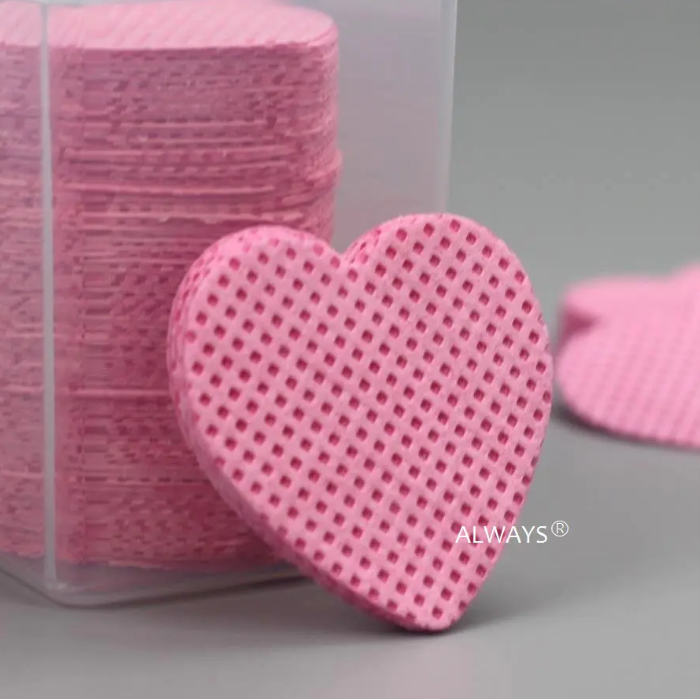
Clean face wipes for sensitive skin require a reduced-irritant formulation profile. This means eliminating fragrance, minimizing preservative load, and selecting only surfactants with a long safety history in leave-on applications. Panthenol, allantoin, and bisabolol are common soothing actives added at concentrations between 0.1 and 0.5 percent. The pH of the lotion should be maintained between 4.5 and 5.5 to match the skin's natural acid mantle and minimize transepidermal water loss (TEWL). Dermatologically tested claims require supporting data from a clinical study with a minimum panel size and an objective TEWL measurement protocol.
The best clean face wipes for oily skin include sebum-controlling actives and astringent humectants. Niacinamide at 1 to 2 percent reduces sebaceous activity over repeated use. Witch hazel extract provides mild astringency. Salicylic acid at 0.5 to 1.0 percent offers exfoliating and comedolytic benefits without requiring a rinse step at low concentrations. These formulations typically carry a lighter lotion load per sheet, between 2.0 and 2.5 times the dry weight of the substrate, versus 2.5 to 3.5 times for dry or normal skin variants.
Micellar clean face wipes and makeup remover products use a specific surfactant architecture. Micelles are nanoscale spherical structures formed when surfactant molecules self-assemble above their critical micelle concentration (CMC). The hydrophobic core of each micelle traps oil-based makeup, while the hydrophilic shell keeps the complex suspended in the aqueous lotion. This mechanism removes waterproof mascara and long-wear foundation more effectively than standard wipes. The table below compares micellar wipes to standard cleansing wipes on key formulation and performance parameters.
| Parameter | Micellar Clean Face Wipes | Standard Cleansing Wipes |
|---|---|---|
| Surfactant system | Mild nonionic at or above CMC | Mixed anionic/nonionic |
| Makeup removal efficacy | High (including waterproof formulas) | Moderate |
| Residue after use | Minimal (designed for no-rinse) | Moderate (rinse recommended) |
| Typical surfactant conc. | 1.5–3.0% | 0.5–1.5% |
| Skin feel after use | Clean, non-greasy | Variable (may feel filmy) |
| Suitable for sensitive skin | Yes (fragrance-free versions) | Depends on formulation |
Clean face wipes, alcohol free formulations have grown in market share as consumers and dermatologists increasingly recognize the drying and barrier-disrupting effects of short-chain alcohols such as ethanol and isopropanol. At concentrations above 20 percent, ethanol measurably increases TEWL and reduces skin hydration within 30 minutes of application. Removing alcohol from the formula, however, creates a preservation challenge that must be solved through alternative systems.
Alcohol-free wipes require a robust antimicrobial preservation strategy to maintain a minimum 24-month shelf life and pass challenge testing per ISO 11930. Commonly used systems include:
Biodegradable clean face wipes are a fast-growing segment driven by regulatory pressure and consumer sustainability demand. The European Single-Use Plastics Directive (EU 2019/904) has accelerated the shift away from synthetic fiber substrates in disposable personal care products. Biodegradability claims require substantiation under recognized testing standards, not just marketing language.
The following substrate materials and certifications are the primary framework for substantiated biodegradability claims in the wipe category:
When reviewing a technical data sheet or requesting a custom formulation, buyers and formulators should assess the following functional ingredient categories:
For wholesale buyers, private label developers, and OEM sourcing teams, the following criteria should appear in every product specification document:
Daily use is generally safe for most skin types when the wipe uses a mild, alcohol-free, fragrance-free formulation with a pH between 4.5 and 5.5. Repeated use of wipes containing high concentrations of preservatives, fragrance, or drying alcohols can increase TEWL and compromise the skin barrier over time. For daily use, selecting clean face wipes, alcohol free with a clinically tested formulation,s minimizes this risk. Dermatologists generally recommend following wipe use with a moisturizer to restore any lipids removed during cleansing.
Face wipes are effective for surface cleansing, makeup removal, and on-the-go hygiene, but they are not a complete replacement for water-rinsed cleansing in most cases. They do not remove all sunscreen residues, heavy foundation, or deeply lodged particulate matter from pores as effectively as a foaming or gel cleanser used with water. Micellar clean face wipes and makeup remover products come closest to full cleansing efficacy among wipe formats, but clinical dermatology guidance generally recommends water-based cleansing at least once daily for acne-prone or congestion-prone skin.
For substantiated biodegradability claims, require ISO 14855 test data showing at least 90 percent aerobic biodegradation within 180 days, or EN 13432 certification for industrial compostability. For organic fiber content, GOTS certification covers the supply chain from raw material to finished substrate. For chemical safety in the substrate, OEKO-TEX Standard 100 confirms the absence of over 100 harmful substances. Biodegradable clean face wipes making marine degradability claims should also reference ASTM D7081 or equivalent marine biodegradability test data.
Stability testing for wet wipes follows a combination of real-time and accelerated aging protocols. Accelerated testing is conducted at 40 degrees C and 75 percent relative humidity for a minimum of 12 weeks. This predicts a 24-month shelf life at ambient storage conditions. Key parameters monitored include pH, microbial count, visual appearance, substrate integrity, and lotion distribution uniformity. Preservative efficacy is re-tested on aged samples per ISO 11930 to confirm the system remains active at the end of shelf life. Packaging integrity testing under ASTM D4169 verifies the seal against moisture loss throughout distribution.
If you are interested in our products, please consult us

 contact us


 English
 日本語
日本語
 简体中文
简体中文