2025.11.12
 Blog
Blog
Content
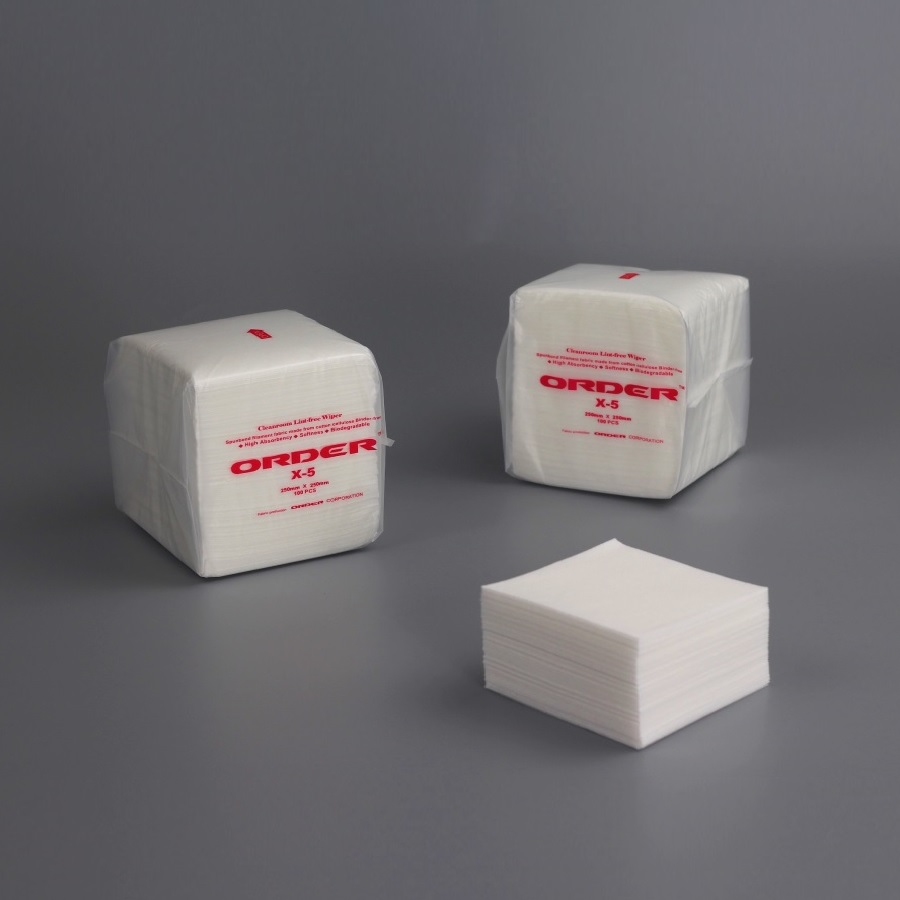
In any controlled environment—from semiconductor fabrication to pharmaceutical manufacturing—the integrity of the cleanroom is paramount. Contamination control is a constant battle, and one of the most fundamental tools in this fight is the humble cleanroom wipe. However, not all wipes are created equal. Selecting the right CLEANROOM WIPES is a critical decision that directly impacts product yield, process reliability, and regulatory compliance. This guide provides a comprehensive framework to help you navigate the technical specifications and choose the perfect wipe for your specific application, ensuring your environment remains truly clean.
The performance of a cleanroom wipe is determined by three core factors: the material it's made from, how it's constructed, and its certified level of cleanliness. A deep understanding of these elements is the first step in making an informed choice. A wipe that is perfect for a general ISO Class 8 area could be a source of catastrophic contamination in an ISO Class 4 semiconductor fab.
Once you understand the basics, the next step is to match the wipe's technical characteristics to the specific demands of your application. This involves considering the type of contamination you are dealing with, the chemicals you are using, and the required ISO classification of your environment.
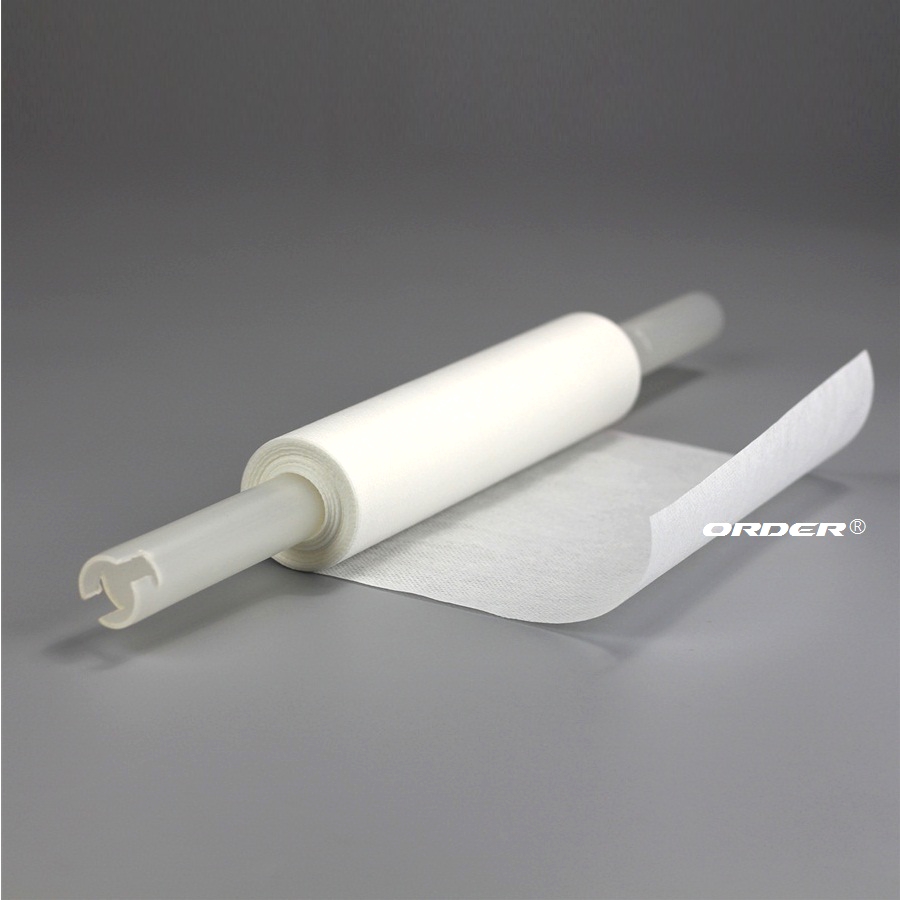
In environments where particle control is the absolute highest priority—such as semiconductor lithography, hard drive manufacturing, or optical assembly—low linting polyester cleanroom wipes are the industry standard. Polyester is inherently strong, abrasion-resistant, and has very low particle and fiber generation, making it ideal for critical cleaning tasks.
For convenience, consistency, and controlled dispensing, pre-saturated cleanroom wipes are an excellent solution. They eliminate the need to manually dispense solvents, which can introduce variability and the risk of over-wetting. They are ideal for routine cleaning of workstations, equipment, and surfaces.
In pharmaceutical, biotech, and medical device manufacturing, controlling microbial contamination is as important as controlling particles. For these applications, sterile cleanroom wipes for pharmaceutical use are mandatory. These wipes undergo a rigorous sterilization process after being manufactured and packaged in a clean environment.
Beyond the basic type of wipe, there are other factors to consider, such as environmental impact and the capabilities of your supplier. A great supplier is a partner who can provide expert advice, consistent quality, and customized solutions to meet your unique needs.
As industries place a greater emphasis on sustainability, biodegradable cleanroom wipes are gaining traction. These wipes are designed to offer excellent cleaning performance while minimizing their environmental footprint after disposal. They are an excellent choice for applications where the highest level of cleanroom classification is not required, but a commitment to green practices is desired.
When selecting a supplier for critical products like cleanroom wipes, their expertise, quality control, and manufacturing capabilities are as important as the product itself. Suzhou Order Cleanroom Material Co., Ltd. stands out as a technology-driven enterprise that embodies these qualities, making it an ideal partner for your contamination control needs.
Selecting the right CLEANROOM WIPES is a detailed process that requires a clear understanding of your environment's requirements and a thorough evaluation of both the product and the supplier. By considering the material, construction, and sterility needs, and by choosing a partner like Suzhou Order Cleanroom Material Co., Ltd. that combines deep expertise with rigorous quality control and flexible customization, you can ensure you are using the best possible tool to protect your critical processes and products.
While you can, it's often not best practice. For general cleaning to remove particles and residues, a wipe with high absorbency and low linting, like a polyester or polyester-cellulose blend, is ideal. For disinfection, you need a wipe that is compatible with your specific disinfectant (e.g., alcohol, quaternary ammonium, bleach). Pre-saturated sterile wipes are often the best choice for disinfection in pharmaceutical settings as they ensure the correct concentration is applied. Using separate, optimized wipes for each task can improve efficacy and reduce the risk of chemical incompatibility.
The difference lies in the edge finishing, which is critical for contamination control. A knife-cut wipe is simply sliced, leaving the fibers along the edge exposed and loose. This makes it prone to shedding fibers and particles, making it unsuitable for any cleanroom above ISO Class 7. A laser-cut wipe is sliced with a high-precision laser, which melts and fuses the edge as it cuts. This creates a sealed, sealed edge that prevents the release of fibers, making it essential for ISO Class 5 and cleaner environments.
Cleanroom wipes are tested according to internationally recognized standards, primarily IEST-RP-CC004. The key tests include: 1) Particle Count: Measuring the number and size of particles released from the wipe. 2) Fiber Count: Measuring the number of loose fibers released. 3) Non-Viable Residue (NVR): Measuring the total amount of extractable non-ionic residue. 4) Ionic Extractables: Measuring the amount of extractable ionic contaminants (e.g., chloride, sulfate). The results are provided on a Certificate of Analysis (CoA) for each lot.
No, biodegradable cleanroom wipes are generally not suitable for the most critical cleanroom environments (ISO Class 5 and cleaner). While their performance has improved greatly, natural fiber materials like cellulose typically generate more particles and have lower chemical resistance than 100% polyester. They are an excellent, sustainable choice for less critical areas such as gowning rooms, general labs, and ISO Class 7-8 environments where particle control is important but not at the most extreme level.
In electronics manufacturing, particularly for semiconductors and circuit boards, even microscopic amounts of ionic or non-ionic residue can cause catastrophic failures. Ionic residues (like sodium or chloride) can lead to corrosion or electrochemical migration, causing short circuits. Non-volatile residues can interfere with adhesion of coatings, photoresists, or solder masks. Using a wipe certified for low ionic and non-volatile extractables ensures that your cleaning process is not introducing new contaminants that could compromise the functionality and reliability of the final electronic device.
If you are interested in our products, please consult us

 contact us


 English
 日本語
日本語
 简体中文
简体中文