
 English
 日本語
日本語
 简体中文
简体中文





- Substrate material determines wipe performance, with polypropylene offering superior oil absorption and cellulose providing better water absorption
- Cost-per-use analysis often reveals that higher-priced wipes deliver lower total cost through reduced consumption
- Solvent compatibility is critical, certain solvents degrade specific wipe materials causing disintegration or contamination
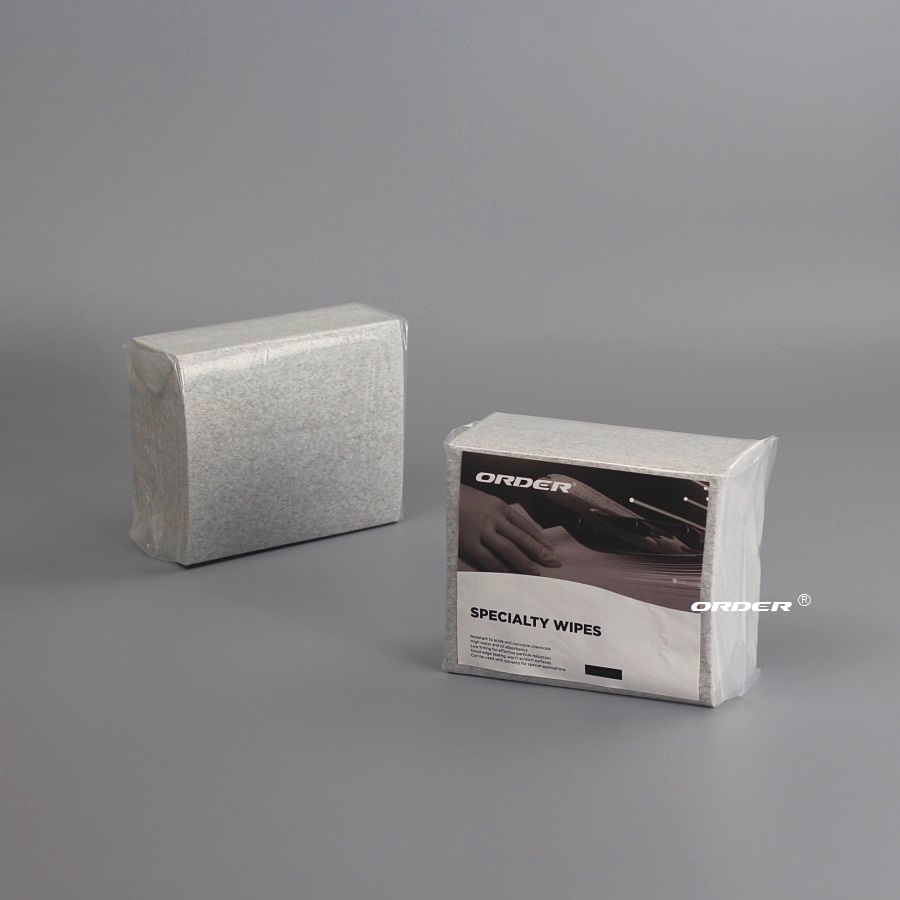
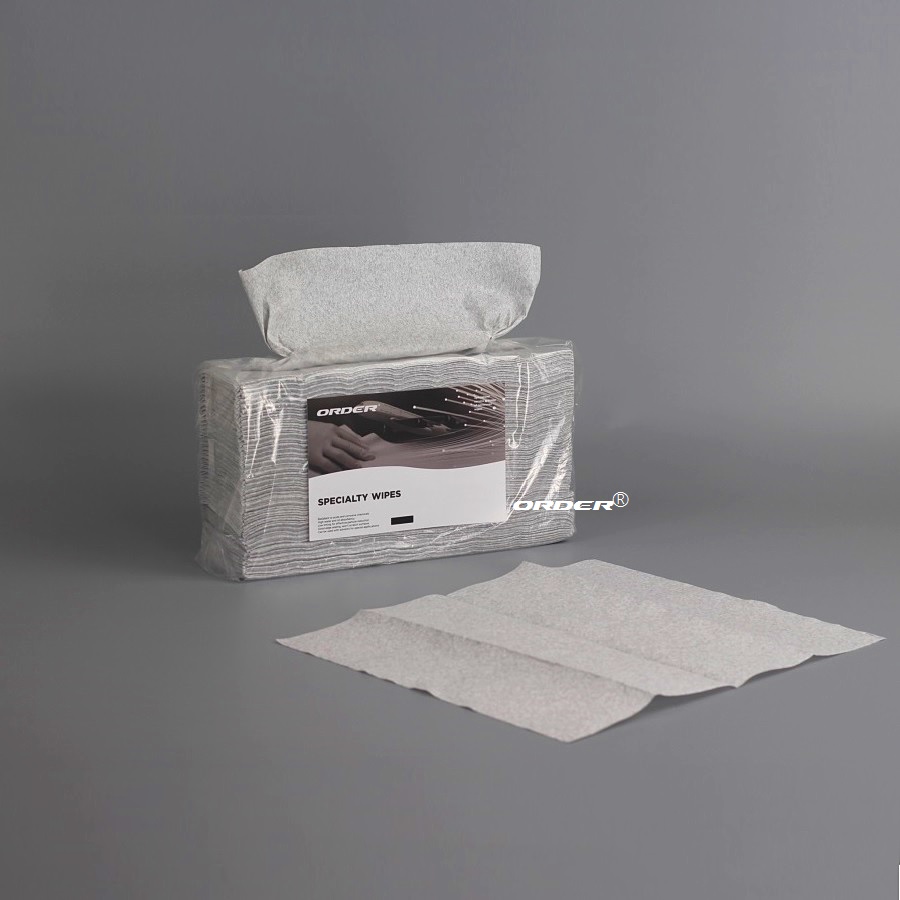
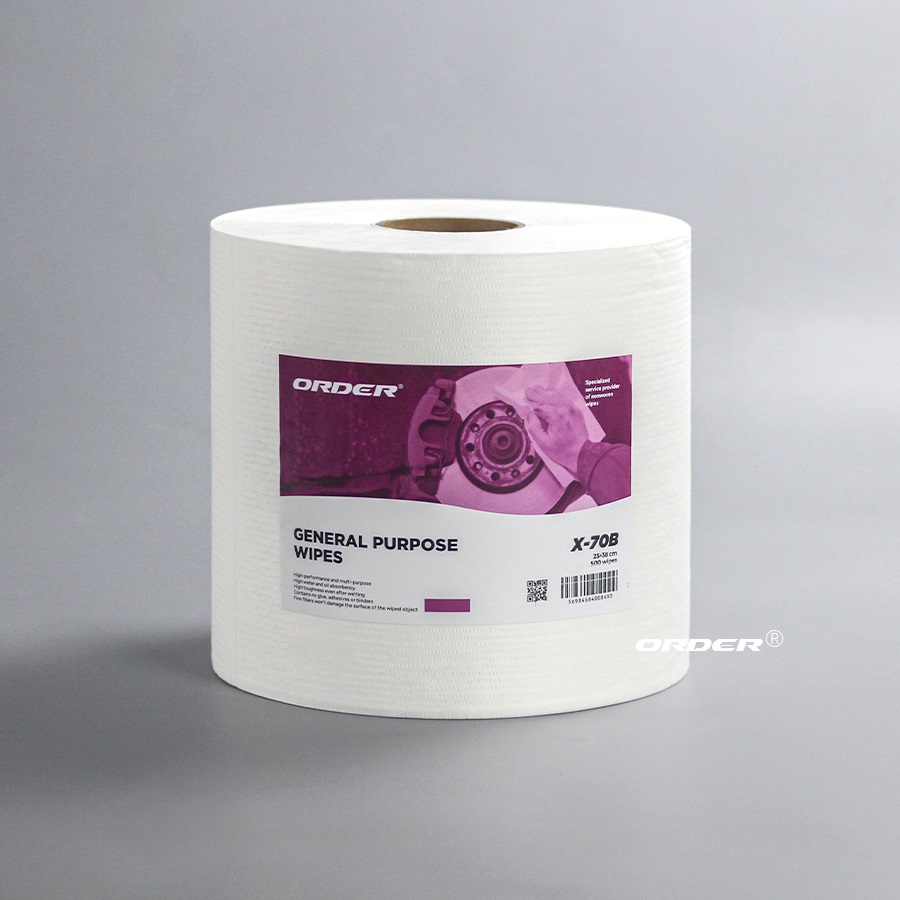
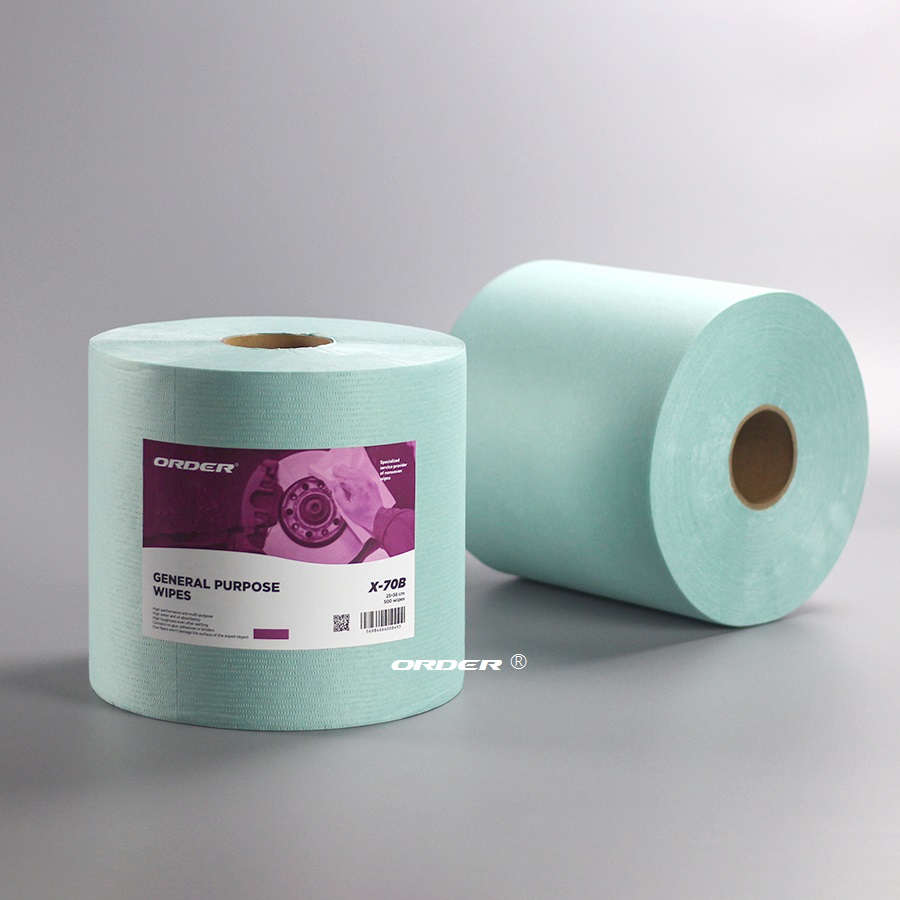
- Industrial wipes are available in roll, folded, and dispenser formats, each suited to different application environments
- Proper disposal compliance is mandatory, wipes contaminated with hazardous substances require specialized handling
What Are Industrial Cleaning Wipes? A Technical Overview
Industrial cleaning wipes are engineered nonwoven fabrics designed for heavy-duty cleaning applications in manufacturing, maintenance, and workshop environments. Unlike consumer-grade wipes, which prioritize softness and cosmetic appeal, industrial wipes emphasize durability, absorbency, and resistance to tearing under mechanical stress.
The fundamental distinction lies in the substrate material and manufacturing process. Industrial wipes are typically produced through spunbond, meltblown, or hydroentanglement technologies, creating nonwoven fabrics with specific fiber orientations and bonding characteristics. These processes produce wipes with controlled porosity, tensile strength, and absorbency profiles that match industrial cleaning requirements.
Industrial wipes serve multiple functions: removing grease and oil from machinery, cleaning parts before assembly, wiping spills, absorbing fluids, applying solvents or degreasers, and preparing surfaces for painting or coating. Their performance directly impacts cleaning efficiency, solvent consumption, and waste generation, factors that contribute to operational costs and environmental compliance.
The industrial wipes market has evolved significantly in recent years, with manufacturers developing specialized products for specific applications. These include anti-static wipes for electronics manufacturing, low-linting wipes for cleanroom environments, and high-temperature wipes for applications near hot surfaces. Understanding the technical characteristics of different wipe materials enables informed selection that balances performance, cost, and environmental considerations.
Substrate Material Science: Understanding Wipe Compositions
The substrate material is the single most important factor determining industrial wipe performance. Different fiber types and bonding methods produce distinct physical and chemical properties that influence absorbency, strength, softness, particle generation, and chemical compatibility.
Polypropylene Wipes
Polypropylene is the most common material for oil-absorbing industrial wipes. This synthetic polymer is hydrophobic, meaning it repels water while absorbing hydrocarbons effectively. Polypropylene wipes excel at oil and grease removal, making them ideal for machinery cleaning, parts degreasing, and spill response in areas where oil contamination is prevalent.
The manufacturing process typically involves meltblown technology, producing fine fibers with high surface area and excellent oil absorbency. These wipes offer good tensile strength and resistance to tearing, even when saturated with oil. They do not dissolve or disintegrate when exposed to most hydrocarbons, ensuring integrity during cleaning tasks.
However, polypropylene wipes are not suitable for aqueous cleaning solutions or water-based degreasers. They exhibit poor water absorbency and float on water surfaces rather than absorbing. This characteristic is advantageous for oil-water separation applications but limits their versatility in general-purpose cleaning.
Cellulose Wipes
Cellulose wipes are manufactured from wood pulp or cotton fibers, providing excellent water and solvent absorbency. These wipes are hydrophilic, absorbing water-based solutions effectively. They are commonly used in applications involving water-based detergents, general purpose cleaning, and wiping of surfaces that do not require oil-specific absorption.
Cellulose wipes generally offer good softness and feel, reducing the risk of surface scratching on delicate materials. They are biodegradable, an important consideration for facilities with sustainability targets. The low cost of cellulose wipes makes them attractive for high-volume, general-purpose applications where specialized performance is not required.
The primary limitations of cellulose wipes include lower oil absorbency, reduced wet strength compared to synthetics, and the tendency to leave lint or fiber residues on cleaned surfaces. These factors restrict their use in critical cleaning applications where contamination control is essential.
Blended Fiber Wipes
Blended wipes combine two or more fiber types to achieve balanced performance characteristics. Common blends include polypropylene-cellulose combinations, offering both oil and water absorbency in a single product. These wipes are designed for general-purpose industrial cleaning where the user may encounter various contaminant types.
The blend ratio determines the performance profile. Higher polypropylene content improves oil absorption but reduces water handling capability. Higher cellulose content enhances water absorption and softness but reduces oil resistance. Manufacturers typically specify the fiber composition and absorbency characteristics to assist users in matching the wipe to the application.
Blended wipes often incorporate bonding agents to maintain structural integrity under wet conditions. These agents affect the wipe's compatibility with solvents and its behavior during disposal. Users should verify that the bonding system is compatible with the chemicals used in their cleaning operations.
Specialty Substrates: Viscose, Polyester, and Microfiber
Beyond the primary substrate categories, specialty materials serve specific industrial cleaning applications. Viscose wipes offer excellent water absorbency with good wet strength and softness, suitable for general-purpose cleaning where lint control is moderate. Polyester wipes provide superior tensile strength and resistance to chemicals, making them suitable for aggressive solvents. Microfiber wipes, composed of ultra-fine fibers, deliver exceptional particle removal through mechanical action, ideal for precision cleaning of sensitive surfaces.
Each substrate type presents a unique performance profile that influences selection. The table below provides a comparative overview of substrate characteristics.
| Substrate Type | Oil Absorbency | Water Absorbency | Wet Strength | Linting | Solvent Resistance | Relative Cost |
| Polypropylene | Excellent | Poor | Good | Low | Excellent | Medium |
| Cellulose | Poor | Excellent | Fair | Medium | Good | Low |
| Blended (PP/Cellulose) | Good | Good | Good | Medium | Good | Medium |
| Viscose | Fair | Excellent | Good | Low | Good | Medium |
| Polyester | Good | Good | Excellent | Very Low | Excellent | High |
| Microfiber | Excellent | Excellent | Good | Very Low | Good | High |
Key Performance Indicators for Industrial Wipes
Selecting industrial cleaning wipes requires understanding key performance indicators that directly impact cleaning effectiveness and operational cost.
Absorbency Rate and Capacity
Absorbency rate measures how quickly the wipe absorbs fluid, while capacity measures the total fluid the wipe can hold before saturation. Both parameters influence cleaning efficiency. High-rate wipes minimize fluid runoff and reduce the time required for cleaning tasks. High-capacity wipes reduce the number of wipes consumed per cleaning event.
Absorbency performance is typically measured using standardized test methods that specify fluid type, test duration, and measurement conditions. Users should request absorbency data specific to the fluids used in their operations. Oil and water absorbency values differ significantly for most substrates, requiring separate evaluation for each fluid type.
Tensile Strength and Wet Strength
Tensile strength measures the force required to tear the wipe, determining durability under mechanical stress. Wet strength, measured after the wipe is saturated with fluid, is particularly important because many wipes lose significant strength when wet. Low wet strength results in tearing during cleaning, leaving fiber residues on the workpiece and increasing consumption rates.
Industrial cleaning wipes should maintain sufficient wet strength to withstand rubbing, wiping, and pulling forces encountered in typical cleaning operations. Applications involving rough surfaces or aggressive scrubbing require higher strength than light-duty wiping tasks.
Particle Generation and Linting
Particle generation, commonly referred to as linting, describes the release of fibers or particles from the wipe during use. High-linting wipes deposit contaminants on cleaned surfaces, potentially affecting product quality in sensitive manufacturing processes. Low-linting wipes are essential for electronics assembly, precision machining, and any application where surface contamination is critical.
Linting is influenced by substrate material, bonding method, and fiber length. Meltblown polypropylene generally produces lower linting than cellulose due to continuous fiber formation. Wipes classified as low-linting undergo additional processing to minimize fiber release and are typically tested using standardized methods to verify performance.
Solvent Compatibility
Solvent compatibility determines whether the wipe maintains its integrity when exposed to cleaning chemicals. Some substrates dissolve or disintegrate in specific solvents, causing contamination and rendering the wipe unusable. Polypropylene is generally compatible with most hydrocarbons and organic solvents but may swell in aromatic compounds. Cellulose is compatible with water-based solutions but degrades in strong acids or bases.
Users should verify compatibility with the solvents and cleaning agents used in their facilities. Manufacturers often provide chemical compatibility charts indicating resistance to common industrial solvents. When compatibility data is unavailable, conducting small-scale exposure tests is recommended before full deployment.
Application-Specific Selection Guide
Different industrial cleaning applications require specific wipe characteristics. The following selection guide matches applications to recommended wipe types.
| Application | Recommended Substrate | Key Requirements | Typical Solvents | Format Preference |
| Heavy machinery degreasing | Polypropylene | High oil absorbency, good wet strength | Hydrocarbons, degreasers | Rolls, heavy-duty |
| Parts cleaning and assembly | Blended or polyester | Low linting, solvent resistance | Isopropyl alcohol, acetone | Folded, dispenser |
| General workshop cleaning | Cellulose or blended | Cost-effective, good water absorbency | Water-based cleaners | Rolls or folded |
| Oil and coolant spill response | Polypropylene | High oil absorbency, rapid rate | Hydraulic oil, cutting fluids | Rolls or sheets |
| Electronics assembly | Polyester microfiber | Very low linting, anti-static | Isopropyl alcohol, solvents | Folded, cleanroom |
| Paint and coating prep | Low-linting cellulose | Solvent resistant, low linting | Paint thinner, prep solvents | Folded, dispenser |
| Food processing | Food-grade cellulose | FDA compliance, no additives | Sanitizers, water | Rolls, color-coded |
| Pharmaceutical manufacturing | Polyester | Very low linting, sterile options | Alcohols, disinfectants | Folded, gamma sterilized |
This matrix provides general guidance. Specific application requirements may warrant customization. Users should conduct validation testing with candidate wipes under actual use conditions to confirm performance before full-scale adoption.
Format Considerations: Roll, Folded, and Dispenser Options
Industrial cleaning wipes are available in multiple formats, each suited to different use environments and operator preferences.
Roll Wipes
Roll wipes are continuous sheets wound on a core, typically dispensed from wall-mounted or portable dispensers. Center-pull rolls pull from the center of the roll, reducing waste and allowing single-hand dispensing. Roll wipes are suitable for high-volume applications where operators require quick, convenient access.
Advantages include controlled dispensing, reduced waste, and efficient use of floor space. Disadvantages include limited width options and the potential for cross-contamination if the roll is exposed to contaminants.
Folded Wipes
Folded wipes are pre-cut sheets arranged in stack form, dispensed from boxes or dispensers. Interfolded wipes allow single-sheet dispensing while the next sheet advances, reducing waste. Folded wipes offer consistent sheet size and are available in a wider range of material compositions than rolls.
Advantages include precise sheet count control, ease of transport, and compatibility with a variety of dispensing systems. Disadvantages include higher packaging cost and potential for sheet waste if operators pull multiple sheets.
Dispenser Systems
Dispenser systems influence wipe consumption and operator convenience. High-quality dispensers provide controlled sheet release, reduce waste, and maintain product integrity through contamination protection. Dispensers are available in manual and automatic configurations, accommodating various wipe formats and usage patterns.
In selecting dispensers, considerations include mounting location, ease of refilling, and compatibility with available wipe formats. Integrated dispenser systems that combine wipe dispensing with waste disposal improve workflow efficiency in active workshop environments.
Cost-Per-Use Analysis
Evaluating industrial wipe costs requires shifting focus from unit price to cost-per-use. A higher-priced wipe that performs more effective cleaning and reduces consumption often delivers lower total cost than a cheaper alternative that requires multiple wipes per cleaning task.
| Performance Factor | High-Performance Wipe | Standard Wipe | Cost Impact |
| Wipes per cleaning event | 1 to 2 | 3 to 5 | High-performance reduces consumption by 50 to 70% |
| Wipe unit cost | Higher | Lower | Higher unit cost offset by lower consumption |
| Labor time per event | Lower | Higher | Reduced wiping time saves labor cost |
| Solvent consumption | Optimized | Higher | Efficient wipes reduce solvent usage |
| Waste generation | Lower | Higher | Reduced disposal cost |
Cost-per-use analysis should incorporate all relevant factors: wipe unit cost, consumption rate, labor cost, solvent consumption, and disposal cost. The analysis may reveal that the apparently more expensive wipe delivers significantly lower total cost when full lifecycle factors are considered.
Example calculation: A standard wipe costing $0.05 each and consuming 4 wipes per cleaning event costs $0.20 per event. A high-performance wipe costing $0.15 each and consuming 1 wipe per cleaning event costs $0.15 per event, representing a 25 percent cost reduction despite the 3x higher unit price. When labor and solvent savings are included, the economic advantage increases further.
Procurement Checklist for Industrial Cleaning Wipes
This checklist supports procurement professionals in evaluating and comparing industrial cleaning wipe options.
- Substrate material matches primary cleaning application requirements
- Absorbency performance verified for fluids used in facility
- Wet strength adequate for intended use conditions
- Linting level appropriate for cleanliness requirements
- Solvent compatibility confirmed for all chemicals used
- Material safety data sheet available and reviewed
- Compliance with applicable regulations for food contact if applicable
- Flammability characteristics understood for safe handling
- Disposal compliance requirements identified
- Format matches use environment and operator workflow
- Compatibility with existing or planned dispensing systems
- Packaging suitable for storage and handling conditions
- Batch traceability provided for quality management
- Cost-per-use analysis completed with realistic assumptions
- Consumption rate projected based on application requirements
- Labor cost impact estimated for candidate products
- Disposal cost included in total cost calculation
- Manufacturing quality and consistency assessed
- Supply chain reliability and lead times understood
- Technical support availability confirmed
- Samples obtained and validated under use conditions
Common Mistakes in Industrial Wipe Selection
Experience with industrial cleaning operations reveals recurring patterns of selection mistakes that increase costs and reduce cleaning effectiveness.
Mistake 1: Selecting Based Solely on Unit Price
The most common error is selecting the lowest-priced wipe without evaluating performance characteristics. Low-cost wipes typically require higher consumption rates, increasing total cost and labor time. The cost-per-use analysis described in section 6 should guide economic selection, not unit price alone.
Mistake 2: Using General-Purpose Wipes for Specialized Applications
General-purpose wipes often fail in specialized applications where specific performance characteristics are required. Using standard cellulose wipes for heavy oil cleaning results in poor absorbency and high consumption. Using high-linting wipes in electronics assembly contaminates sensitive components. Matching wipe characteristics to application requirements is essential for satisfactory performance.
Mistake 3: Ignoring Solvent Compatibility
Failure to verify solvent compatibility leads to wipe disintegration during use, leaving fiber residues on workpieces and contaminating cleaning surfaces. This problem is particularly common when switching cleaning solvents without reassessing wipe compatibility.
Mistake 4: Overlooking Disposal Requirements
Wipes contaminated with hazardous substances require specialized disposal that adds cost and compliance requirements. Selecting wipes that are compatible with existing waste treatment methods reduces disposal costs and simplifies compliance.
Mistake 5: Inadequate Validation
Selecting wipes without conducting use validation leads to performance surprises after full deployment. Testing candidate products under actual workshop conditions is essential to confirm absorbency, strength, and compatibility before committing to volume orders.
Frequently Asked Questions
Conclusion
Industrial cleaning wipes, while appearing to be simple consumables, represent a significant operational cost and performance factor in manufacturing and maintenance environments. Understanding substrate material characteristics, performance indicators, and application-specific requirements enables informed selection that balances cleaning effectiveness, cost, and environmental considerations.
Material science principles guide substrate selection, with polypropylene providing oil absorption, cellulose offering water handling, and blended formulations delivering balanced performance. Key performance indicators including absorbency, strength, linting, and solvent compatibility determine suitability for specific cleaning tasks. The application selection matrix and procurement checklist provide practical tools for systematic evaluation.
Cost-per-use analysis reveals that higher-performing wipes often deliver lower total cost through reduced consumption, labor time, and solvent usage. Format selection, including roll, folded, and dispenser options, affects workflow efficiency and operator convenience.
Common selection mistakes, particularly prioritizing unit price over performance and ignoring solvent compatibility, result in increased costs and reduced cleaning effectiveness. Validation testing under actual use conditions is essential to confirm performance before volume procurement.
Ultimately, the best industrial cleaning wipe is one that matches the specific contaminant and application requirements of the workshop, is compatible with cleaning chemicals and disposal methods, and delivers acceptable cost-per-use performance. Taking the time to conduct a systematic evaluation yields cost-effective and reliable cleaning consumables that support efficient industrial operations.