2026.11.17
 Blog
Content
A salon group preparing a private-label launch usually starts with a simple request: 5 cm x 5 cm lint-free pads that remove gel polish without shedding, packed in a retail bag with the salon's logo. The sourcing decision quickly becomes broader than the pad. The right nail wipes exporter should control nonwoven selection, cutting, folding, packing, batch records and export documents, not just quote a price per bag. For most B2B buyers, the safest shortlist is made of exporters who can sample against a written specification and repeat it across reorders.
An exporter's value is visible in the handoffs. Ask where the raw roll is slit, where the pad is cut, who inspects the bag seal, and who signs the batch record. If those steps are outsourced without a documented handoff, small changes in fiber lot or blade condition can appear as frayed edges, inconsistent pad size or loose fibers in the salon. A useful supplier conversation covers four controls:
These controls matter more than a catalog photo. A wipe that looks correct in a sample bag can fail if the pad curls, tears during gel removal or leaves lint on the nail plate. The exporter should be able to explain which variable caused a failure and what will change in the next batch.
Nail wipes are not a single product. A dry pad used to wipe gel polish, a pad used with acetone-based remover and a pad used for eyelash adhesive cleanup have different demands. Select the nonwoven for the fluid it will meet and the surface it will touch. Meltblown polypropylene is often chosen for fine, lint-sensitive nail work because it can be cut into small pads and offers a soft, low-lint surface. Spunlace and cellulose blends may absorb more liquid, but check shedding and strength after soaking. The practical test is not soft versus rough; it is whether the pad stays intact long enough to finish the task without residue.
| Construction | Typical use | What to verify |
|---|---|---|
| Meltblown polypropylene | Small lint-sensitive pads for gel polish and adhesive cleanup | Fiber shedding after solvent soak, cut edge cleanliness and color fastness |
| Spunlace viscose or polyester | Softer absorbent pads for salon and beauty use | Strength when wet, pad weight spread and residue on dark surfaces |
| Cellulose and polyester blend | General salon cleanup and remover wipe | Lint level, bag seal compatibility and consistency across lots |
Ask for the solvent test to be run with the actual remover, not water. Acetone, ethyl acetate and alcohol blends can affect dyes, binders and bag seals differently. A supplier that tests only with water is not giving you useful data.
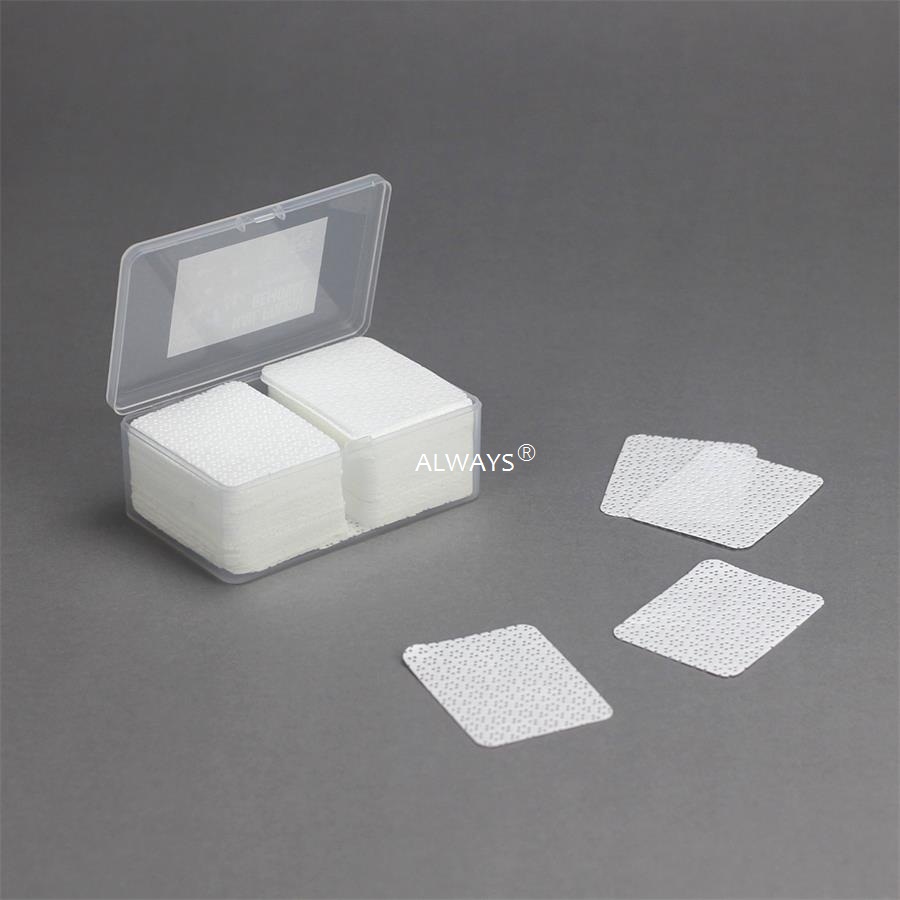 ORDER P-X3330 Gel Polish Remover Nonwoven WipesLint-free 100% meltblown polypropylene wipes for gel polish removal and salon cleaning, offered in 200-wipe bags for sampling against your remover test.View Product →
Sampling is cheap compared with a bad reorder. Put the following on one specification sheet and make the exporter sign it back with the sample reference:
For a 5 cm x 5 cm pad, agree a cut tolerance both sides can inspect; a plus-or-minus 1-2 mm range is practical for many converting lines, but confirm it against the equipment and inspection method. State whether size is measured flat or after folding. Define lint by a simple in-house method, such as wiping a dark glass slide under controlled pressure and checking for visible fibers. If the application is cosmetic, request material declarations and a color-fastness check against the remover.
Nail wipe orders often look inexpensive per pad and expensive per finished unit. The difference is packaging. A bulk bag for salon back-bar use has different requirements from a retail carton with barcode, batch code, ingredient declaration and shelf-life wording. Confirm bag seal type, easy-open feature, resealability, label substrate and carton drop test. For private label, request a digital proof and a physical pre-production sample; do not approve from a PDF alone.
Ask for two pack formats: bulk salon pack and retail-ready pack. That comparison exposes hidden cost in counting, bagging, labeling and carton assembly. It also shows whether the supplier can support a pilot launch without forcing a full container of one SKU.
 Bulk Salon Pack Nail Polish Remover Dry WipesWhite lint-free meltblown polypropylene wipes in 1,200-wipe bags, with OEM/ODM options, for comparing bulk packing and supplier batch controls.View Product →
A quality certificate is an entrance ticket, not a batch record. For nail wipes, useful controls are incoming fiber verification, GSM check, cut dimension, visual inspection for spots and foreign fibers, pad-to-pad weight variation, bag seal strength, label accuracy and retained samples. Ask how nonconforming pads are segregated and who authorizes rework. If the exporter cannot describe a corrective action from a previous complaint, the audit is mostly paperwork.
Batch coding should let a salon or distributor trace a bag back to production date, fiber lot and packing line. That is especially important when color is part of the brand. A pink or light green pad must match the approved standard under agreed lighting; otherwise repeat orders arrive with visible shade shifts.
For a first order, confirm Incoterm, port of loading, lead time and document set in writing. The commercial invoice, packing list and bill of lading are baseline; certificate of origin or other documents may be required by the destination. The exporter should also state carton dimensions, net and gross weight, pallet count and pallet treatment or marking required by the buyer's market.
Dry wipes still need moisture protection, carton compression checks and a sensible container loading plan; bags can abrade and labels can scuff in transit. If the wipes are presaturated, confirm the liquid formulation, bag-film compatibility and transport restrictions before booking. For dry pads, agree shelf life and storage conditions so the distributor does not receive a short-dated batch.
Use one sampling round to test both product and process. Send a written brief with size, material preference, GSM range, color, pack count, label language and target market. Ask for three things back: a sample with batch reference, a specification sheet with tolerances and a packing proposal with carton dimensions. Then run a small use test with the actual remover and the salon team. Record failures by category, not as general dissatisfaction.
A supplier that answers with data and a named contact is easier to scale than one that answers only with a lower price.
A manufacturer that converts nonwoven rolls into cut pads, folds, bags and cartons can usually solve size, lint and packing issues in one production chain. That is different from a trading office that buys finished bags and cannot change the cut without a new factory order. For nail wipes, this matters because the product is small, the pack count is high and the visual standard is strict. A converting-focused partner can adjust pad size, embossing, color, count and bag format without rebuilding the supply route.
Buyers can review the nail polish removal guide, then send a target specification through the contact page. Keep the first brief simple: application, remover type, pad size, material preference, pack format and destination market. A clear brief gives the exporter less room to guess and gives you a comparable sample from each shortlisted supplier.
 ORDER P-X3330 Lint-Free Salon Nail WipesDisposable meltblown polypropylene wipes in 1,200-wipe bags, with customizable style, material, logo and packaging for a comparable sample brief.View Product →
If you are interested in our products, please consult us

 contact us


 English
 日本語
 简体中文