2026.11.10
 Blog
Content
A maintenance manager who orders 400 jumbo rolls per quarter will usually notice a weak perforation before noticing a price change. The roll tears at the dispenser, the sheet pulls unevenly, and the line loses time. In industrial cleaning wipes manufacturing, that kind of failure is rarely a warehouse problem. It is a specification problem that begins with fiber selection, web bonding, basis weight, and converting.
The practical conclusion is simple: buy wipes by manufacturing specification, not by product name alone. The sections below explain how industrial cleaning wipes are made, which material choices drive performance, how converting formats affect daily use, and what B2B buyers should verify before placing a production order.
Industrial cleaning wipes manufacturing is a chain of controlled decisions, not a single mixing or cutting step. The manufacturer first selects a fiber blend, forms a nonwoven web, bonds the fibers, and then converts the material into rolls, folded wipers, pop-up stacks, or flat sheets. Each stage changes how the finished wipe absorbs oil, releases solvent, resists tearing, or generates lint.
For buyers, the useful way to read a quotation is to separate material cost from conversion cost. A 60 gsm spunlace wipe and a 100 gsm meltblown polypropylene wipe may look similar in a photograph, but they behave differently under a greasy hand tool, a solvent bath, or a cleanroom wipe-down. The specification should therefore state fiber type, basis weight range, bonding method, sheet dimensions, fold style, packaging, and the intended cleaning task.
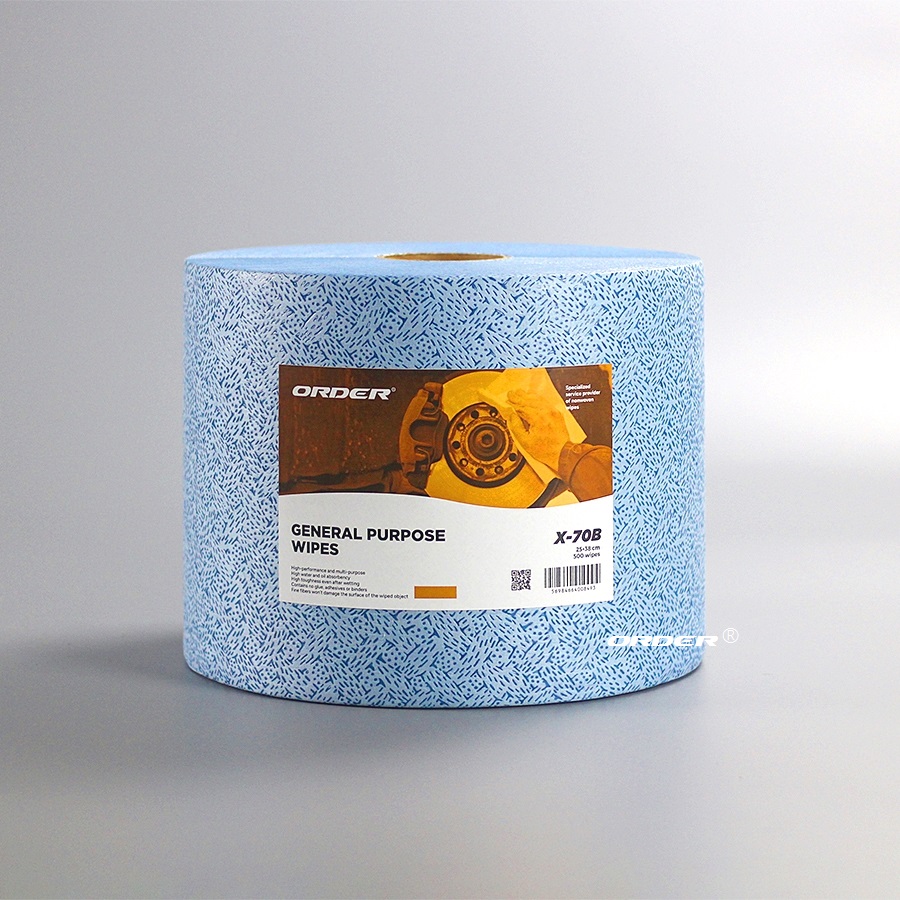
Meltblown polypropylene is often specified for oil absorption, degreasing, and solvent work because its fine-fiber web creates a dense capillary structure. It tends to resist tearing when saturated with oil and can be made in blue, white, or grey for workshop color-coding. Spunlace cellulose-polyester blends offer a softer hand, good wet strength, and low lint, which makes them common for general industrial maintenance, food service, and cleanroom support tasks. Airlaid material is softer and bulkier, but it may not suit heavy solvent wiping.
The table below is a practical comparison, not a ranking. The right choice depends on the soil type, surface sensitivity, disposal route, and the cost per completed task rather than cost per wipe.
| Material | Strong fit | Procurement watch-out |
|---|---|---|
| Meltblown polypropylene | Oil, grease, solvent, workshop maintenance | Confirm solvent compatibility and wet strength |
| Spunlace cellulose-polyester | General cleaning, low-lint wiping, food service | Check basis weight and lint level by lot |
| Airlaid | Soft dry wiping, patient care, light maintenance | Lower wet abrasion resistance in heavy tasks |
| Woodpulp-polyester blend | Absorbent jumbo rolls, general workshop use | Perforation strength and sheet yield matter |
For heavy oil and solvent work, a meltblown polypropylene wipe is often the lower-risk starting point because the web holds oil without shedding easily. A representative heavy-duty option can be reviewed here:
 Heavy-Duty Meltblown Polypropylene Oil-Absorbent Jumbo Roll WipesFor heavy oil and solvent work, this low-lint meltblown wipe is supplied as a perforated jumbo roll for repeat-use industrial cleaning.View Product →
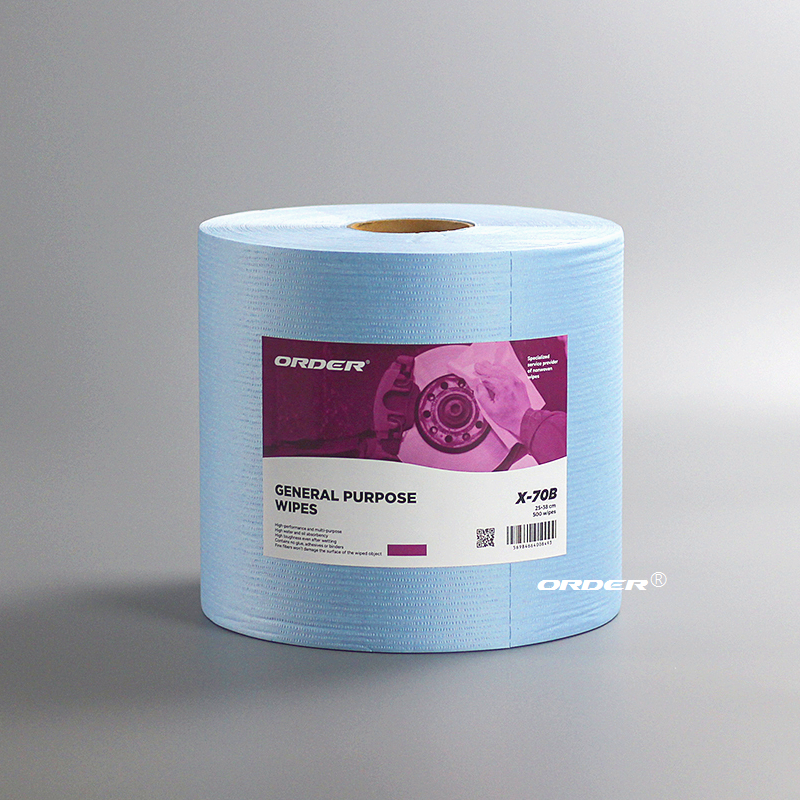
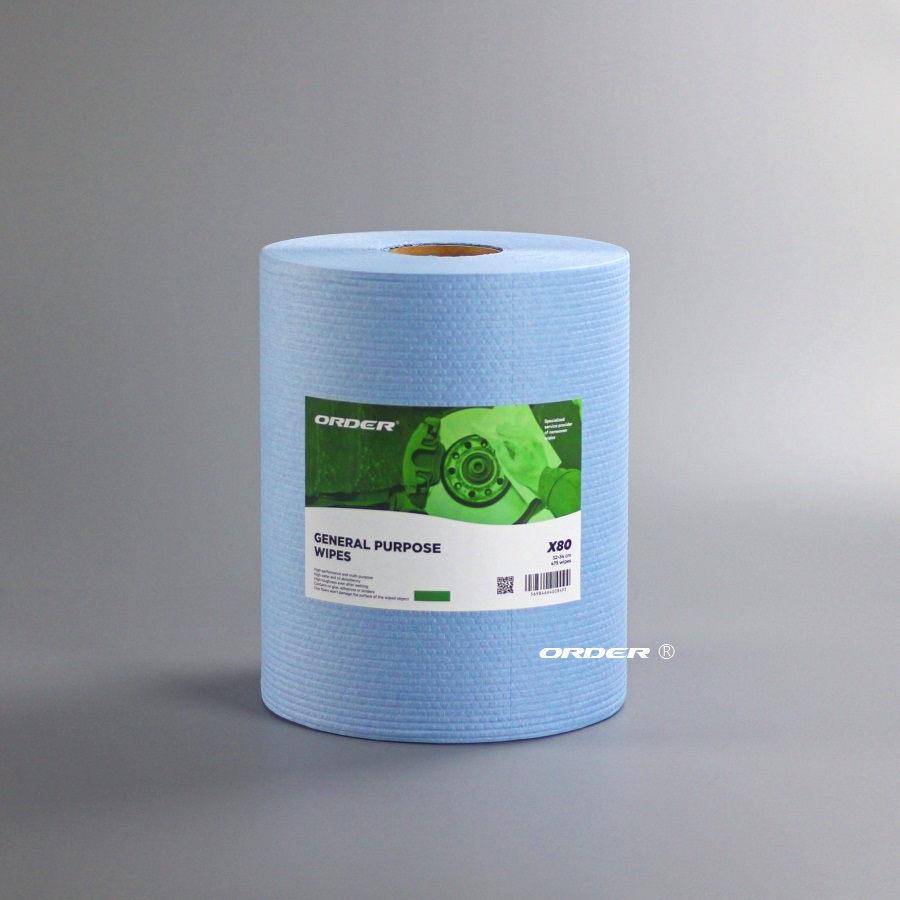
Converting is where many industrial cleaning wipes manufacturing projects succeed or fail. A jumbo roll may be perforated at a fixed pitch, wound on a 38 mm or 76 mm core, and packed for a floor stand or wall dispenser. A quarter-fold wipe is cut, folded, and stacked so the user can pull one sheet without touching the next. A pop-up box uses interleaving to lift the next wipe into reach. Each format changes labor time, waste, and contamination risk.
For high-volume workshop maintenance, perforated jumbo rolls usually reduce handling because one roll serves many shifts and the dispenser can be placed near the machine. The trade-off is that a weak perforation or an incompatible core diameter can stop the line. For precision tasks, flat sheets or folded wipers give better control and less over-pull. For mobile repair teams, small rolls and pop-up packs reduce bulky packaging.
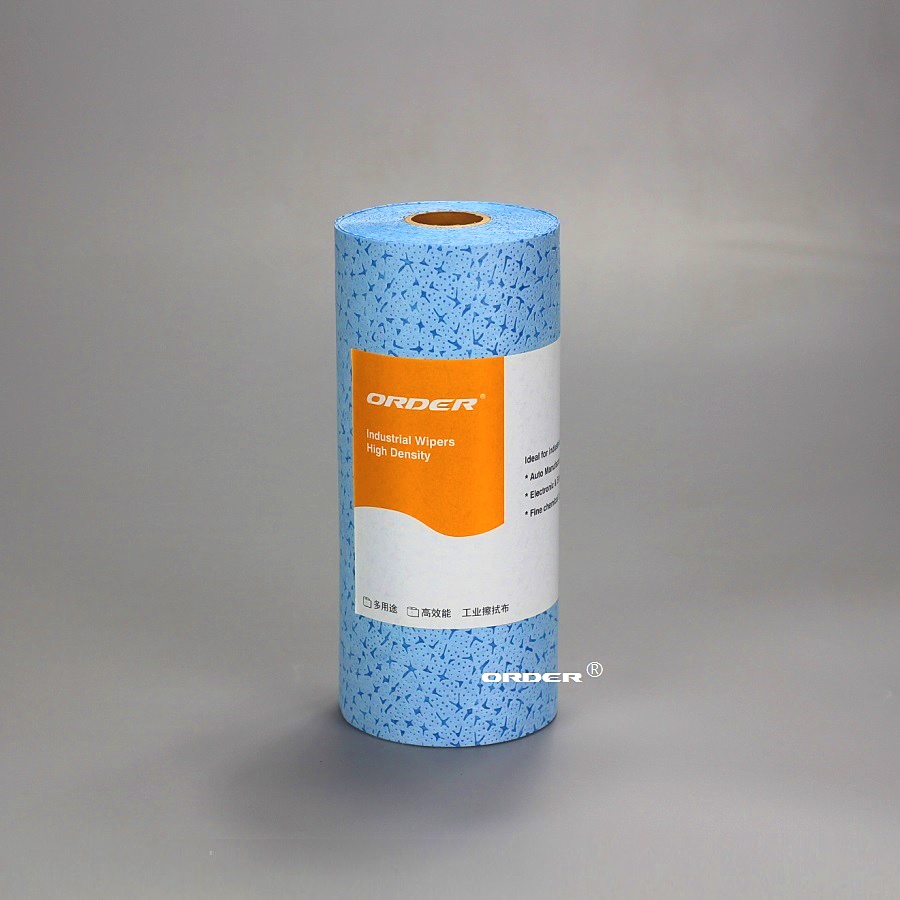
A durable solvent-resistant wiper may be appropriate where abrasion and chemical exposure occur together. A representative option is available here:
 White Spunlaced Nonwoven Brag Box Cleaning WipesA representative light-duty maintenance wipe with absorbency and abrasion resistance, supplied in a brag box for solvent wiping and equipment cleaning.View Product →
Dispenser compatibility is part of the specification, not an accessory decision. A wall stand that fits one core size may not fit another, and a floor stand with wheels may be preferred where the cleaning point moves. Buyers should confirm roll width, roll diameter, core inner diameter, perforation pitch, and pull direction before approving artwork or packaging.
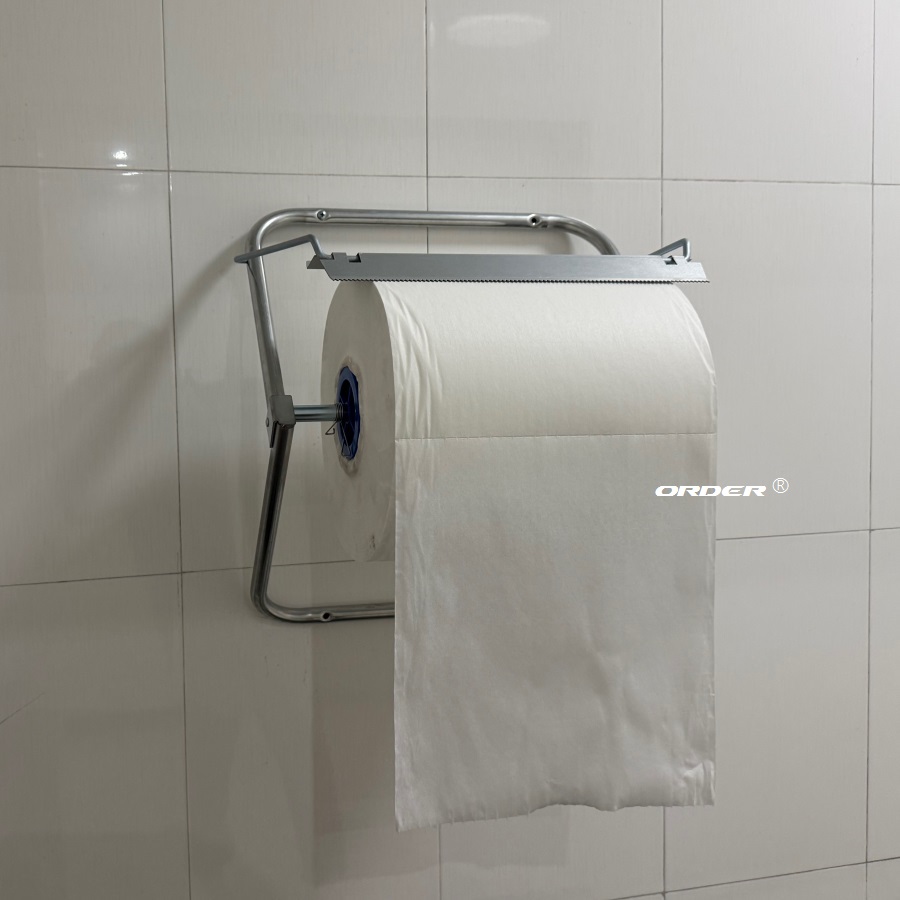 Wall-Mounted Jumbo Roll Wiper Dispenser for Industrial WorkshopsA wall-mounted dispenser for jumbo nonwoven wiper rolls up to 38 cm wide; confirm roll and core dimensions before specifying.View Product →
Industrial cleaning wipes manufacturing should be audited against measurable release criteria. A common basis weight tolerance is ±3% to ±5%, but the buyer should state the acceptable range for the actual application. Absorbency can be tested by oil or water uptake rate and capacity. Lint can be assessed by wipe testing on a dark surface or by particle counting where cleanroom use is intended. Tensile strength should be checked in both dry and wet conditions, because many nonwovens lose strength after saturation.
For solvent and precision cleaning, ask for compatibility data on the specific chemistry and contact time. For cleanroom supply, confirm the targeted ISO 14644 class, packaging integrity, and particle shedding level. For medical or food-adjacent use, request the relevant hygiene and migration documentation rather than relying on a general “clean” claim. Lot-to-lot consistency is often more important than a single impressive test result, because a change in fiber supplier or bonding temperature can alter the feel and performance of the finished wipe.
| Check | Typical method or target | Procurement risk if skipped |
|---|---|---|
| Basis weight | Measured in gsm against an agreed tolerance | Sheet count, absorbency, and cost per task drift |
| Wet tensile | Pull test after controlled saturation | Wipes tear during solvent or heavy soil removal |
| Lint and particles | Dark-surface wipe test or particle count | Residue on tools, optics, or painted surfaces |
| Perforation strength | Pull force at the perforation line | Rolls break at the dispenser or feed poorly |
| Packaging seal | Visual and seal-integrity check | Moisture pickup, contamination, or damaged pallets |
Custom industrial cleaning wipes projects usually vary in size, fold, color, basis weight, packaging, and dispenser design. The manufacturing risk is not only tooling cost. A new fold can change line speed, a new fiber blend can change absorbency, and a new printed film can add lead time. Buyers should freeze a golden sample before mass production, define a change-control process, and agree on how deviations will be handled.
Minimum order quantity should be reviewed by component rather than by finished wipe alone. A custom dispenser may require a higher MOQ than the roll itself, and a custom printed bag may add weeks to the schedule. For repeat orders, keep raw material lot records and finished-product samples so that complaints can be traced to a specific run. A broader technical selection guide for B2B buyers is available at this B2B wipe selection guide, which can help frame internal trials before a supplier visit.
A factory visit should confirm capability rather than only showroom presentation. Ask to see the nonwoven input specification, the converting line for the intended fold, the in-process inspection records, and the packaging area. If the supplier claims cleanroom or medical supply, check the controlled environment, gowning practice, and particle monitoring records.
Order Cleanroom’s Suzhou-based operation, founded in 2006, supports OEM/ODM work across nonwoven wiping products, including folded wipers, jumbo rolls, pop-up boxes, and dispenser accessories. That breadth is useful only when the specification is tight. Buyers should still test the proposed wipe on the actual soil, tool, or surface, because a material that performs well on a sample panel may behave differently on a workshop floor.
If a specification is still open, contact the manufacturer with the cleaning task, current format, monthly volume, and target performance range. That brief is more useful than a product name, and it gives the manufacturing team a clear basis for material, fold, and packaging recommendations.
Industrial cleaning wipes manufacturing succeeds when the material, converting format, and quality checks match the work being done. A tape roll that feeds reliably, a folded wiper that opens without tearing, or a jumbo roll that survives a solvent-heavy shift is not an accident. It is the result of a defined fiber blend, controlled basis weight, tested perforation, and packaging that protects the product. Buyers who specify those details before comparing prices usually get fewer interruptions, lower waste, and a more predictable cost per cleaning task.
If you are interested in our products, please consult us

 contact us


 English
 日本語
 简体中文