2026.09.24
 Blog
Blog
Content
When a nail polish remover wipe leaves lint on the nail plate or needs three extra passes to clear a gel layer, the weak point is rarely the polish remover itself. More often, the wipe material is what slows down the service. Nail wipes are a one-time-use item, but they determine how quickly and cleanly a manicure or pedicure can be finished. In a salon, that affects labor time, product usage, and client satisfaction. The purchasing decision should therefore be practical rather than decorative. A well-designed nail wipe keeps its form when soaked, releases the solvent evenly, and leaves no fibers behind.
Cotton pads and makeup remover pads can work for occasional use, but they are not designed for acetone and repeated rubbing. Cotton fibers absorb liquid unevenly, and short fibers can stay on the nail or cuticle. Professional nail wipes are manufactured from materials such as meltblown polypropylene (PP) or spunlace nonwoven blends. These fibers are bonded, not woven, so the surface remains stable under pressure.
This structure matters in real use. Acetone and isopropyl alcohol are aggressive solvents that can break down the binder in low-quality wipes. If the wipe disintegrates, the solvent reaches the skin for longer than intended, and the operator has to stop and start again. A stable synthetic wipe supports the soak-off technique because it keeps the liquid inside the pad and spreads it across the nail without dripping.
For gel polish removal, the requirement is even higher. Gel coats are thicker and need a wrapped pad that stays in place for several minutes under foil. A cheap cotton pad will tear when wrapped or pulled. A meltblown PP wipe usually maintains enough wet strength to complete the full cycle.
Another practical point is the need for a wipe to be lint-free not only when dry, but also when wet. When the fabric is soaked with acetone, a loose structure creates short fibers that can stick to the nail surface. This is especially visible with colored gel polish, where fibers can appear as white specks under the topcoat. A thermally bonded nonwoven has fewer free fiber ends, which is why it performs better in this regard.
Meltblown PP has become a common choice for nail salons because it handles polar solvents well. The fibers are microfine and thermally fused. This gives the wipe a dense, lint-free surface that does not shed when rubbed over a hard nail. It also picks up polish pigment quickly, which means fewer strokes to finish the job.
Spunlace nonwoven wipes are produced with high-pressure water jets that physically entangle the fibers. The result is a softer, more flexible sheet. A typical blend is cellulose with polyester, which gives a balance of absorbency and drape. These wipes are good for clients with sensitive skin and for lash adhesive work, but they are more expensive to produce and may take up more solvent than the nail service actually needs.
The table below compares the key factors for buyers deciding between the two material systems.
| Factor | Meltblown PP | Spunlace (cellulose/polyester) |
|---|---|---|
| Absorbency | Fast, high solvent pickup | Moderate to high, slower release |
| Lint reduction | Excellent, thermally bonded | Good when hydroentangled tightly |
| Solvent resistance | Excellent with acetone and IPA | Good with polar solvents |
| Softness vs. skin contact | Firmer, slightly abrasive | Softer, lower friction |
| Cost per wipe | Lower at high volume | Higher |
| Typical use | Gel soak-off, polish removal | Sensitive skin, lash adhesive |
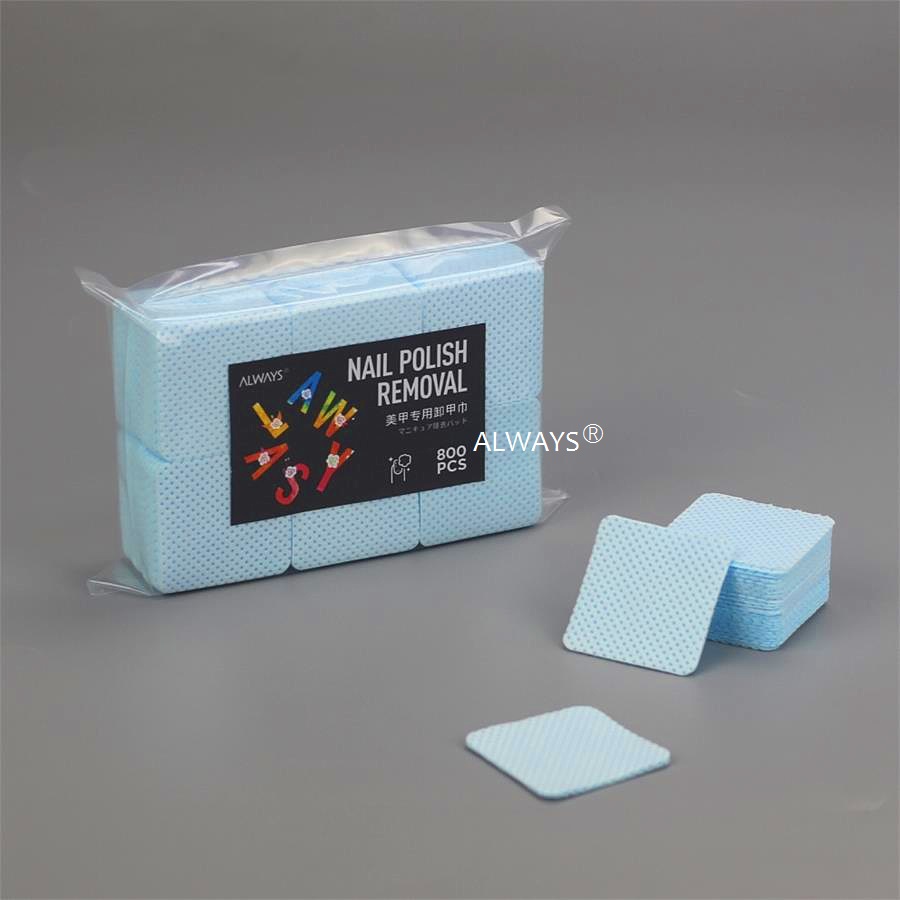 Meltblown PP Lint-Free Nail Wipes for Salon Polish RemovalThese 5 cm square wipes are made of 100% meltblown polypropylene, offering a soft, strong, and absorbent option for nail polish removal. Their lint-free design makes them suitable for both gel and acrylic services.View Product →
The 5 cm x 5 cm square is the standard size for nail wipes because it covers the nail plate while remaining small enough to wrap around a fingertip. Some salons prefer slightly larger pads for pedicure work. Smaller formats around 3 cm x 3 cm are used for lash extension adhesive cleaning, where precision and minimal solvent are preferred.
Thickness determines how much liquid the pad holds. A lighter wipe may hold enough acetone for one nail before drying out. A heavier fabric holds enough for two or three nails, which reduces the number of pads used per client. For a busy salon, that difference is not cosmetic; it affects the daily consumable budget.
Most nail wipes in the market fall between 30 and 60 gsm. At the lower end, the wipe is lightweight and cost-effective, but it may need to be replaced twice per nail. At the higher end, the fabric feels more substantial and holds more liquid, but the cost per wipe increases. A common commercial choice is around 40 gsm meltblown PP, which provides a good balance between absorbency and cost.
Packaging also matters. A bag of 100 or 200 wipes is straightforward for refilling a station. A pop-up box gives one-handed access and keeps remaining pads covered between services. A flat pack with a peel-off seal is convenient for home use or for a traveling service. The right format follows the workflow, not the other way around.
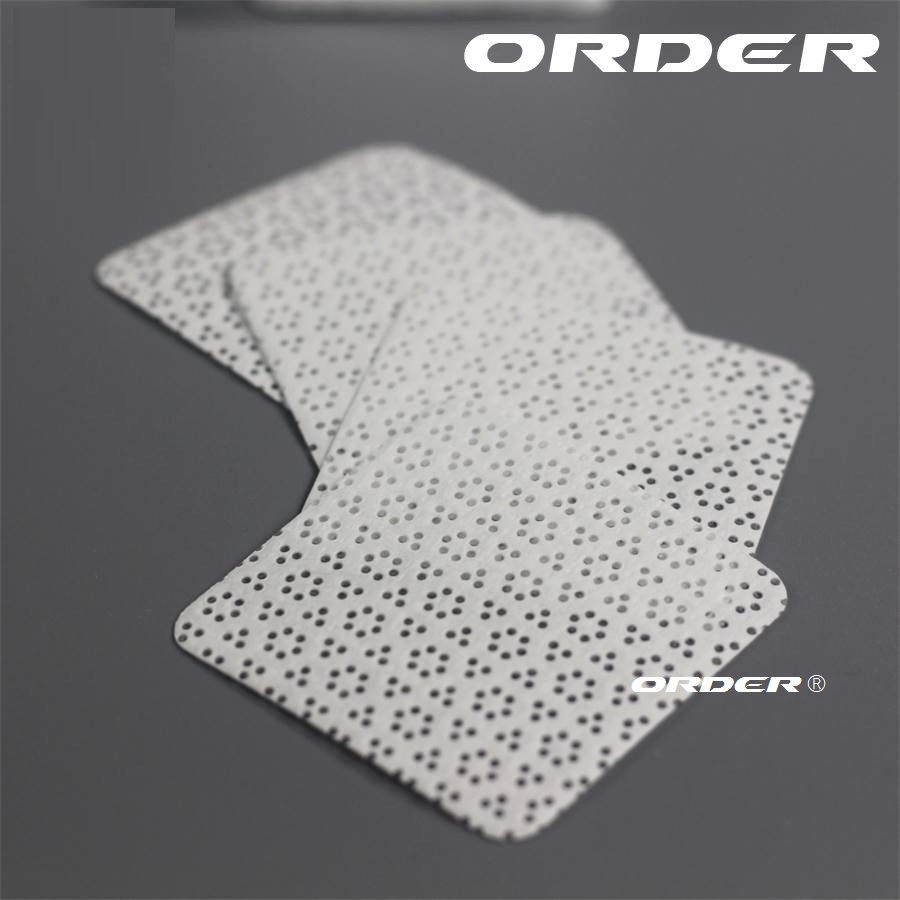 5cm Square Embossed Meltblown PP Nail Wipes, 100 per BagThis 100-count pack features embossed meltblown PP wipes in the standard 5 cm size, designed for use with polish remover and finishing on nail extensions. The round-corner flat sheet format is easy to dispense.View Product →
Before committing to a supplier, run a simple batch test with the same polish remover used in the actual service process. First, soak a wipe in acetone and rub it across a clean, dark surface to see if any fibers shed. Second, check whether one wipe holds enough liquid to clear a full nail without being replaced. Third, pull the wipe out of its intended packaging and wrap it around a finger to test whether it tears at the corners.
These checks reveal most quality problems in under ten minutes. They matter because a bad batch is often discovered only after the wipes have been stocked and used in a client service. The cost of a failed product is not just the price of the wipes, but also the client confidence and the technician time lost.
A very light wipe with a fluffy surface may seem convenient for a home user, but in a salon it becomes a hidden cost. The technician uses more solvent, spends more time, and may have to repeat the removal if the pad breaks. This is why salon-grade nail wipes are usually made from a dense, thermally bonded nonwoven rather than a loose cotton-type material.
Ask the supplier about their process control. Do they test absorbency and tensile strength on a regular schedule? Is the production line dust-controlled? Do they have traceability for raw material batches? These questions do not take long to answer, and the responses reveal how much risk a buyer will carry.
When the order size grows, the selection question changes. Instead of asking which wipe feels nice, the buyer has to ask which supplier can reproduce the same specification at scale. A manufacturer that runs its own nonwoven line can adjust the fiber blend, loft, and color without sourcing converted products from a third party. This flexibility is important for private-label brands that want a custom size or a unique package design.
Cost is not only about unit price. It is also about consistency. If the absorbency or tensile strength varies from batch to batch, the brand will either lose money on returns or lose customers on quality. A supplier that inspects each lot and maintains a dust-controlled environment reduces that risk. That is why the supplier behind the product is worth investigating as carefully as the product itself. For a cost-effective nail towel manufacturer, the ability to control production stages usually translates into stable price and repeatable quality.
When an order involves custom printing or a specific package design, early alignment matters even more. A factory that has already produced nail wipes for beauty brands can advise on the fiber type, gsm range, and bag material that are most suitable for acetone exposure. This reduces trial-and-error during product development.
For some buyers, the most important question is whether the supplier can handle private label requirements such as a custom logo on the bag or a specific folding pattern. The folding style affects how easily the wipe dispenses from a pop-up box. Interfolded or flat-stack designs are both common, but they require different machinery. A supplier with in-house converting capabilities can support both.
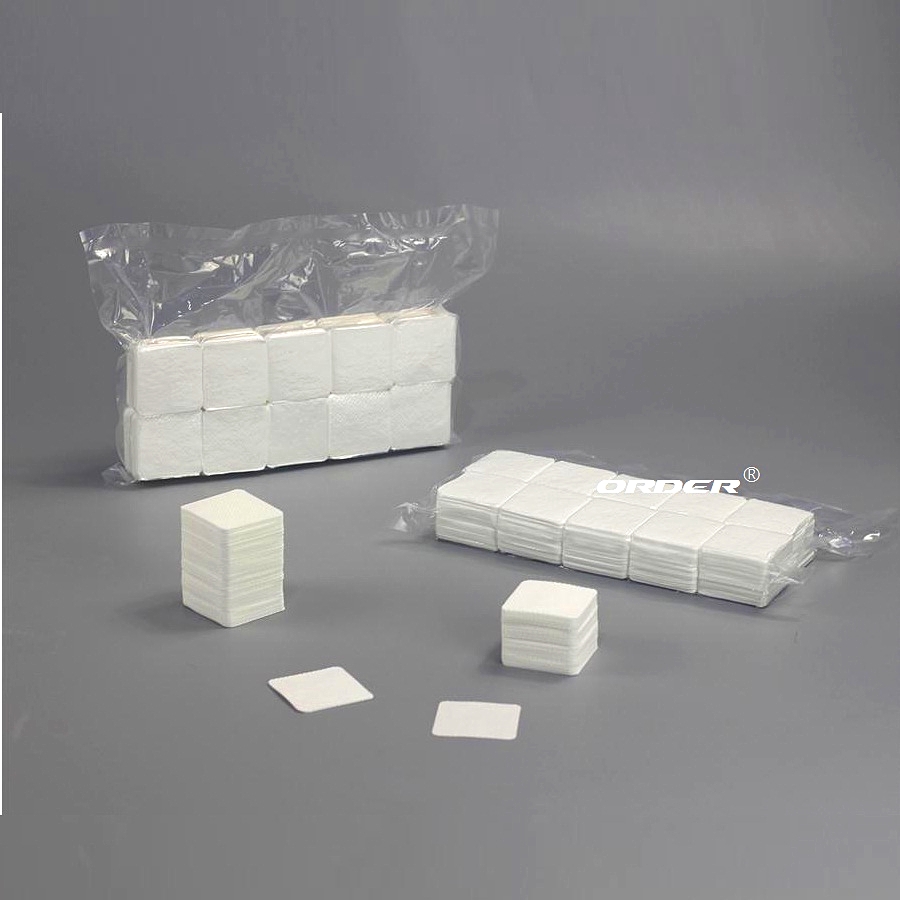 Wholesale Dry Nail Polish Remover Wipes in Bag PackThese meltblown PP wipes come in a bag pack for salon use, with customizable material and packaging options. They are lint-free and can be used for personal or professional nail care, including eyelash adhesive cleaning.View Product →
The decision can be reduced to four checks. First, the wipe must not shed lint after being soaked in acetone; drag it over a black surface and observe. Second, one wipe should hold enough solvent to clean one full nail without needing replacement. Third, it should remain intact when pulled from a pop-up box or wrapped around a finger. Fourth, the supplier must show that the same specification can be delivered every time.
For salon use, test against the actual removal process and the actual solvent in use. For private-label projects, discuss material, size, color, and package format with the manufacturer early so that the qualification process can be repeated at scale.
If you are interested in our products, please consult us

 contact us


 English
 日本語
日本語
 简体中文
简体中文