2026.10.01
 Blog
Blog
Content
A maintenance team replaced its dry rags with canisters of anti-bacterial industrial wet wipes just before shutdown season. Two weeks in, the wipes worked. By week four the crew was pulling four at a time to find one still damp, and tool handles were being wiped with something closer to dry cloth. Nothing on the label had changed; the wipe inside the canister had.
An anti-bacterial wet wipe is not one product. It is four decisions made together: the substrate that decides whether the wipe holds liquid, the chemistry that decides what actually dies and how long it takes, the saturation ratio that decides whether the last sheet in the pack is still usable, and the dispenser that decides whether any of it survives a shift. Get the substrate right and the chemistry wrong, and you have a clean surface rather than a disinfected one.
The active is in the liquid, never in the fabric. Four chemistries do most of the work in industrial wet wipes.
Contact time is the number buyers skip. A 70% alcohol wipe may claim a 3-log reduction in 30 seconds on a clean, non-porous surface; quat products often need one to five minutes at the tested concentration. If the liquid flashes off before that time is up, the claim does not apply. Note too that 3-log means 99.9% and 5-log means 99.999%.
Most industrial wet wipes are cleaners with a disinfectant in them, not the reverse: the wipe has to lift cutting fluid, oil film and dust before the active reaches anything, so a single pass over a soiled surface cleans but does not disinfect. Our note on the disinfection principles behind wet wipes covers the microbiology in more depth.
Water-based anti-bacterial liquid needs a hydrophilic, wet-strong substrate. Oil and solvent wiping needs something else, and most cross-application mistakes start here.
| Substrate | Liquid retention and wet strength | Lint | Best fit | Watch-outs |
|---|---|---|---|---|
| Spunlace viscose / polyester, 60–80 gsm | Holds three to four times its weight | Low | Shop floors, panels, tools | Higher cost per sheet |
| Meltblown polypropylene | Low for water, high for oil and solvent | Medium | Degreasing, paint and print prep | Poor water retention |
| Airlaid cellulose with binder | Very high absorbency | High | Janitorial tasks, spill pickup | Binder softens in alcohol |
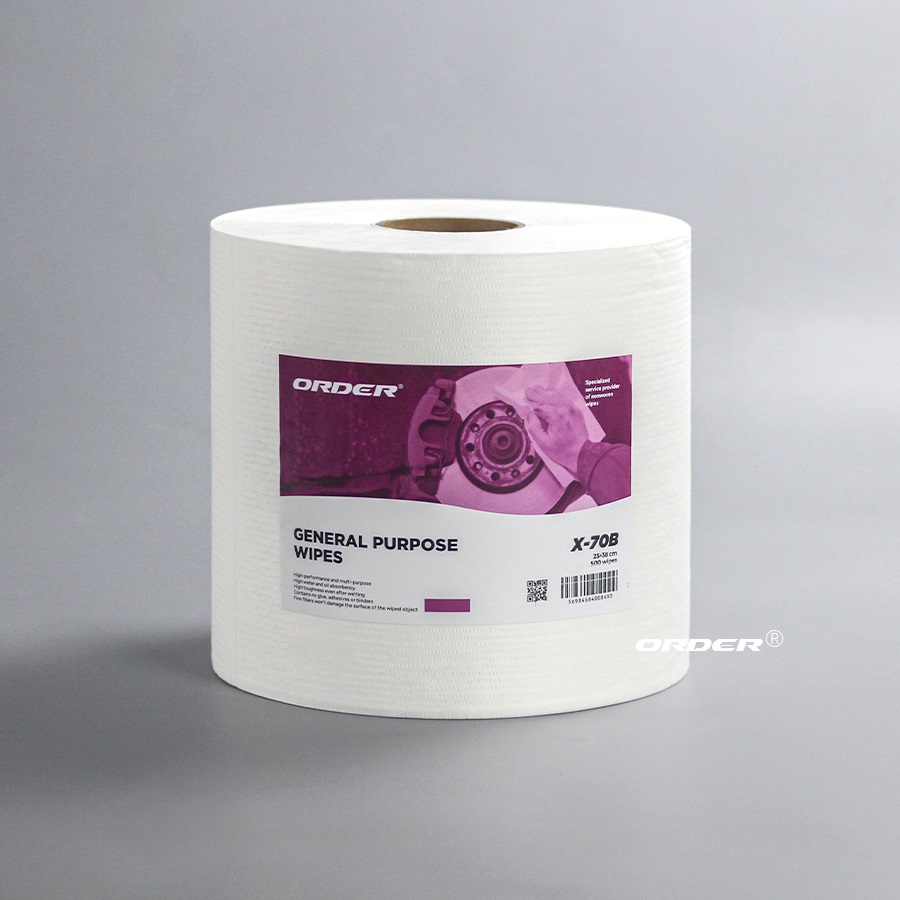
| Cellulose / polyester hydroentangled, 68–80 gsm | Strong when wet, reusable | Low to medium | Jumbo-roll maintenance, large flat areas | Needs a dispenser to stay wet |
| Polyester knit or cleanroom nonwoven | Moderate liquid load, very clean | Very low | Electronics, optics, ISO Class 5–7 | Premium price; quat residue conducts |
Basis weight on nonwoven lots commonly swings 12–18%, which changes how much liquid a sheet carries. If the specification says only "nonwoven", expect the pack to behave differently between orders. Name the fibre blend, the weight with a tolerance — 68 gsm ±5%, for example — and the wet tensile strength if the wipe meets rough metal.
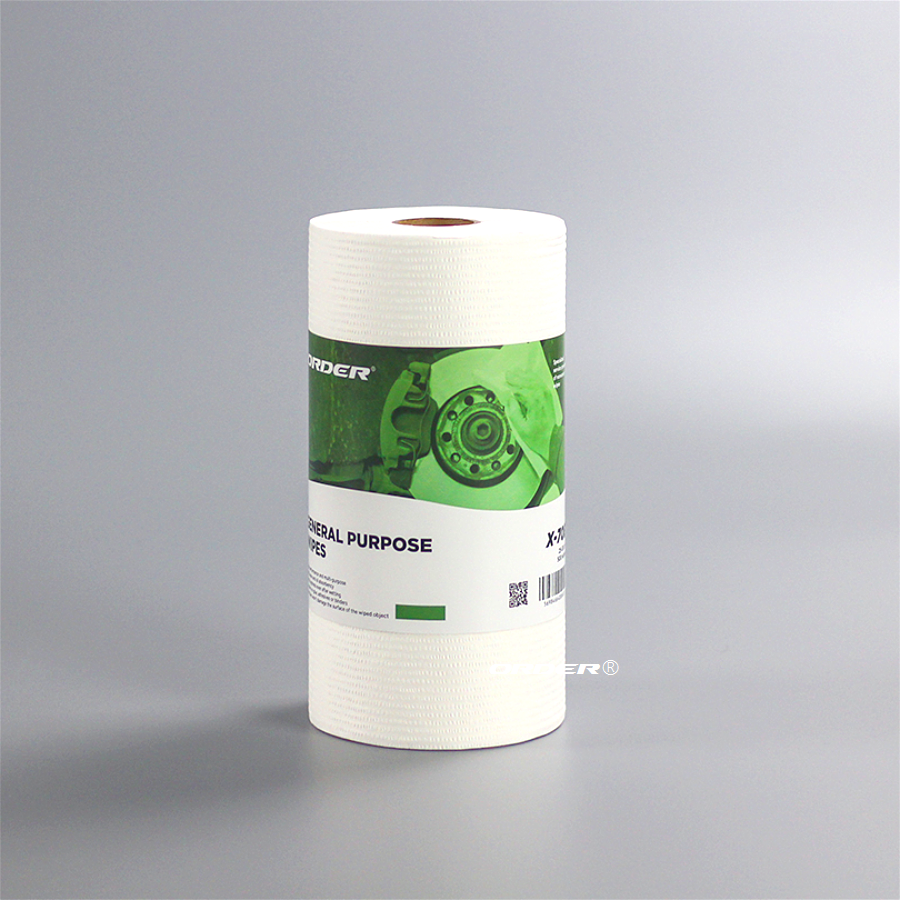
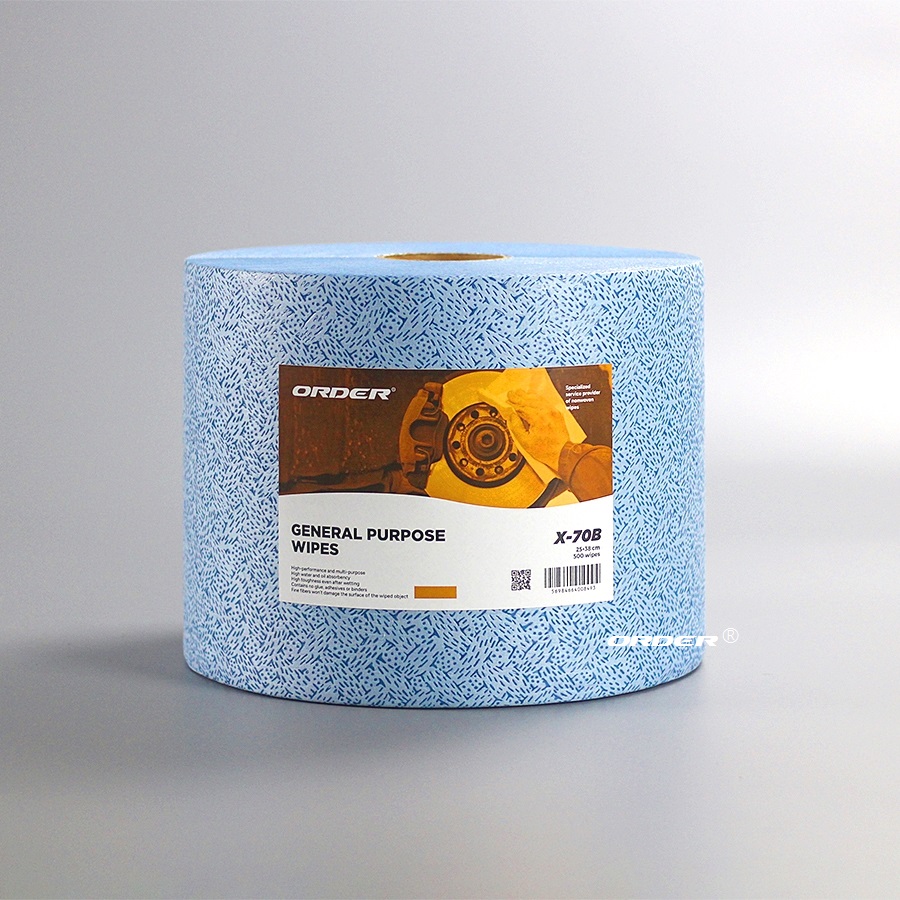
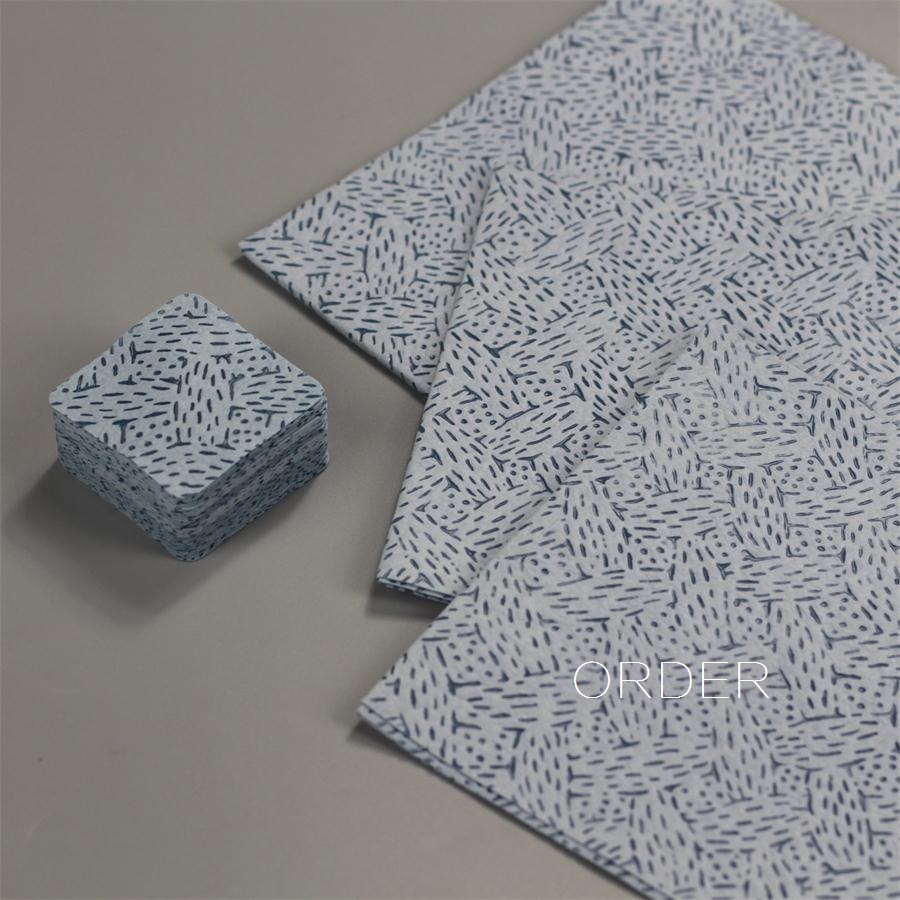 Blue Perforated Meltblown Polypropylene Jumbo Roll Industrial WipersBlue 100% meltblown polypropylene perforated jumbo roll wipers, 32 cm by 25 cm, 717 per dispenser; review fibre blend, basis weight and saturation.View Product →
Saturation ratio is grams of liquid per gram of dry fabric, and industrial wet wipes normally run between 2.5:1 and 4:1. Below 2.5:1, the top sheets in an open canister dry out within days, especially in a workshop above 25 °C. Above 4:1, liquid pools at the bottom, the first sheets drip, and the interleaved fold sticks so the user pulls three or four at once — quietly raising consumption by 15–30% and cancelling the cost advantage of a cheaper pack.
Ask for liquid load per sheet in grams, not a percentage. A 30 × 30 cm sheet at 70 gsm weighs 6.3 g dry; at a 3:1 ratio it carries roughly 19 g of liquid. That single figure tells you the coverage one pack should deliver.
Packaging decides whether the ratio holds. Foil-sealed canisters with a snap lid keep moisture far better than a plain screw cap, and some facilities buy dry canister wipes and saturate them on site with their own approved chemistry, keeping the formulation under their own control. Ask for an evaporation test: weight loss after 30 days at 40 °C is a fair proxy for a two-year shelf-life claim.
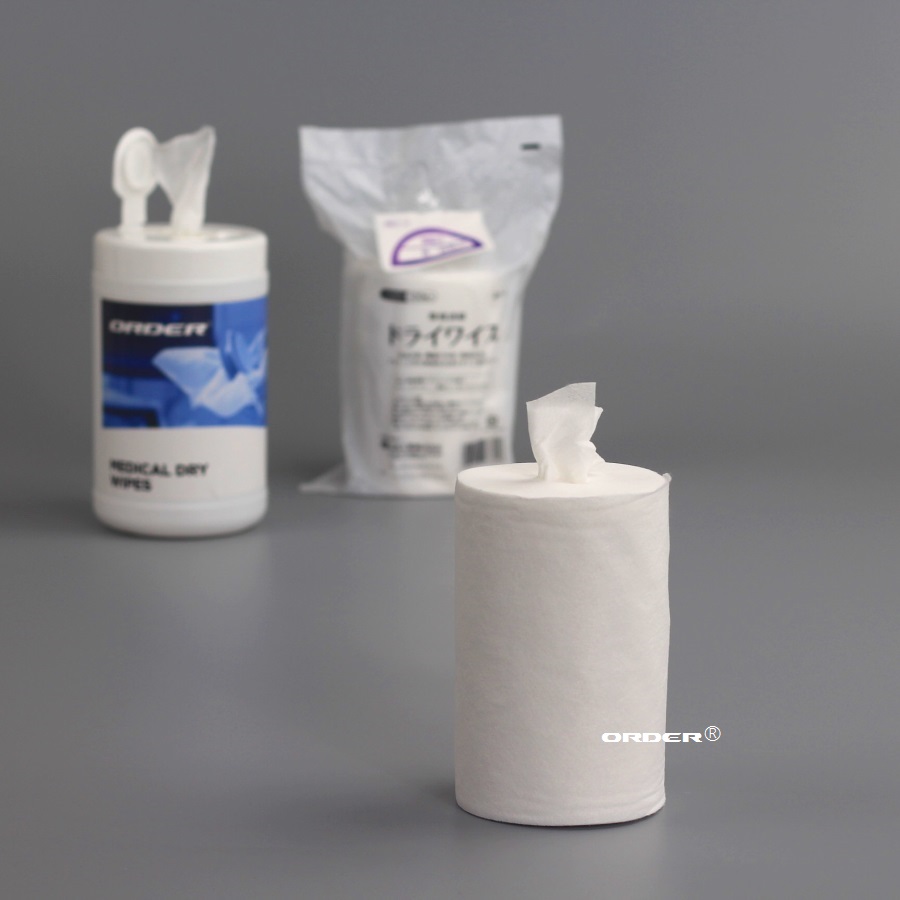 Pull-Out Perforated Rayon Viscose Dry Roll Wipes in CanisterDry 45 gsm rayon/viscose nonwoven roll wipes, 18 cm by 15 cm, 160 per roll in reusable canister; saturate with approved chemistry after compatibility testing.View Product →
The disinfectant that cleans a workbench can damage the thing beside it. Test a 100 × 100 mm area for 60 seconds before committing.
Where a wipe has to cross from the shop floor into a cabinet or an optics bench, use a cleanroom-grade presaturated wipe. IPA-saturated nonwoven wipes leave no film and evaporate cleanly, which keeps them the default for precision work.
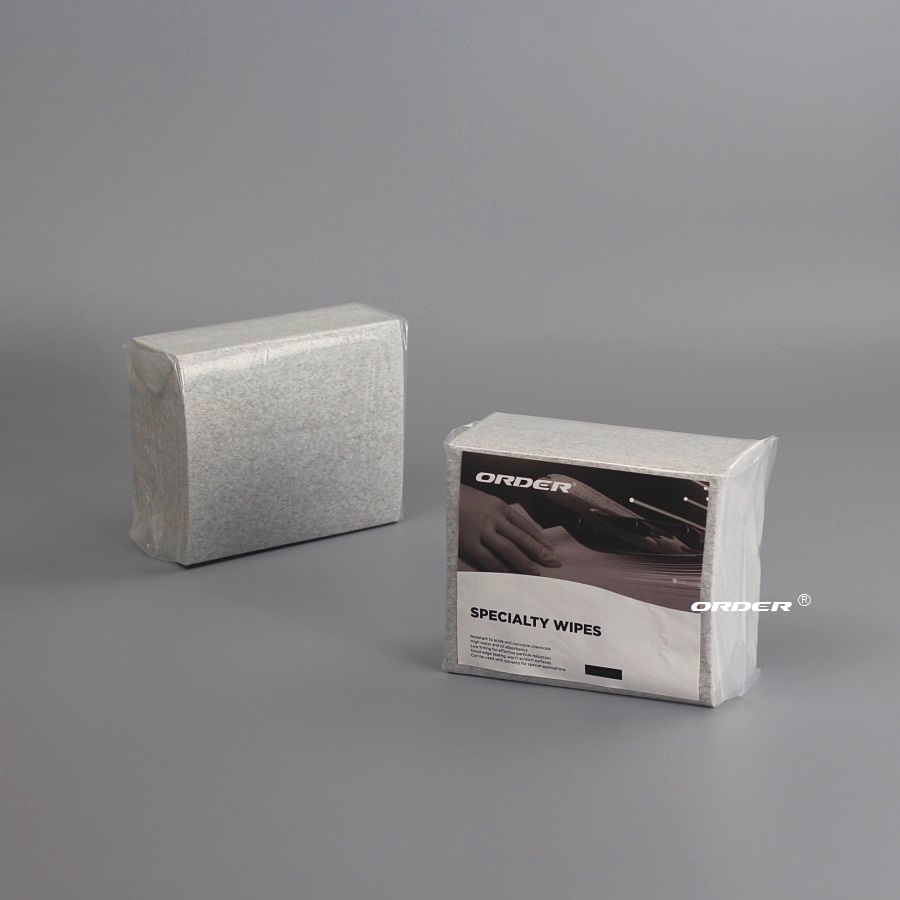
 Electronic-Grade IPA Presaturated Meltblown Polypropylene Precision Cleaning WipesPresaturated with 99.9% electronic-grade IPA, these 40 gsm meltblown polypropylene wipes, 10 cm by 12.5 cm, come 50 per foil-packed box; review test reports.View Product →
Put these on one page and attach the test reports behind them.
That last item is not paperwork for its own sake. In the EU, a wipe making an anti-bacterial claim on the pack is either a treated article or a biocidal product, and the documentation depends on which. In China, disinfectant wipes are filed with the provincial health authority. A supplier who cannot say which category applies has not finished the compliance review.
Cost per wipe is the wrong metric; cost per completed cleaning task is the right one. Run a two-week trial with one crew on one line, and record four numbers: wipes used per task, seconds to clean a defined area, defect rate if the area feeds a paint step, and the weight of a bottom-of-pack sheet on day 14.
Then watch dwell time in real use. If an operator wipes a panel and puts a hand on it two seconds later, the contact time was two seconds, whatever the label says. The fix is usually a realistic contact time plus brief training, not a stronger chemistry.
For saturation figures, substrate options and test reports before you commit to an order, request the specification sheet and a sample and run the same trial on your own line.
Anti-bacterial industrial cleaning wet wipes usually fail for unglamorous reasons: a substrate that will not hold water, a contact time nobody can meet, a saturation ratio that leaves the last third of the pack dry, or a dispenser that lets the top sheet evaporate. Specify the four together, and the wipe that arrives in month six will still behave like the sample did in week one.
If you are interested in our products, please consult us

 contact us


 English
 日本語
日本語
 简体中文
简体中文