2026.01.01
 Blog
Blog
Content
In the world of professional cleaning, not all cloths are created equal. Blue leaning cloths have emerged as a recognizable standard, a versatile and high-performance tool trusted by janitorial staff, detailers, and facility managers alike. The characteristic blue color is more than a simple aesthetic choice; it often serves as a visual code, signaling specific material properties and intended uses, from achieving a streak-free shine on glass to tackling heavy industrial grime. This comprehensive guide explores the material science, varied applications, and economic rationale behind these essential tools. We will delve into the distinct features of microfiber blue leaning cloths for glass, the rugged durability of industrial heavy duty blue leaning cloths, and the specialized nature of chemical resistant blue leaning cloths. Furthermore, we will address practical sourcing and lifecycle questions, such as where to buy blue leaning cloths in bulk and how to maximize the value of reusable and washable blue leaning cloths.
The effectiveness of a leaning cloth is fundamentally determined by its material composition and construction. The iconic blue color is frequently applied to advanced fabrics engineered for specific tasks. A premier example is microfiber, typically a blend of polyester and polyamide. This material is split during production to create fibers finer than a human hair, resulting in a massive surface area that excels at trapping dust, absorbing moisture, and lifting grease without leaving behind lint or streaks. This makes it the ideal choice for microfiber blue leaning cloths for glass. For more demanding tasks, fabric weight (measured in grams per square meter, or GSM) and weave become critical. A higher GSM indicates a denser, more absorbent, and durable cloth. Waffle weaves and terry loops enhance scrubbing power and liquid retention, which are key features of industrial heavy duty blue leaning cloths. For environments dealing with solvents or acids, the material itself may be a specially treated synthetic blend designed to resist chemical degradation, defining the category of chemical resistant blue leaning cloths. Quality is also evident in the details, such as laser-cut or thermally sealed edges that prevent fraying and extend the cloth's usable life through multiple wash cycles.
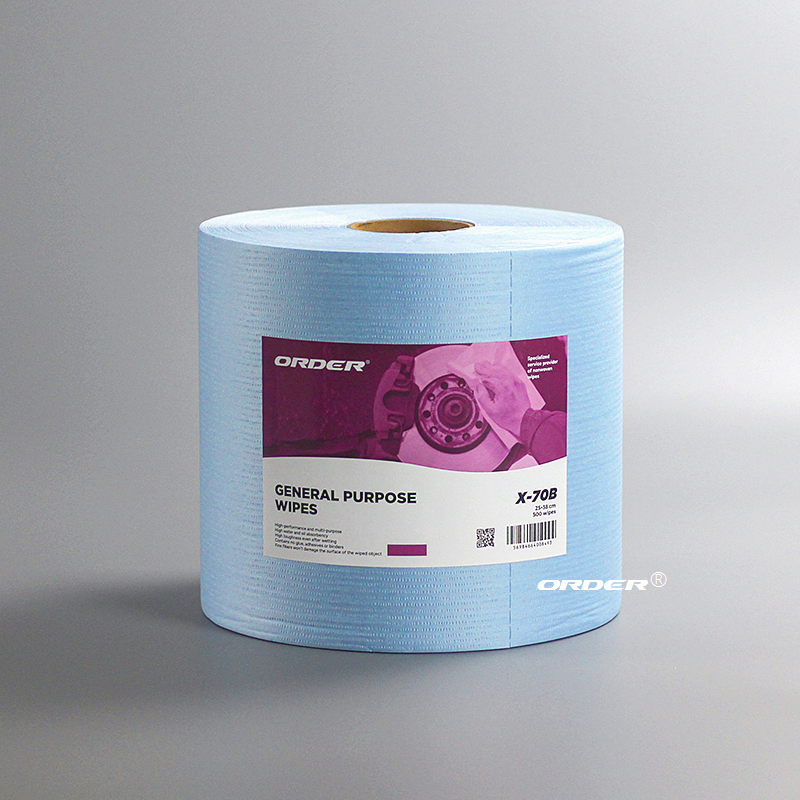
Selecting the correct blue cloth is about matching its engineered properties to the specific cleaning challenge. For applications where clarity and shine are paramount, such as windows, mirrors, and glass tabletops, the choice is clear: microfiber blue leaning cloths for glass. These cloths are designed to be ultra-fine and often have a smooth, flat weave to glide over surfaces without leaving lint or water streaks. Their electrostatic properties attract and hold dust particles rather than pushing them around. In contrast, workshops, garages, and construction sites present a different challenge—grease, heavy dirt, metal shavings, and abrasive grime. Here, industrial heavy duty blue leaning cloths come into play. These are typically made from a robust blend of materials with a high GSM and a textured weave (like a deep waffle pattern) to provide the scrubbing power and absorbency needed to clean machinery, floors, and tools. In laboratories, manufacturing facilities, or professional kitchens, cleaning often involves harsh agents. Chemical resistant blue leaning cloths are formulated from polymers that maintain their structural integrity and cleaning performance when exposed to acids, alkalis, solvents, and disinfectants, ensuring safety and effectiveness.
| Cloth Type / Search Term | Ideal Material & Construction | Primary Use Case | Key Performance Feature |
| Microfiber for Glass | Fine, split microfiber (70/30 or 80/20 blend), low GSM, flat weave. | Windows, mirrors, screens, eyeglasses, chrome fixtures. | Lint-free, streak-free polishing and drying. |
| Industrial Heavy Duty | Blended yarns (poly/cotton), high GSM (300+), waffle or heavy terry weave. | Mechanical workshops, garage floors, construction cleanup, agricultural equipment. | High absorbency, abrasion resistance, and durability for tough grime. |
| Chemical Resistant | Treated synthetic fibers (e.g., polypropylene, specialized polyester). | Laboratories, industrial plants, professional kitchens, janitorial closets with strong cleaners. | Resists degradation and maintains strength when exposed to harsh chemicals. |
| General Purpose / All-Rounder | Medium-weight microfiber or blended cloth. | Dusting, wiping countertops, cleaning bathrooms, automotive interiors. | Good balance of absorbency, softness, and versatility for daily tasks. |
Beyond performance, the shift toward professional blue leaning cloths is driven by compelling economic and operational logic. The most significant advantage is their reusability. Investing in high-quality reusable and washable blue leaning cloths represents a move away from the recurring cost and waste of disposable paper towels or cheap, single-use rags. While the initial purchase price is higher, the total cost of ownership (TCO) is dramatically lower over time. A single microfiber cloth can be washed and reused hundreds of times if cared for properly, performing consistently better with each use as it breaks in. This leads directly to the question of where to buy blue leaning cloths in bulk. For businesses, sourcing from industrial janitorial suppliers, specialty distributors, or direct from manufacturers offers access to commercial-grade quality, volume-based pricing discounts, and detailed product specifications. Bulk purchasing ensures consistency across cleaning teams and reduces the frequency of reordering, simplifying inventory management.
In professional settings, particularly those with strict hygiene standards like healthcare, hospitality, and food service, blue cloths are rarely used in isolation. They are part of a larger, best-practice system known as color-coded cleaning. In this system, different colored cloths (and often mop heads) are assigned to specific areas or tasks to prevent cross-contamination. For example, blue is commonly designated for general-purpose cleaning of low-risk areas like offices or glass. Red might be used for restroom surfaces, green for kitchen and food prep areas, and yellow for clinical surfaces. Implementing such a system with your blue leaning cloths and other colors enhances safety, complies with health regulations, and simplifies staff training. Proper care is the final pillar of this system. Reusable and washable blue leaning cloths must be laundered separately by color in hot water with a mild detergent, avoiding fabric softeners which can clog microfiber, and tumble-dried on low heat or air-dried to preserve their technical properties.
| Color Code (Example) | Assigned Area / Task | Rationale |
| Blue | General Areas, Glass, Dusting | Low-risk zones; prevents general dust from being transferred to sanitary or food areas. |
| Red | Restrooms, Toilets, Urinals | Contains pathogens from sanitary areas to prevent spread. |
| Green | Kitchen Food Prep Areas, Cafeterias | Prevents cross-contamination with allergens and bacteria in food zones. |
| Yellow | Clinical Surfaces, Sick Rooms | Isolates cleaning tools used in higher infection-risk environments. |
Blue is a common, visually distinct color used for coding in professional cleaning systems. When it comes to glass, the color is less important than the material. However, microfiber blue leaning cloths for glass are specifically engineered for this task. The ultra-fine fibers are split to create millions of tiny hooks that grab and remove dust, grease, and moisture at a microscopic level without scratching. The tight weave leaves no lint behind. Their superior performance compared to cotton or paper towels is due to this material science, not the color itself, though the blue often signifies this high-grade, lint-free variety.
The lifespan of industrial heavy duty blue leaning cloths varies based on fabric quality, GSM, and wash conditions. A high-quality cloth with a GSM of 300 or more, made from durable blended yarns with thermally sealed edges, can typically withstand 100 to 300+ commercial laundry cycles. Key to longevity is proper care: wash in warm water, avoid bleach and fabric softener (which degrade fibers), and tumble dry on low heat. The cloth should be retired when it becomes thin, stiff, or shows significant fraying, as its absorbency and cleaning efficacy will be compromised.
When determining where to buy blue leaning cloths in bulk, focus on specifications, not just price. Key factors include: Material Composition: (e.g., 70% polyester/30% polyamide for microfiber). GSM Weight: Heavier for tougher jobs. Certifications: Look for products tested for chemical resistance or lint-free performance. Edge Type: Sealed edges last longer. Supplier Reputation: Choose a distributor known for consistent quality and reliable logistics. Always request samples to test absorbency, durability, and suitability for your specific tasks before committing to a large order.
No, it is not recommended. To preserve the cleaning power and lifespan of your reusable and washable blue leaning cloths, especially microfiber, they should be washed separately. Washing with cotton towels or clothing can cause lint to transfer and clog the microfiber's pores. Furthermore, grease and oils picked up by the cloths can transfer to other fabrics. Wash them in warm water with a small amount of liquid detergent, and never use bleach or fabric softener, as these chemicals coat and break down the microfibers, destroying their effectiveness.
For typical household or office cleaning with common all-purpose or glass cleaners, standard microfiber or blended cloths are sufficient. Chemical resistant blue leaning cloths are a specialized tool for specialized environments. They are necessary when cleaning involves strong acids (e.g., toilet bowl cleaners, rust removers), caustic alkalis (e.g., degreasers, oven cleaners), solvents (e.g., acetone, alcohol-based sanitizers), or concentrated disinfectants. In these cases, using a resistant cloth prevents the fabric from breaking down, melting, or leaching chemicals back onto surfaces during subsequent uses, ensuring safety and cloth integrity.
If you are interested in our products, please consult us

 contact us


 English
 日本語
日本語
 简体中文
简体中文