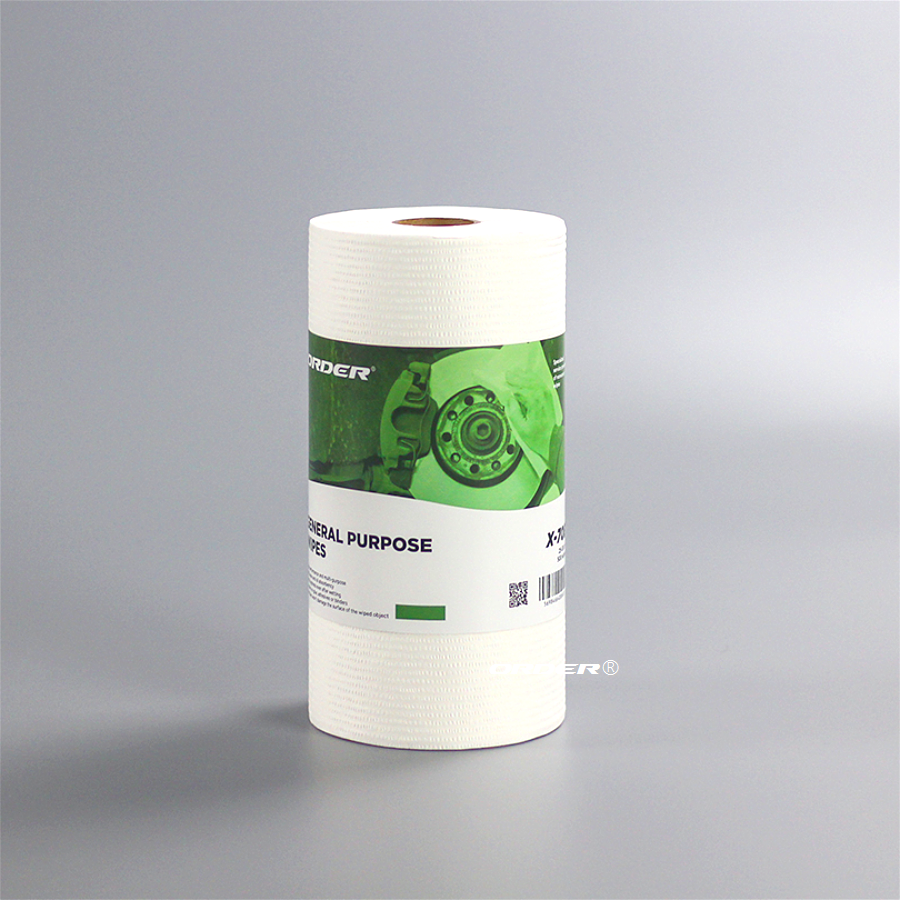
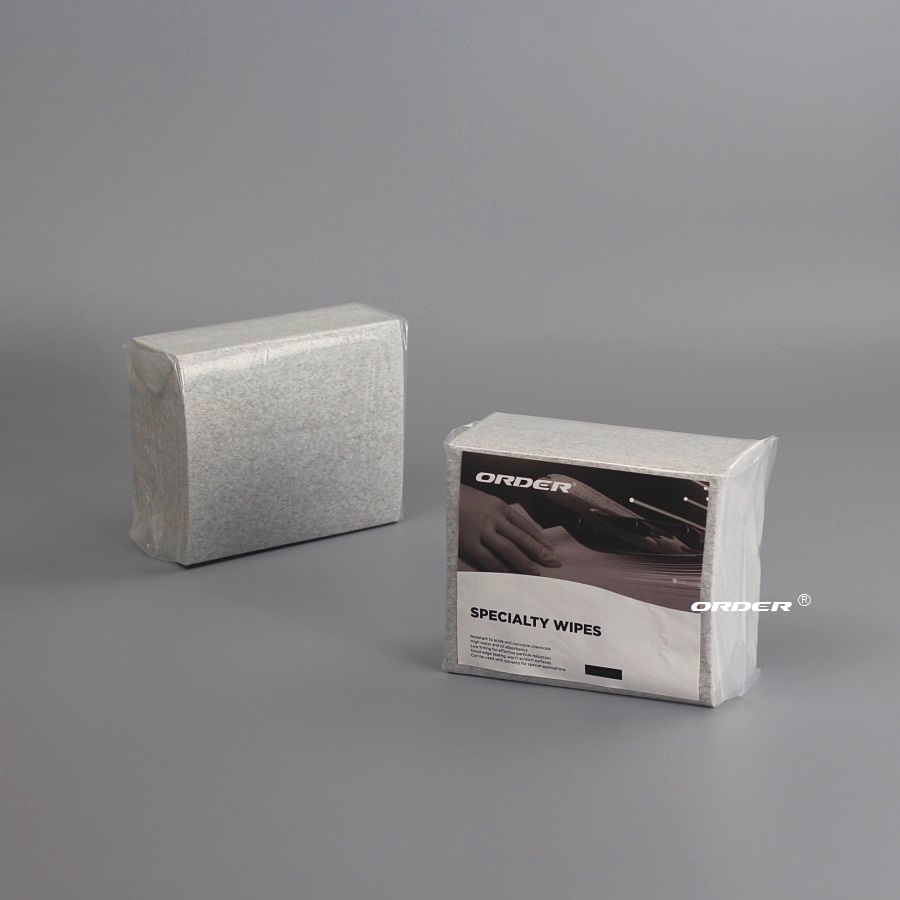
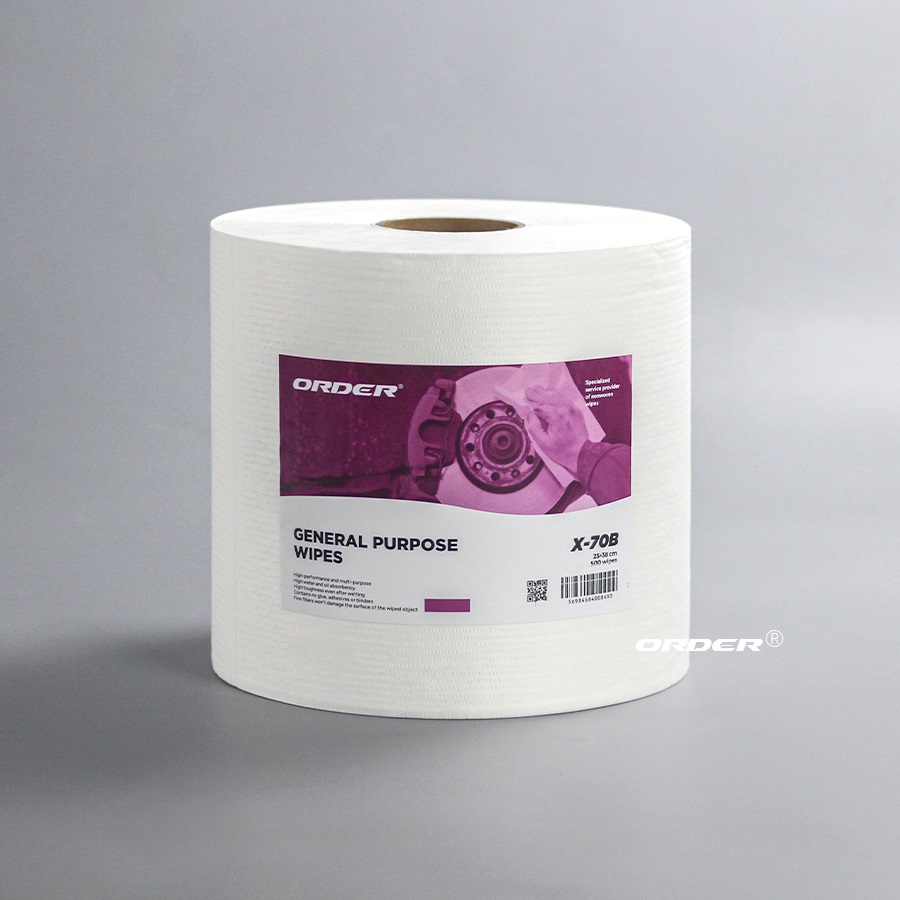
In precision manufacturing environments — from semiconductor wafer fabrication to ISO-regulated medical device assembly — the selection of a cleaning wipe is a critical engineering decision, not a consumable afterthought. The wrong wipe can introduce ionic contamination, generate electrostatic discharge (ESD), shed sub-micron fibers, or react chemically with sensitive substrates, resulting in yield losses, regulatory non-compliance, and costly rework cycles.
This article provides an engineer-grade analysis of industrial wiping solutions across five high-value application domains, covering material science fundamentals, cleanroom qualification protocols, sustainability compliance frameworks, medical-grade sourcing requirements, and OEM procurement structures. It is designed to support B2B procurement managers, quality engineers, and industrial distributors making informed, specification-driven sourcing decisions.
Section 1: The Material Science Behind Nonwoven Fabric Wipes for Electronics Manufacturing
1.1 Why Standard Wipes Fail in Electronics Environments
Electronics and optoelectronics manufacturing operates under ISO 14644-1 cleanroom classifications, where acceptable airborne particle concentrations are measured in particles per cubic meter at 0.1 µm and above. In an ISO Class 5 environment (formerly Class 100), no more than 100,000 particles ≥0.1 µm per m³ are permitted. A single wipe that sheds fibers or releases extractable contaminants can breach these thresholds, triggering mandatory environmental monitoring events.
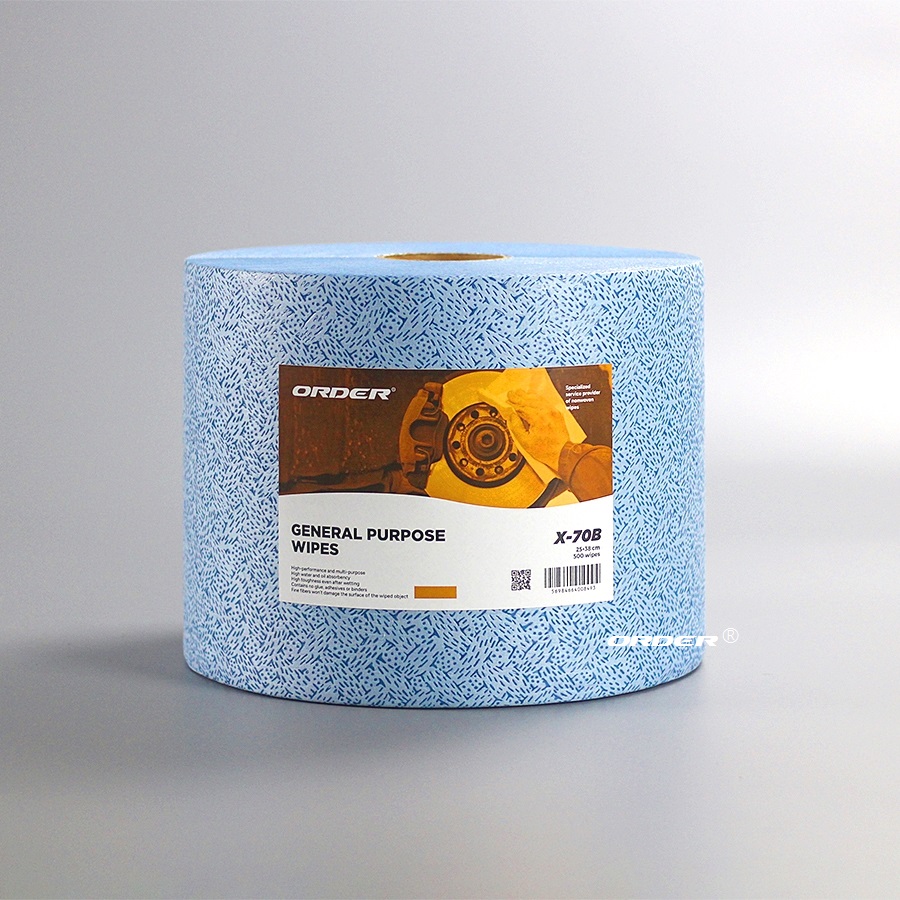
Nonwoven fabric wipes for electronics manufacturing are engineered to address failure modes that consumer-grade wipes cannot. These failure modes include:
- Fiber shedding: Woven and knitted substrates have cut edges that release loose fibers upon mechanical use. Nonwoven wipes — particularly those produced via hydroentanglement (spunlace) or meltblown processes — have thermally or hydraulically bonded fiber networks that minimize loose particle generation. Laser-sealed edges eliminate mechanical cutting debris entirely.
- Ionic contamination: Sodium (Na⁺), potassium (K⁺), and calcium (Ca²⁺) ions from wipe substrates or additives (softeners, optical brighteners, biocides) can migrate onto PCBs, wafers, or optical surfaces, causing electrochemical corrosion, dielectric failures, and lens hazing. Qualified wipes must pass extractable ion testing per IEST-RP-CC004 or equivalent protocols, typically requiring Na⁺ and K⁺ levels below 5 ppb.
- ESD and triboelectric charging: Synthetic fibers (polyester, polypropylene) inherently generate triboelectric charge when wiped across a surface. In environments housing MOSFET devices with gate oxide thicknesses below 5 nm, electrostatic discharge events above 100V can cause latent or catastrophic failure. ESD-safe wipes incorporate carbon or metallic fiber blends, or are treated with permanent antistatic finishes, maintaining surface resistivity within the ESD-safe range (1×10⁴ to 1×10¹¹ Ω/sq per IEC 61340-5-1).
- Solvent incompatibility: Electronics cleaning protocols frequently employ isopropyl alcohol (IPA, 70–99.9% v/v), acetone, methyl ethyl ketone (MEK), or deionized (DI) water. Wipes must demonstrate solvent compatibility without substrate degradation, color bleeding, or release of plasticizers. Polyester-cellulose blends (70/30 or 55/45 by weight) are commonly validated for this purpose due to their dual-phase absorptive capacity.
1.2 Substrate Selection: Polyester, Cellulose, and Blended Nonwovens
The fiber composition of a nonwoven fabric wipe for electronics manufacturing directly determines its functional performance profile:
- 100% polyester: High tensile strength, excellent chemical resistance, very low particle generation, ESD-treatable. Preferred for Class 5 and above. Limited absorbency (~500% of dry weight for fine-denier hydroentangled constructions).
- Polyester-cellulose blend (55/45 or 70/30): The industry standard for Class 6–8 environments. Cellulose component improves absorbency (up to 800% of dry weight), while polyester provides structural integrity and chemical resistance. Must be verified for ionic contamination from cellulose processing chemicals.
- 100% lyocell (Tencel): High-purity cellulose fiber produced via closed-loop solvent spinning (NMMO process). Combines the absorbency of natural cellulose with lower extractable content than traditional wood-pulp-based substrates. Increasingly used in optoelectronics and display panel manufacturing.
- Microfiber polyester: Fibers below 1 denier (diameter <10 µm) create extremely high surface area per gram of material, enabling superior particulate capture and liquid absorption. Applicable for lens and optical surface cleaning where mechanical abrasion must be minimized.
1.3 Process Validation and Qualification Testing
Before a wipe substrate enters a qualified production environment, it must pass a documented qualification protocol. Procurement teams should require the following test data from suppliers:
- Non-volatile residue (NVR) per IEST-RP-CC004.3: typically <1.0 mg per wipe for Class 5 applications
- Particle count per unit area (0.5 µm and above) per IEST-RP-CC004.3
- Extractable cations (IC analysis): Na⁺, K⁺, Ca²⁺, Mg²⁺, NH₄⁺ in ppb
- Extractable anions: Cl⁻, SO₄²⁻, NO₃⁻, PO₄³⁻ in ppb
- Total organic carbon (TOC) by combustion method (ASTM D4779 equivalent)
- Surface resistivity per IEC 61340-2-3 (for ESD-safe wipes)
- Absorbency and liquid retention by gravimetric method (INDA IST 10.1)
Section 2: Cleanroom Wipes for Semiconductor Production — Engineering the Zero-Defect Standard
2.1 The Contamination Physics of Advanced Semiconductor Nodes
At the 3nm process node, a single metallic particle of 1.5 nm diameter can bridge adjacent transistor features and cause a short-circuit defect. The relationship between critical particle size and process node follows the International Roadmap for Devices and Systems (IRDS) half-pitch specification, where the critical defect size is approximately 0.5× the minimum feature pitch. At 3nm, this threshold is <1.5 nm — well within the size range of molecular-scale metallic contaminants deposited by inadequately qualified wipes.
Cleanroom wipes for semiconductor production must therefore be manufactured, packaged, and validated to a standard that goes significantly beyond general cleanroom consumable practice. The qualification benchmark is the SEMI F57 standard (Standard for Metallic Contamination of Ultrapure Water Components) in spirit, combined with SEMI E10 and semiconductor-specific internal qualification protocols used by major foundries.
2.2 Manufacturing Environment Requirements for Semiconductor-Grade Wipes
The wipe itself must be manufactured in a controlled environment to avoid in-process contamination of the substrate. Key requirements include:
- Manufacturing cleanroom class: ISO Class 5 (Class 100) or cleaner, with continuous environmental monitoring per ISO 14644-2
- Personnel contamination control: Full bunny suits, gloves, face masks, and air shower entry protocols for all manufacturing personnel
- Water system: DI water at ≥18 MΩ·cm resistivity used for all wet processing steps including washing and pre-wetting
- Edge treatment: Laser cutting or ultrasonic sealing to eliminate mechanical fiber release at wipe perimeter — a critical differentiator vs. die-cut or scissor-cut wipes
- Packaging: Double-bagged in cleanroom-compatible polyethylene, sealed with non-outgassing adhesive, packaged in ISO Class 5 environment
- Lot traceability: Full raw material lot traceability with retention samples for failure investigation support
2.3 Trace Metal and Organic Contamination Thresholds
The following specifications represent current industry practice for cleanroom wipes for semiconductor production at leading-edge nodes. These are engineering reference values — actual fab qualification may impose tighter limits:
| Contaminant Parameter |
Standard Cleanroom Grade |
Advanced Semiconductor Grade |
Test Method Reference |
| Na⁺ (extractable) |
<20 ppb |
<2 ppb |
IC / ICP-MS |
| K⁺ (extractable) |
<20 ppb |
<2 ppb |
IC / ICP-MS |
| Total metals (Al, Fe, Cr, Cu, Zn) |
<50 ppb each |
<5 ppb each |
ICP-MS |
| Total organic carbon (TOC) |
<500 µg/wipe |
<50 µg/wipe |
Combustion TOC |
| Silicone (extractable) |
<10 µg/wipe |
<1 µg/wipe |
GC-MS / ICP-OES |
| Particles ≥0.5 µm (per wipe) |
<5,000 |
<500 |
IEST-RP-CC004.3 |
| NVR (100 mL extraction) |
<1.0 mg/wipe |
<0.2 mg/wipe |
IEST-RP-CC004.3 |
2.4 Qualification Protocol for Incoming Lot Acceptance
Semiconductor procurement teams and incoming quality control (IQC) departments should implement a formal wipe qualification procedure for each supplier lot. A recommended minimum protocol includes:
- AQL sampling per ANSI/ASQ Z1.4 or equivalent (typically AQL 1.0, Level II for critical consumables)
- Extractable ion testing on ≥3 wipes per lot via DI water extraction (100 mL, 30 min ultrasonic agitation) followed by ion chromatography (IC)
- Particle generation test per IEST-RP-CC004.3 on ≥3 wipes per lot
- Visual inspection for edge integrity, color consistency, and packaging seal integrity
- Dimensional verification (±2 mm tolerance on length and width)
- Retention of reference samples for traceability and failure investigation
Section 3: Biodegradable Cleaning Wipes for Industrial Use — Regulatory Drivers and Material Performance
3.1 The Regulatory Landscape Driving Biodegradable Adoption
The transition to biodegradable cleaning wipes for industrial use is not primarily market-driven — it is regulation-driven. The following legislative frameworks are reshaping industrial wipe procurement across major sourcing markets:
- EU Single-Use Plastics Directive (SUPD, 2019/904/EU): Prohibits single-use plastic products containing >50% plastic content by weight in certain categories. While industrial wipes are not directly regulated under Annex I, downstream OEM customers in the EU are increasingly requiring supply chain compliance for ESG reporting purposes.
- EU Taxonomy Regulation (2020/852/EU): Defines "substantial contribution to circular economy" and "pollution prevention" criteria that affect procurement policies of EU-listed companies. Suppliers providing non-biodegradable consumables may face deselection in supplier audits aligned with this framework.
- ISO 14855-1:2012 (Biodegradability under controlled composting): The primary standard for certifying biodegradability of nonwoven substrates. Materials must achieve ≥90% conversion to CO₂ within 180 days under composting conditions. Lyocell, bamboo fiber, and unbleached wood pulp substrates typically achieve this threshold.
- REACH Regulation (EC 1907/2006): Restricts substances of very high concern (SVHC) in products placed on the EU market. Wipe substrates containing certain fluorinated compounds, phthalate plasticizers, or formaldehyde-based binders may require substitution.
- China GB/T 33610 series: National standards for wet wipes covering physical properties and microbial limits; relevant for manufacturers exporting from China and ensuring product compliance in domestic markets.
3.2 Biodegradable Fiber Technologies: Performance vs. Conventional Synthetics
A common procurement concern is that biodegradable cleaning wipes for industrial use sacrifice performance for sustainability. Engineering data challenges this assumption:
- Lyocell (Tencel) nonwoven: Produced by dissolving wood pulp cellulose in N-methylmorpholine N-oxide (NMMO), a non-toxic, closed-loop solvent. Tensile strength: 40–60 N/5cm (dry), 30–45 N/5cm (wet) — comparable to polyester-cellulose blends. Absorbency: 600–900% by weight. Biodegrades >90% within 90 days under composting (ISO 14855-1). Minimal extractable ions due to solvent-free residuals.
- Bamboo fiber nonwoven: Mechanically processed bamboo (no chemical pulping), retaining natural antimicrobial properties from bamboo-kun. Tensile strength lower than lyocell (~25–35 N/5cm wet) but acceptable for light-duty industrial cleaning, food service, and surface decontamination. Biodegrades in 120–180 days.
- Wood pulp/polyester hybrid (30% wood pulp / 70% bio-based PET): Bio-based PET derived from sugarcane (e.g., Braskem I'm greenTM PET) offers equivalent mechanical performance to petroleum-based PET with up to 70% lower carbon footprint (ISO 14067 LCA). Compostability is limited by PET fraction, but total fossil carbon content is significantly reduced.
- Hydroentangled cotton nonwoven: 100% natural cotton, fully biodegradable, high wet strength due to hydroentanglement bonding. Superior absorbency (up to 1,000% by weight). Higher particle generation than synthetic alternatives — more suitable for food processing and general industrial use than semiconductor environments.
3.3 ESG Documentation Requirements for Industrial Procurement
B2B purchasers requiring biodegradable cleaning wipes for industrial use for sustainability reporting should request the following documentation from suppliers:
- ISO 14855-1 biodegradation test report from an accredited third-party laboratory
- Carbon footprint declaration per ISO 14067 (Product Carbon Footprint)
- Material safety data sheet (SDS/MSDS) per GHS/UN standards confirming absence of REACH SVHC substances
- FSC or PEFC certification for wood-derived fiber content (if applicable)
- Oeko-Tex Standard 100 or GOTS certification for consumer-contact applications
- Manufacturer's environmental management system certification (ISO 14001)
Section 4: Bulk Lint-Free Wipes for Medical Device Cleaning — Regulatory Compliance Architecture
4.1 Regulatory Framework for Medical Device Manufacturing Environments
The selection of bulk lint-free wipes for medical device cleaning is governed by a multi-layered regulatory architecture that varies by jurisdiction but converges on common principles of contamination control, biocompatibility, and process validation:
- ISO 13485:2016: The primary quality management standard for medical device manufacturers. Section 7.5.2 (Cleanliness of product) and Section 7.5.11 (Control of monitoring and measuring equipment) indirectly mandate that cleaning materials — including wipes — are qualified and controlled. Wipe procurement must be part of the approved supplier list (ASL) process with documented qualification evidence.
- FDA 21 CFR Part 820 (Quality System Regulation): Requires that cleaning materials used in device manufacturing be controlled and validated as part of production process controls (§820.70). The upcoming transition to ISO 13485 alignment under the Medical Device Single Audit Program (MDSAP) reinforces harmonized requirements.
- EU MDR 2017/745: Annex I, Chapter I, Section 3 requires manufacturers to demonstrate that devices are designed, manufactured, and packaged in a way that minimizes risk from contaminants. Wipes used in assembly and packaging environments fall within this scope.
- ISO 14644-1/-2: Defines cleanroom classification and monitoring requirements. Medical device manufacturing environments typically operate at ISO Class 7 or 8 (Class 10,000–100,000), with sterile product areas at ISO Class 5 (Class 100). Wipe selection must align with the classification of the manufacturing area.
- USP <1072> (Disinfectants and Antiseptics): Relevant for pre-wetted wipes used in disinfection protocols, requiring evidence of efficacy against specified organisms and compatibility with surface materials.
4.2 Biocompatibility and Extractables Testing
Bulk lint-free wipes for medical device cleaning used in contact with or near finished devices must be evaluated for biocompatibility risk. Even indirect contact through residuals left on cleaned surfaces can introduce biocompatibility concerns for implantable or patient-contact devices.
- ISO 10993-1 (Biological evaluation of medical devices): Part 1 provides the risk-based framework for determining which biocompatibility tests are required based on contact nature and duration. For wipes, this typically triggers evaluation of cytotoxicity (ISO 10993-5), sensitization (ISO 10993-10), and potentially irritation.
- Extractables and leachables (E&L) profiling: Per ICH Q3D and USP <1663>/<1664> guidelines, cleaning materials that may leave residues on device surfaces should undergo extractables profiling via GC-MS, LC-MS/MS, and ICP-MS. This is especially critical for wipes used in Class III device or drug-device combination product manufacturing.
- Endotoxin content: Bacterial endotoxins (lipopolysaccharides) from wipe substrates can contaminate device surfaces and cause pyrogenic reactions in patients. Wipes used in terminally sterilized device manufacturing areas should be tested per USP <85> (Bacterial Endotoxins Test), with acceptance criteria defined based on device classification and patient contact route.
- Cytotoxicity (ISO 10993-5): Direct contact extract method or elution method using cell culture (e.g., L929 mouse fibroblast). Required for any wipe substrate where residual material may contact device surfaces in contact with tissue or blood.
4.3 Specification Requirements for Medical-Grade Wipe Procurement
Procurement teams sourcing bulk lint-free wipes for medical device cleaning should mandate the following minimum specifications in supplier qualification documentation:
- Particle shedding per IEST-RP-CC004.3: <500 particles ≥0.5 µm per wipe (for ISO Class 7 environments)
- NVR (water extraction): <2.0 mg per wipe
- Endotoxin content: <0.5 EU/mL per USP <85> LAL assay
- Cytotoxicity: Grade 0–1 per ISO 10993-5 elution method
- Sterility: SAL ≤10⁻⁶ for sterile-packaged variants (ISO 11135 or ISO 11137)
- Dimensional tolerance: ±3 mm on all edges
- Tensile strength (wet): ≥25 N/5cm MD and CD
- Absorbency: ≥400% by weight (gravimetric method)
- Lot-level documentation with Certificate of Analysis (CoA) and Certificate of Conformance (CoC)
Section 5: OEM Cleaning Wipe Manufacturer Low MOQ — Procurement Structures for B2B Distributors
5.1 Why MOQ Architecture Matters for Industrial Distributors
For industrial distributors, specialty wholesalers, and private-label wipe brands, the minimum order quantity (MOQ) structure of an OEM cleaning wipe manufacturer directly impacts inventory financing costs, SKU portfolio flexibility, and go-to-market speed. High-MOQ suppliers (typically 50,000–500,000 units per SKU per order) create the following structural disadvantages:
- Working capital lock-up: A 200,000-unit MOQ at USD 0.08/wipe represents USD 16,000 of inventory per SKU — multiplied across a 20-SKU portfolio, this requires USD 320,000 of inventory financing before a single sale is made.
- SKU proliferation risk: Testing new product variants (new sizes, substrate grades, packaging formats) requires committing to full MOQ runs before market validation. Low-MOQ structures allow for pilot batches of 5,000–20,000 units per SKU, reducing new product development risk by an order of magnitude.
- Demand volatility exposure: Industrial demand cycles — particularly in semiconductor and electronics manufacturing — can shift ±30% quarter-over-quarter based on fab utilization rates. Low-MOQ procurement allows distributors to match inventory to demand curves rather than absorbing volatility through oversized safety stock.
- Geographic market entry: Entering a new market (e.g., Southeast Asian electronics manufacturing cluster or European medical device OEM ecosystem) typically requires 3–6 months of market development before volume materializes. Low-MOQ pilots enable market entry without the financial risk of full-volume commitment.
5.2 OEM/ODM Customization Scope: What Engineering Teams Should Specify
When engaging an OEM cleaning wipe manufacturer, engineering and procurement teams should develop a comprehensive product specification document covering the following dimensions:
5.2.1 Substrate Specification
- Fiber composition (% polyester / % cellulose / other), fiber denier, and fiber length
- Bonding method: hydroentanglement, thermal bonding, chemical bonding, or combination
- Basis weight (g/m²): typically 40–120 g/m² for industrial applications
- Thickness (mm): measured per EDANA/INDA standard test methods
- Surface texture: plain, embossed pattern (specify pattern geometry and depth), or double-sided differential texture
5.2.2 Form Factor and Processing
- Flat-cut sheets: Specify dimensions (±2 mm tolerance), edge treatment (die-cut, laser-cut, ultrasonic-sealed), and fold configuration (unfolded, 1/4 fold, 1/8 fold, Z-fold, interfold)
- Roll format: Specify core diameter, outer diameter, sheet count per roll, and perforated tear-off length
- Canister/pull format: Define dispenser compatibility (standard 100-sheet canister or custom-diameter canister), sheet interleave configuration, and pre-moistened solution compatibility
- Die-cut shapes: For specialized applications (e.g., optical lens wipes, robotic end-effector cleaning wipes), specify custom die-cut geometry with ±0.5 mm tolerance
5.2.3 Functional Enhancement Options
- Pre-wetted formulations: specify solution composition (IPA concentration, surfactant type, biocide class if applicable), solution load ratio (% by weight), and required shelf life
- ESD-safe treatment: permanent antistatic fiber blend or topical antistatic finish (specify decay time requirement per IEC 61340-5-1)
- Sterile packaging: gamma irradiation or e-beam sterilization (specify SAL requirement and dosimetry validation per ISO 11137)
- Custom printing: logo, substrate grade marking, lot number window — specify ink type (water-based, UV-cured), color (Pantone reference), and bleed requirements
5.3 Supplier Qualification Criteria for OEM Wipe Manufacturers
Not all suppliers claiming OEM cleaning wipe manufacturer low MOQ capability offer equivalent manufacturing credibility. The following qualification criteria distinguish engineering-grade OEM partners from commodity converters:
- Quality management system: ISO 9001:2015 minimum; ISO 13485:2016 for medical-adjacent applications. Request scope certificate and latest external audit report.
- Cleanroom manufacturing capability: On-site cleanroom with ISO classification certificate, continuous monitoring records, and environmental control documentation (HVAC specifications, filter change log).
- Digital process control: Manufacturers with manufacturing execution system (MES) integration can provide real-time SPC (statistical process control) data for critical parameters (basis weight, moisture content, tensile strength) — a strong indicator of lot-to-lot consistency.
- R&D capability: In-house fiber selection expertise, substrate development capability, and formulation chemistry for pre-wetted products. Request evidence of recent product development projects and technical team qualifications.
- Testing laboratory: On-site or dedicated third-party laboratory access for ionic contamination, particle generation, and mechanical property testing. Request lab accreditation certificates (CNAS, ISO 17025, or equivalent).
- International certification portfolio: CE marking for relevant product categories, REACH compliance declaration, RoHS compliance (for electronics-adjacent applications), and food-contact compliance (EU 10/2011 or FDA 21 CFR 177) where applicable.
Suzhou Order Cleanroom Material Co., Ltd., established in 2006 in Suzhou — a city at the center of China's advanced manufacturing cluster — operates a 12,000 m² production base with clean workshop environments, intelligent production equipment, and a digital quality management system providing full-process traceability from raw fiber to finished packaged product. The company has achieved quality management system certification, holds multiple authoritative product certifications, and serves customers in over 30 countries across electronics, semiconductor, medical care, and industrial sectors. Its modular OEM/ODM platform supports all form factors (flat-cut, folded, roll, canister-pull, die-cut) with in-depth customization of substrate composition, size, functional treatment, and packaging — enabling industrial distributors and private-label brands to build competitive product portfolios without the volume constraints of legacy international suppliers.
Section 6: Comparative Evaluation Framework for Industrial Wipe Procurement
6.1 Decision Matrix: Application-to-Specification Mapping
| Application Environment |
ISO Cleanroom Class |
Recommended Substrate |
Critical Spec Parameters |
Key Certifications Required |
| Semiconductor wafer fab (front-end) |
ISO Class 5 (100) |
100% polyester, laser-cut |
NVR <0.2 mg, metals <2 ppb, particles <500/wipe |
SEMI standards, ISO 14644 |
| Electronics PCB assembly |
ISO Class 7–8 |
Polyester-cellulose 70/30 |
ESD-safe, IPA-compatible, NVR <1.0 mg |
IEC 61340-5-1, IEST-RP-CC004 |
| Optical/display manufacturing |
ISO Class 5–7 |
Microfiber polyester or lyocell |
No silicone, no abrasives, <500 particles/wipe |
ISO 14644, OEM-specific qualification |
| Medical device assembly |
ISO Class 7–8 |
Polyester-cellulose or lyocell |
Cytotox Grade 0–1, endotoxin <0.5 EU/mL |
ISO 13485, ISO 10993-5 |
| Industrial equipment cleaning |
Unclassified |
Polyester-cellulose or cotton blend |
High absorbency, solvent resistance, durability |
ISO 9001, REACH compliance |
| Food processing / catering |
Controlled, non-classified |
Biodegradable cotton or bamboo |
Food-contact compliant, no biocides, compostable |
FDA 21 CFR 177, EU 10/2011, ISO 14855 |
6.2 Total Cost of Ownership (TCO) vs. Unit Price
Industrial procurement decisions based solely on per-wipe unit price systematically underestimate total cost of ownership. A rigorous TCO model for cleaning wipe procurement should incorporate the following cost categories beyond unit price:
- Qualification cost: Laboratory testing, engineering time, and production trial costs for supplier qualification. For a new wipe supplier in a semiconductor fab, qualification costs can range from USD 15,000 to USD 80,000 per SKU across analytical testing, cleanroom trials, and yield impact assessment.
- Yield impact cost: A wipe that introduces ionic contamination at a defect density of 0.01 additional defects per cm² on a 300 mm wafer translates to approximately 7 additional defective dies per wafer (assuming 700 dies/wafer). At USD 50 per die, this represents USD 350 per wafer in yield loss — easily exceeding the total annual wipe procurement cost for a mid-size fab in a single month.
- Inventory carrying cost: High-MOQ procurement creates excess inventory carrying costs estimated at 20–30% of inventory value per year (capital cost + storage + obsolescence risk).
- Supplier management cost: Maintaining multiple qualified suppliers vs. a single qualified partner with broad SKU capability has quantifiable audit, documentation, and management overhead differences.
- Regulatory compliance cost: Using non-compliant wipes in regulated environments (MDR, FDA QSR) can trigger FDA 483 observations or EU MDR non-conformities with remediation costs far exceeding procurement savings.
Conclusion
Industrial cleaning wipes operate at the intersection of materials science, contamination control engineering, regulatory compliance, and sustainable manufacturing — a complexity that commodity procurement approaches consistently fail to capture. Whether the application is cleanroom wipes for semiconductor production operating at sub-5-ppb ionic contamination thresholds, nonwoven fabric wipes for electronics manufacturing requiring ESD-safe construction and solvent compatibility, biodegradable cleaning wipes for industrial use meeting ISO 14855-1 compostability requirements, bulk lint-free wipes for medical device cleaning with ISO 10993-5 biocompatibility clearance, or an OEM cleaning wipe manufacturer low MOQ partnership enabling flexible private-label product development — the engineering and commercial stakes are substantial.

 2026.03.05
 Blog
Blog

 contact us


 English
 日本語
日本語
 简体中文
简体中文