2026.03.12
 Blog
Blog
Content
A wiper cleanroom is not a simple cloth. It is a precision-engineered consumable designed to clean and maintain critical environments without introducing contamination. In industries like semiconductor manufacturing, pharmaceutical production, and aerospace assembly, the wrong particle or a trace chemical residue can ruin an entire batch or cause a mission-critical failure. For engineers and quality assurance professionals, selecting the correct cleanroom wiper is a technical decision based on ISO classifications, particle generation, chemical compatibility, and electrostatic discharge (ESD) control. This article provides a detailed guide to understanding and selecting the right wiper for your controlled environment.
Cleanrooms are classified by the number and size of particles permitted per volume of air. An ISO Class 5 environment, for example, allows no more than 3,520 particles of 0.5 microns or larger per cubic meter. A standard household cloth or paper towel, when used in such an environment, would shed thousands of fibers and particles, immediately compromising the cleanroom classification. Cleanroom wipers are manufactured, packaged, and tested to ensure they meet strict limits for particle release, extractable chemicals, and ionic contamination. They are also designed for high absorbency and durability to effectively remove spills and residues without scratching sensitive surfaces.
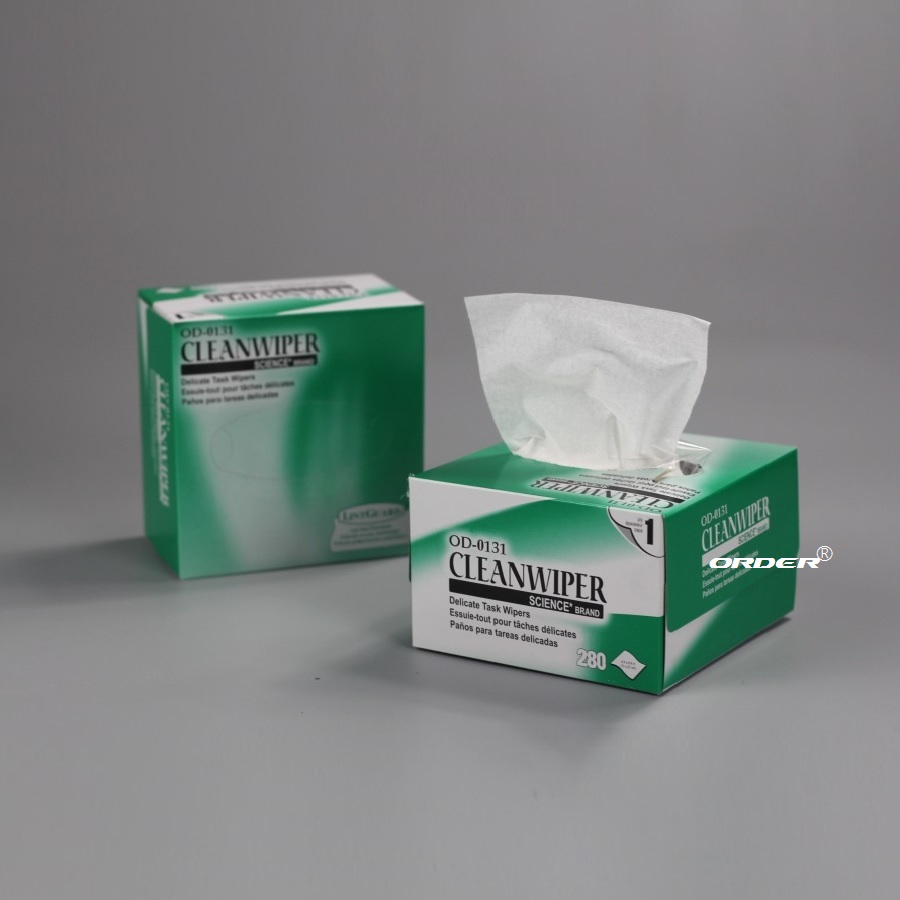
The term lint free cleanroom wipers for ISO class 5 specifies a product suitable for use in high-grade cleanrooms. "Lint free" means the wiper is manufactured from continuous filament yarns or nonwoven fabrics that are bonded or entangled in a way that minimizes the release of fibers. For ISO Class 5 and cleaner environments, wipers must be laundered and packaged in a cleanroom environment to prevent contamination before use. These wipers are typically made from knitted polyester or nonwoven fabrics that have been tested for particle generation using methods like the Helmke Drum Test (IEST-RP-CC004). An engineer selecting a wiper for ISO Class 5 must review the manufacturer's data for particle counts at relevant size thresholds (0.5 microns and larger) and ensure the wiper material is compatible with the surface being cleaned. Using a wiper rated for a lower class (like ISO Class 7) in an ISO Class 5 area is a common but critical specification error.
Sterile cleanroom wipes with isopropyl alcohol are pre-saturated wipes used when both particulate control and biological contamination control are required. Sterility is critical in pharmaceutical compounding, biotechnology labs, and medical device manufacturing. These wipes are gamma-irradiated or ethylene oxide-treated to eliminate viable microorganisms. The isopropyl alcohol (IPA) concentration is typically 70% or 90% with deionized water. The IPA serves as a disinfectant and also helps dissolve organic residues. These pre-saturated wipes ensure a consistent and known amount of solvent is applied to the surface, which is important for process validation. However, engineers must note that IPA can leave non-volatile residues on some surfaces. For optics or sensitive coatings, a different solvent or a rinse step may be required. The shelf life of sterile wipes is also limited, and they must be stored in their sealed packaging until use to maintain sterility.
The selection of a cleanroom wiper involves balancing several performance characteristics. The table below provides a technical comparison of two common categories to aid in the engineering selection process.
In electronics manufacturing, electrostatic discharge (ESD) is a major threat. A discharge as low as 30 volts can damage sensitive components. ESD safe cleanroom wipers for electronics are engineered to prevent the build-up of static charge. Standard cleanroom wipers, even if they are low-particulate, may be made from materials that generate high static charges when rubbed across a surface. ESD-safe wipers are manufactured with carbon fibers or other conductive materials embedded in the fabric. This creates a dissipative pathway that allows static charges to bleed off slowly and safely to ground. They are often packaged in static-shielding bags. Using a non-ESD wiper on a circuit board can generate a charge that damages components or attracts airborne particles to the charged surface.
| Property | Standard Cleanroom Wiper | ESD Safe Cleanroom Wipers for Electronics |
|---|---|---|
| Material Composition | Polyester, cellulose, or polypropylene | Polyester with conductive carbon fibers or coating |
| Surface Resistivity | Typically > 10^12 ohms/square (insulative) | Typically 10^6 to 10^11 ohms/square (dissipative) |
| Static Decay Rate | Slow (holds charge) | Fast (dissipates charge) |
| Packaging | Standard cleanroom polybag | Static-shielding bag |
| Primary Application | General surface cleaning, spill control | Cleaning near sensitive electronics, ESD-protected areas |
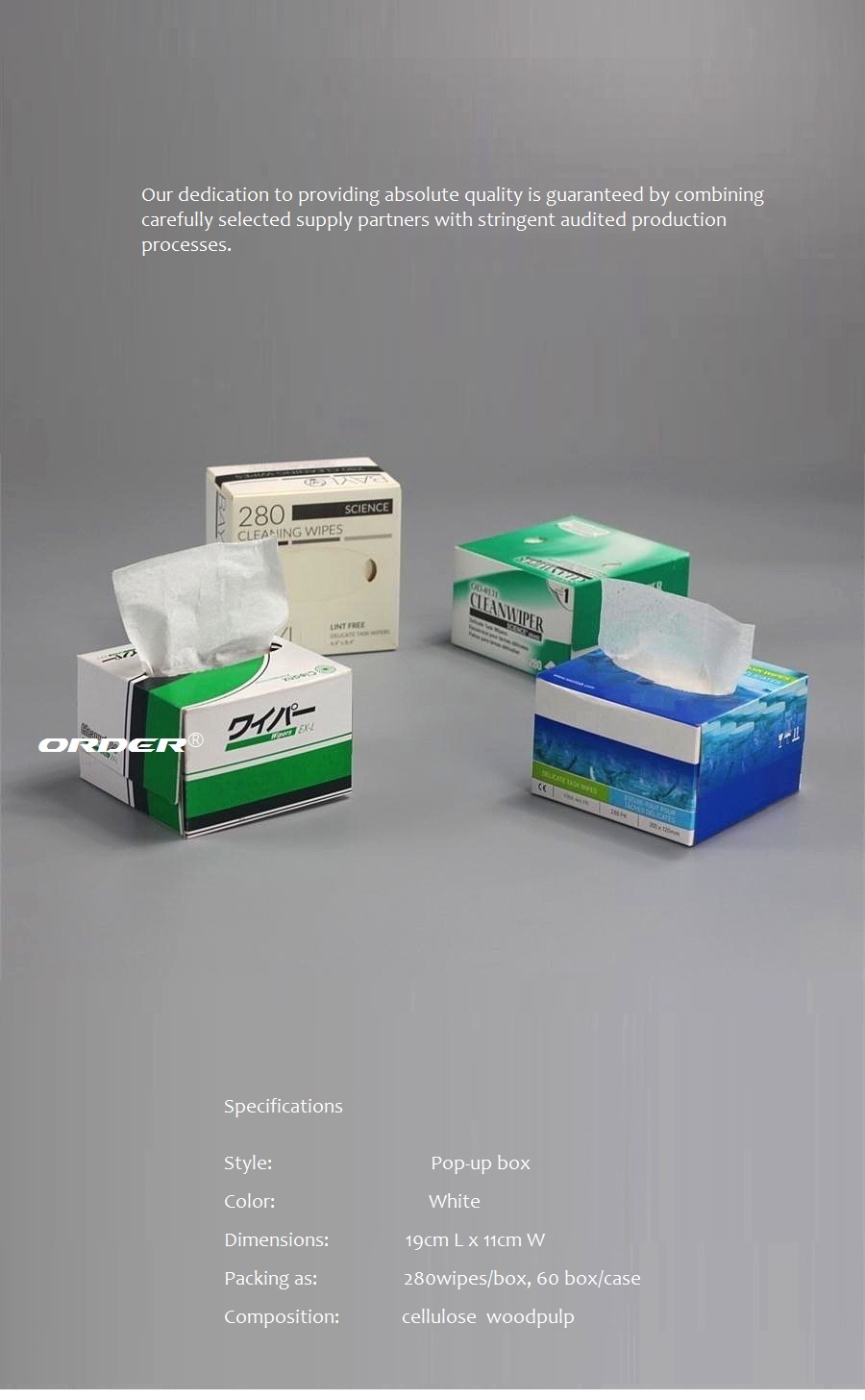
Dry cellulose cleanroom wipes for spill control are a specific type of wiper designed for high absorbency and rapid fluid uptake. Cellulose wipes are made from wood pulp fibers. They are highly hydrophilic and can absorb many times their weight in water or solvents. In a cleanroom context, a cellulose wipe is often chosen for cleaning up large aqueous spills quickly. They are typically more economical than knitted polyester wipes. However, engineers must be aware of the trade-offs. Cellulose wipes generally generate more particles than polyester wipes and have higher levels of extractable ions. They are therefore suitable for lower-class cleanrooms (ISO Class 6 to 8) or for initial gross cleaning steps, followed by a final wipe-down with a low-particle polyester wipe. They are also commonly used in applications where the wiper is discarded after a single use, such as in pharmaceutical spill kits.
Pre saturated cleanroom wipers for surface cleaning offer several advantages over using a dry wiper with a separate solvent bottle. The primary advantage is consistency. The wiper is saturated with a precisely controlled volume of a high-purity solvent, such as IPA, acetone, or deionized water. This ensures that the same amount of solvent is applied to the surface every time, which is critical for reproducible cleaning processes. Secondly, pre-saturated wipers reduce the risk of cross-contamination. The solvent is sealed within the package and is not exposed to the environment until use. Thirdly, they improve workflow efficiency. A technician can simply open a packet and wipe, rather than dispensing solvent and waiting for the wiper to absorb it. For cleaning validation in pharmaceutical or medical device manufacturing, the use of pre-saturated wipers with lot-to-lot traceability simplifies documentation and compliance.
For high-volume manufacturing and specialized applications, partnering with an experienced manufacturer is essential. Suzhou Order Cleanroom Material Co., Ltd., established in 2006 and headquartered in Suzhou City, is a technology-driven enterprise specializing in the research, development, production, and sales of nonwoven fabric cleaning wiping products. The company owns a 12,000-square-meter modern production base and has passed quality management system certifications. Its products have obtained multiple authoritative certifications, and its service network spans over 30 countries worldwide. The company focuses on innovation and customized production, offering differentiated high-quality products to global clients in industrial manufacturing, electronics and optoelectronics, medical care, and catering services. The core advantage of the enterprise stems from its technical accumulation and quality cultivation. Through a digital management system, it ensures full-process quality control from raw materials to finished products. Relying on clean workshops, intelligent equipment, and professional technical teams, the company adopts modular product design and flexible production capabilities. It supports OEM/ODM customization services, offering flexible options for various forms such as flat cutting, folding, pulling, rolling, and die-cutting, as well as in-depth customization of size, packaging, and functions. With 20 years of industry experience, the company has established long-term cooperation with enterprises in multiple countries and regions worldwide. Through the development of eco-friendly processes and biodegradable materials, it promotes sustainable development in the cleaning industry.
Ensuring optimal contamination control requires a systematic approach to selecting and using cleanroom wipers. For the most stringent environments, engineers must specify lint free cleanroom wipers for ISO class 5 areas. For pharmaceutical and biological applications, sterile cleanroom wipes with isopropyl alcohol are necessary for disinfection. In electronics assembly lines, ESD safe cleanroom wipers for electronics are mandatory. For general spill control, dry cellulose cleanroom wipes for spill control offer cost-effective absorbency. And for reproducible, validated cleaning, pre saturated cleanroom wipers for surface cleaning provide consistency and efficiency. By understanding the technical specifications and matching them to the application, and by sourcing from manufacturers with proven quality systems and global reach, professionals can maintain the integrity of their critical environments.
Standard paper towels are made from wood pulp and are not manufactured in a controlled environment. They shed significant amounts of lint, fibers, and particles when used. Cleanroom wipers are manufactured from engineered materials like continuous filament polyester, processed, and packaged in cleanrooms to ensure they meet strict limits for particle generation, extractable chemicals, and ions.
Knitted polyester wipers are typically the lowest in particle generation and are very durable, making them suitable for ISO Class 3-5 environments and for cleaning delicate optics. Nonwoven wipers, made from entangled fibers, offer high absorbency and are often more economical, making them suitable for ISO Class 6-8 environments and general spill cleaning.
No. Isopropyl alcohol can damage some plastics, acrylics, and certain coated surfaces. It can also leave a thin organic residue. Always test the wipe on a small, inconspicuous area first. For sensitive surfaces like polycarbonate or specific optical coatings, a different solvent like a mild detergent solution or a specialized optical cleaner may be required.
ESD safe means the wiper is constructed from materials that are static-dissipative, typically by incorporating carbon fibers or other conductive elements. This allows any static charge generated during wiping to bleed off slowly to ground, rather than building up and discharging suddenly into sensitive electronic components. The surface resistivity of an ESD-safe wiper is typically in the range of 10^6 to 10^11 ohms per square.
Cleanroom wipers should be stored in their original, unopened packaging in a controlled environment. They should be kept away from direct sunlight, extreme temperatures, and sources of contamination. Sterile wipers must be stored according to the manufacturer's instructions to maintain sterility until the expiration date. Once opened, the bag should be resealed to prevent contamination of the remaining wipers.
If you are interested in our products, please consult us

 contact us


 English
 日本語
日本語
 简体中文
简体中文