2026.10.22
 Blog
Content
Two cartons of "oil absorbent wipes" can sit on the same loading dock and behave nothing alike on a machine bed. The difference is usually basis weight and fiber diameter, not the country printed on the label. Here is the conclusion first: sourcing meltblown oil absorbent wipes from China is a mature, competitive exercise, and the risk sits almost entirely in specification control rather than material availability. Chinese meltblown lines run polypropylene webs from roughly 30 to 120 gsm, and the same converter will quote you a 45 gsm light-duty wiper and a 100 gsm degreasing cloth at very different prices. Knowing which one your task actually needs is the whole job.
Meltblown polypropylene is made by extruding molten polymer into a high-velocity hot air stream. The fibers land at roughly 1 to 5 microns in diameter, entangle while still tacky, and bond to one another without latex, resin, or calendering. That structure matters for two practical reasons. There is no binder to dissolve, so the cloth can be used with IPA, acetone, or mineral spirits without leaving a sticky residue behind. And absorption comes from capillary action inside a dense, porous web, which means capacity scales with surface area and void volume rather than with thickness alone.
Typical industrial grades pick up six to twelve times their own weight in motor oil. Water uptake is deliberately low, often one to two times the wipe's weight, so a meltblown cloth floats on a coolant sump instead of sinking into the water phase. That property is why the same roll works for skimming tramp oil off a parts washer and for wiping a machined surface dry.
When a quote says "100% meltblown PP", check whether that describes the whole cloth or one layer of a laminate. SMS structures add tear strength and cost, but the spunbond facings absorb far less oil per gram, so your cost per litre of oil captured climbs. For straight spill and degreasing duty, a single-layer meltblown web usually wins. For wiping rough or burred metal, the laminated version is the more sensible buy. The behavior behind these choices is examined further in this note on why meltblown oil absorbent wipes change industrial cleaning.
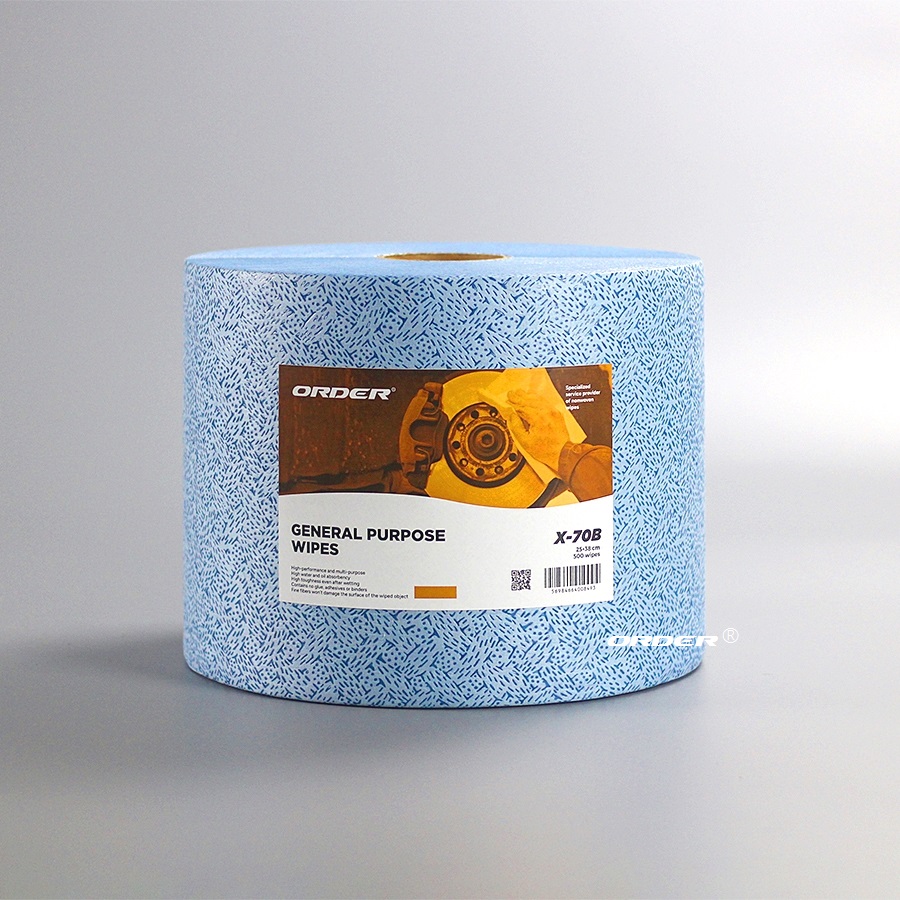
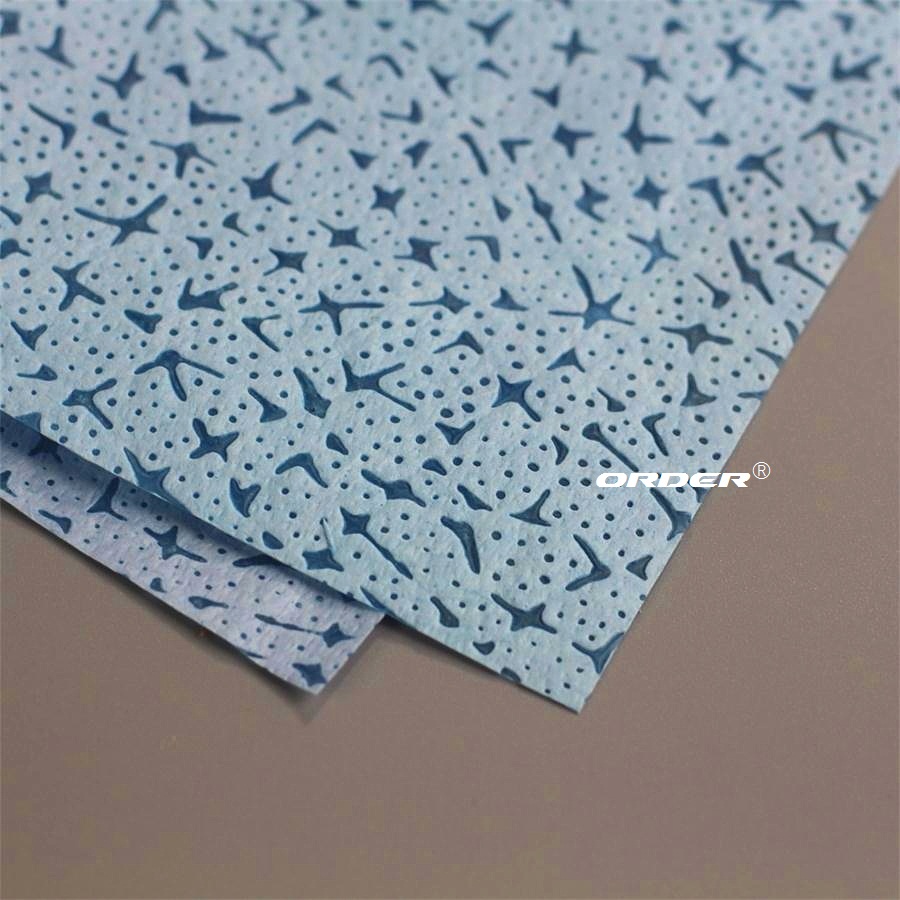
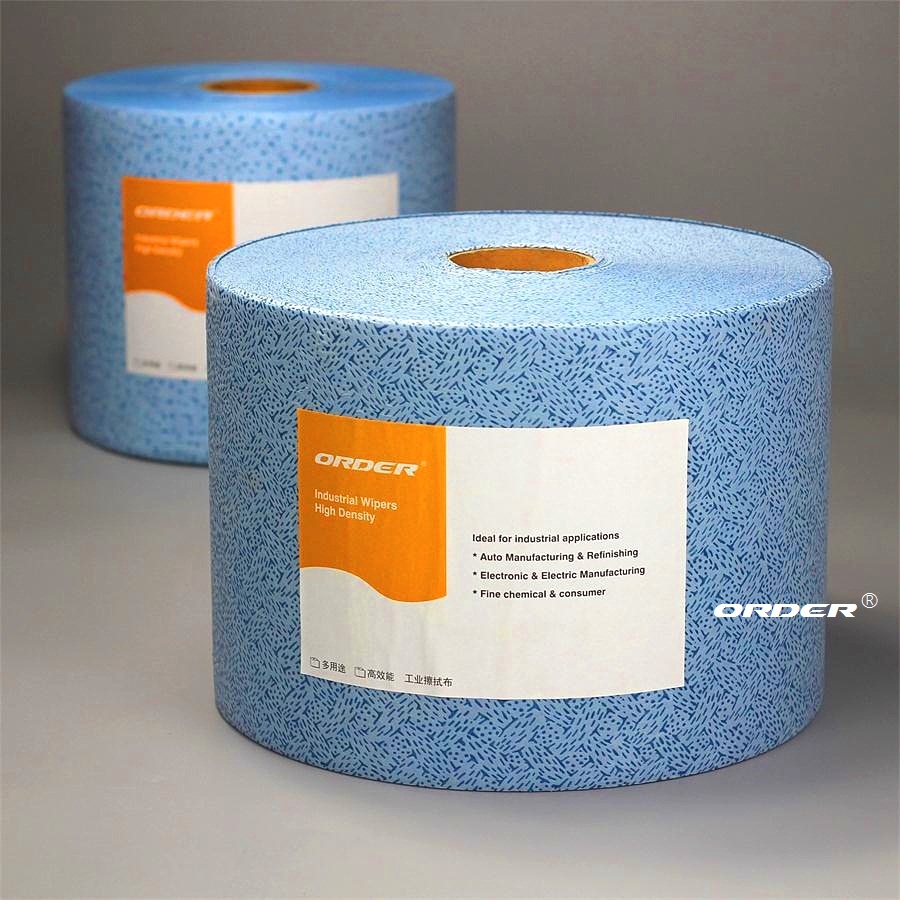 ORDER X-3331B Blue Meltblown Jumbo Roll Industrial Cleaning WipesA 100% meltblown polypropylene jumbo roll for oil absorption and low-lint cleanup with chemicals and solvents in industrial settings.View Product →
| Material | Basis weight | Oil uptake | Lint | Solvent behavior | Best fit |
|---|---|---|---|---|---|
| 100% meltblown PP | 40–120 gsm | 6–12 g/g | Very low, no binder | Stable, wet strength limited | Heavy oil, spills, solvent wipe |
| Cellulose / PET spunlace | 60–120 gsm | 4–7 g/g | Low | Strong wet and dry | Paint prep, general workshop |
| Wood pulp airlaid or 3-ply paper | 40–90 gsm | 3–5 g/g | Moderate to high | Breaks down | Light duty, food service |
| Needle-punched PP felt pads | 200–400 gsm | High total capacity | Moderate | Stable | Containment, not wiping |
The table frames the trade-off you will actually face. Spunlace costs more per gram and absorbs less, but it tolerates wringing and holds together in solvent, which is why it dominates paint preparation and mixed workshop wiping. Buy meltblown when the job is heavy oil, minimal lint, and one-time disposal after the wipe is saturated.
Feed the same 60 gsm meltblown web into a converting line and you can pull off a flat sheet, a quarter-fold stack, an interfolded pop-up box, or a perforated jumbo roll. The web price barely shifts between those formats. The cost per usable wipe moves a great deal, because consumption and handling change with the package.
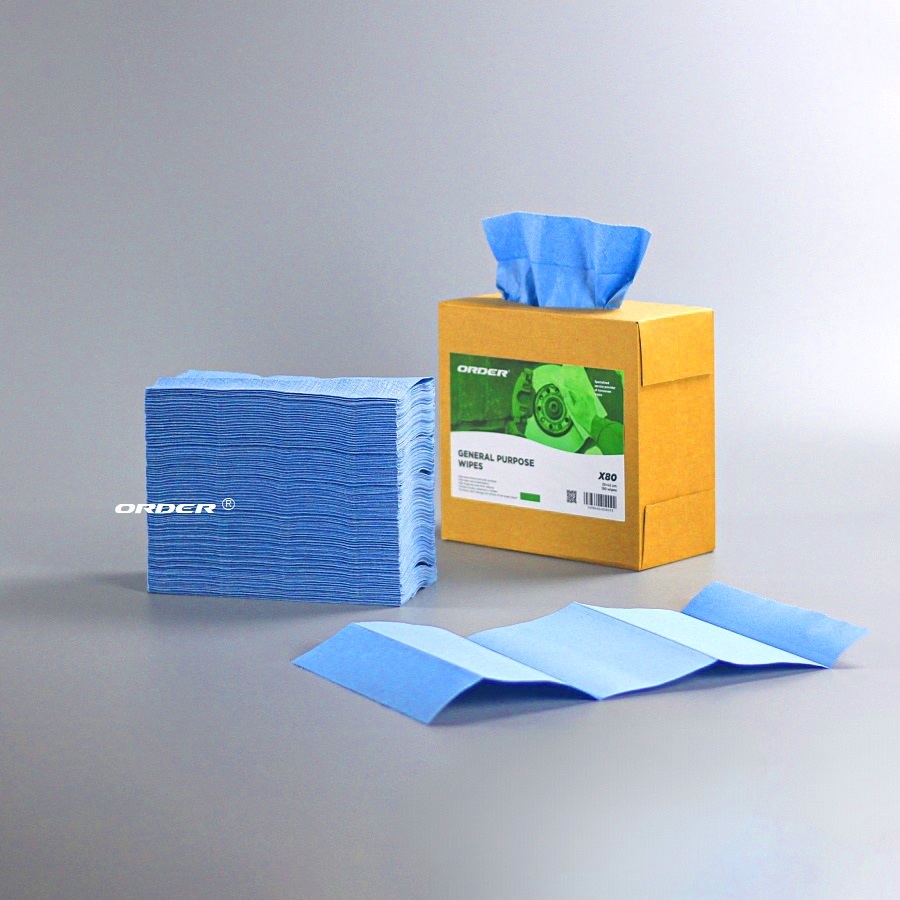
A pop-up box dispenses one sheet at a time and slows down the technician who would otherwise grab a fistful of rags. In a repair bay or an assembly cell, that discipline usually saves more money than a cheaper per-sheet price would. Jumbo rolls push unit cost lower and suit high-volume floors, but they require a dispenser, either a wall bracket or a mobile floor stand, and that hardware belongs in your total cost calculation from the start.
Perforation pitch is the detail buyers forget to specify. A roll cut at 30 by 32 cm yields a predictable sheet count and a predictable cost per wipe; a roll cut a few millimetres differently quietly changes the math. State your target sheet dimensions with a tolerance, and state the core diameter and roll outside diameter, or you will receive a roll that does not fit the dispenser you already own.
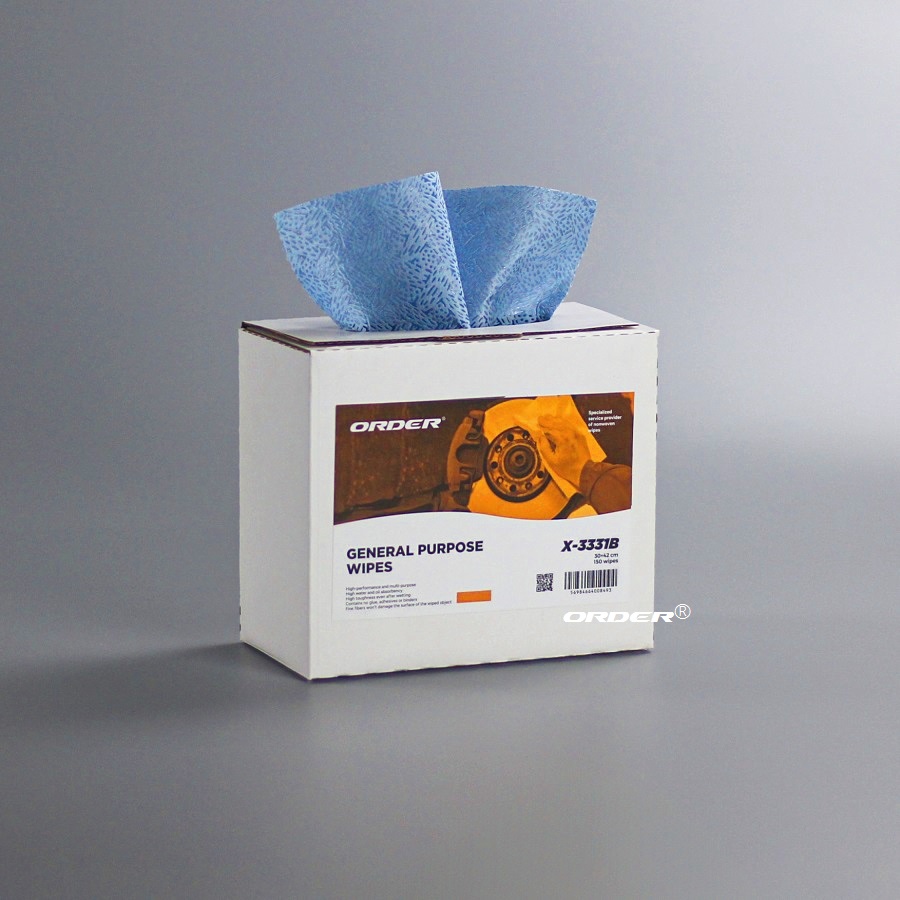
 ORDER PX-3332B Blue Pop-Up Box Meltblown Polypropylene Solvent WipesA blue 100% meltblown polypropylene pop-up box wipe, 23×43 cm and 100 wipes per box, for solvent wiping and oil absorption.View Product →
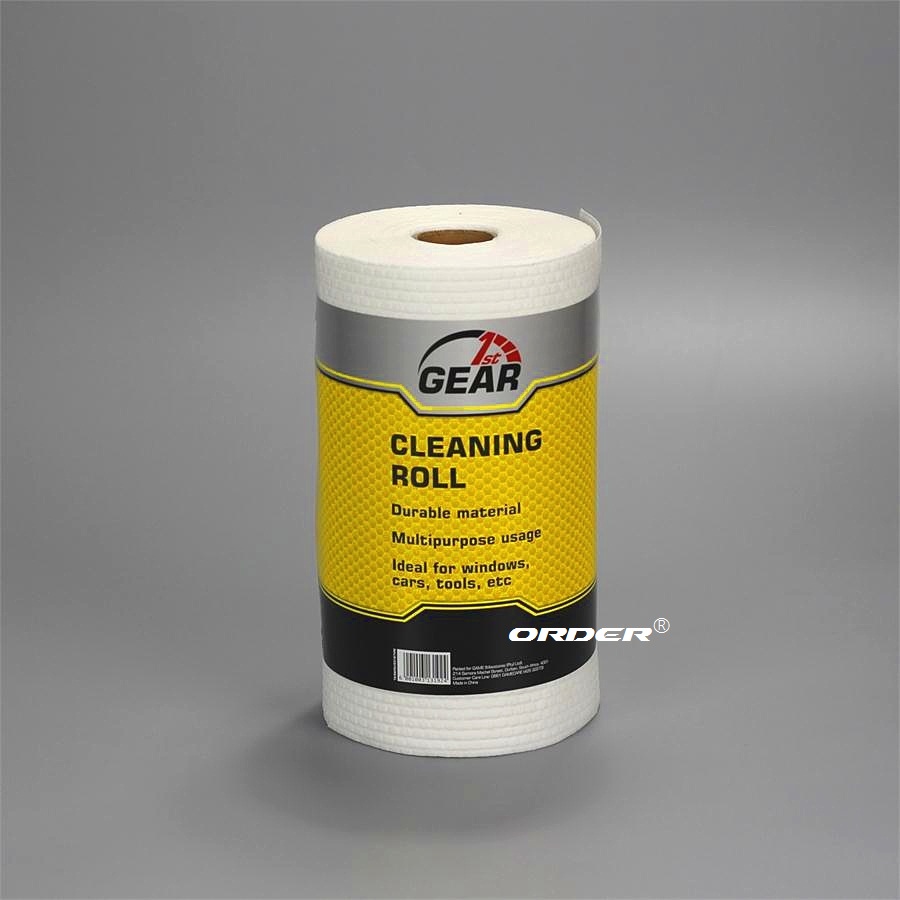
 ORDER X-3332B White Perforated Small Roll Industrial WipesA white 30×25 cm perforated small roll, 100 wipes per roll, listed as 70% cellulose and 30% polypropylene for oil and grease wiping.View Product →
A one-page specification prevents most disputes. Include the following, in this order, with units and tolerances written out.
Certificates travel faster than quality does. Run five checks on the pre-production sample before releasing a purchase order.
Then ask one more question: how much does the web vary between batches? A supplier who tracks basis weight and absorption as in-house control parameters can tell you the standard deviation. A supplier who can only repeat the target figure is telling you something useful too.
Meltblown oil absorbent wipes made in China are a reliable, well-engineered category once the specification is tight and the sample is verified on the line that will actually produce your order. Send your oil grade, solvent list, sheet dimensions, absorption target, and annual volume, and a converter can match a web, a format, and a dispenser to the task rather than to a catalogue page. For tailored grading, custom folding, or dispenser bundles, talk to our team and start with a documented pre-production sample.
If you are interested in our products, please consult us

 contact us


 English
 日本語
 简体中文