2026.10.29
 Blog
Content
In an SMT assembly line, a process engineer once traced a sudden spike in stencil defects to the wipes used for understencil cleaning. The wipes were labeled lint-free, but their cut edges shed microfibers when saturated with solvent. The fix was not a different brand of standard wipes; it was a custom wipe with sealed edges, a specific mesh spunlace substrate, and a roll format that matched the printer’s auto-wiping mechanism. Custom lint-free wipes are not a marketing upgrade—they are a process requirement when standard sizes, materials, or packaging create variability you cannot control.
Standard lint-free wipes are designed for the widest possible range of tasks. That broad compatibility is exactly the problem. A 9-inch by 9-inch wipe may be perfect for a laboratory bench but wasteful and awkward for a 4-inch optical lens. A wipe that performs well with water may fall apart with isopropyl alcohol. Customization allows you to specify the substrate, dimensions, edge treatment, fold, and packaging to match your cleaning motion, chemistry, and cleanliness class. The result is lower defect rates, less waste, and more predictable consumable costs.
For example, a cleanroom that switches from a generic 12x12-inch wipe to a custom 6x6-inch wipe with a low-linting cellulose/polyester blend can cut wipe usage by 30% while improving surface cleanliness. The upfront tooling cost is usually offset within the first few production runs. When evaluating custom options, focus on the total cost of ownership rather than the price per wipe. A slightly more expensive custom wipe that eliminates rework or reduces solvent consumption often delivers a better return than a cheaper standard product.
Lint-free performance starts with the fiber and bonding method. Nonwoven substrates behave very differently depending on how they are made. Meltblown polypropylene creates a dense web of fine fibers that resists shedding and handles oils and solvents well, but it absorbs little water. Spunlace cellulose/polyester blends offer high water absorbency and a soft feel, making them a workhorse for general cleanroom and food service. Mesh spunlace viscose/PET provides a combination of low linting and good solvent resistance, which is why it is often chosen for SMT stencil cleaning and precision optics. Airlaid cellulose is highly absorbent but can generate more particles, so it is better suited to medical and janitorial tasks where absorbency matters more than particle control.
| Material | Linting Tendency | Absorbency | Solvent Resistance | Typical Applications |
|---|---|---|---|---|
| Meltblown PP | Very low | Low for water, high for oil | Good | Oil spill, solvent wiping, heavy-duty industrial |
| Spunlace cellulose/polyester | Low | High | Moderate | General cleanroom, food service, automotive |
| Mesh spunlace viscose/PET | Very low | Moderate | Good | SMT stencil, optical, precision electronics |
| Airlaid cellulose | Low to moderate | Very high | Low | Medical, patient care, janitorial |
Custom wipes let you choose not just the material family but also the basis weight, surface texture, and edge finish. A 60 gsm spunlace may be sufficient for light cleaning, while an 80 gsm version may last longer in heavy-duty degreasing. Laser-sealed or ultrasonic-cut edges reduce fiber release compared to standard cut edges. These variables are difficult to optimize with off-the-shelf products, but they are straightforward to adjust in a custom production run. If you are unsure which substrate matches your task, review the types of lint-free wipes and their typical applications before contacting a supplier.
Different industries define "lint-free" in different ways. An ISO Class 5 cleanroom may require wipes that pass strict particle and fiber release tests, while an industrial maintenance shop may only need a wipe that does not leave visible fibers on a painted surface. Custom wipes allow you to match the product to the actual cleanliness class and regulatory requirement. For semiconductor and electronics manufacturing, you may need wipes with low extractables, anti-static properties, and compatibility with IPA or other solvents. For medical environments, you may need sterile packaging, biocompatibility, or specific absorbency for patient care. For food service, you may need wipes that are safe for food contact surfaces and can withstand repeated use.
 Clexia IS909b Cellulose/Polyester Nonwoven Cleanroom WipersLow-lint cellulose/polyester wiper for solvent wiping, with custom sizes and packaging; consider it for cleanliness-class validation needs.View Product →
Specifying the wrong cleanliness class wastes money on over-engineered wipes or risks contamination with under-engineered ones. A custom supplier can help you select the right material and validate it with particle counts, fiber shedding tests, and extractable analysis. This validation is especially important when your process involves critical surfaces, such as optical lenses, wafer stages, or medical devices.
Procurement teams should focus on a handful of variables that drive both performance and cost. These include:
One common procurement risk is the gap between sample and mass production. A custom wipe that performs perfectly in a hand sample may show different linting or absorbency when produced on a full line. Always request production-representative samples and run them through your actual cleaning process before placing a bulk order. Also clarify minimum order quantities, lead times, and whether the supplier maintains consistent fiber sourcing. A reliable partner will document these parameters and provide batch-to-batch test data.
Custom lint-free wipes are only as good as the manufacturing controls behind them. Look for a supplier that operates in a controlled cleanroom environment, uses digital systems to track fiber blending and web formation, and performs in-line inspections for basis weight, thickness, and particle release. Certifications such as ISO 9001 and ISO 14001 provide a baseline, but for cleanroom wipes you may also need ISO 14644 classification reports for the production area. The best suppliers will invite you to audit their facility or provide detailed quality documentation before you commit to a custom program.
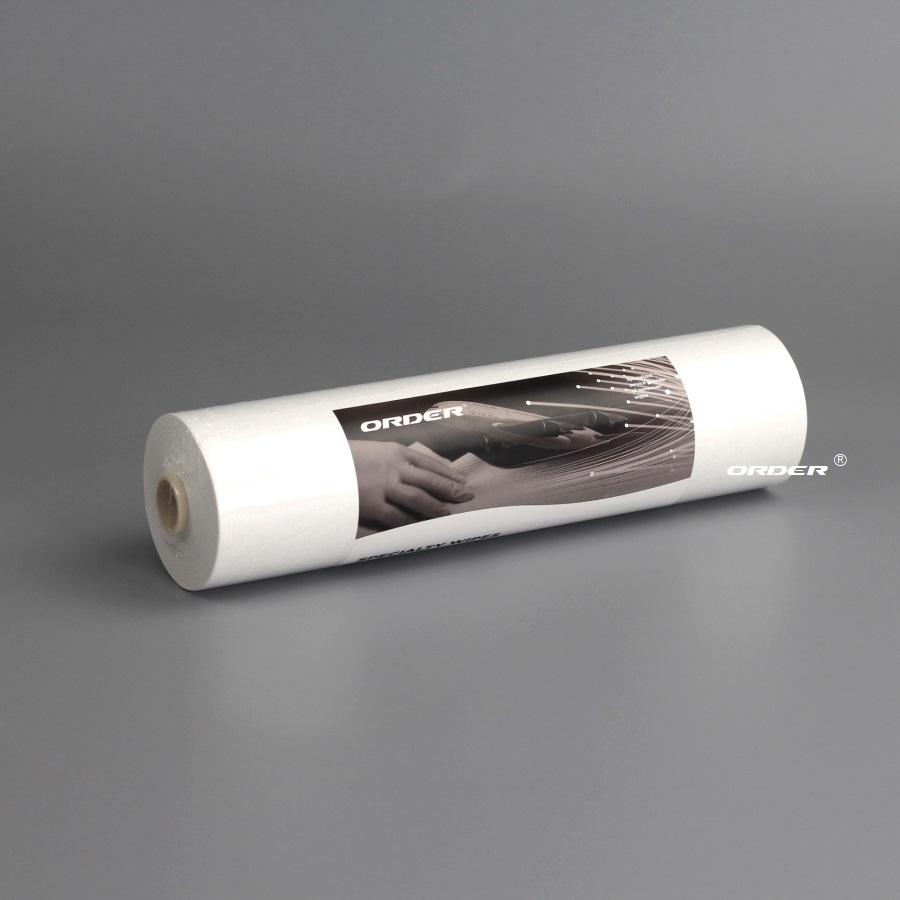 Microfiber Nonwoven Wiper Rolls for SMT and Semiconductor CleaningRoll-style low-lint microfiber wiper for removing solder paste from SMT printers; customizable dimensions and core options support OEM/ODM semiconductor cleaning needs.View Product →
An OEM/ODM partnership goes beyond a simple purchase order. It involves joint problem-solving: your team describes the cleaning challenge, the supplier recommends a substrate and format, and together you test and refine the specification. This collaborative approach is particularly valuable when you are replacing an imported wipe with a custom alternative. The goal is not just to match the incumbent product, but to improve yield, reduce waste, and secure a stable supply chain. If you are ready to explore a custom solution, contact our team to discuss your application and request samples.
Custom lint-free wipes are a precision consumable, not a commodity. The right specification can reduce defects, improve worker efficiency, and lower long-term costs. The wrong one can introduce contamination, slow down production, and create rework. Start by defining your cleaning task, chemistry, and cleanliness class, then work with a manufacturer that can translate those requirements into a repeatable product. With the right partner, custom lint-free wipes become a reliable part of your quality system, not a variable you have to manage.
If you are interested in our products, please consult us

 contact us


 English
 日本語
 简体中文