2026.08.31
 Blog
Blog
Content
Ask ten maintenance supervisors what they expect from a disposable wiping cloth and you will hear eleven different answers. One needs a cloth that holds solvent on painted metal without tearing apart. Another must wipe an optical sensor without leaving a single fiber behind. A kitchen manager needs a wipe that survives greasy countertops and still rinses clean. None of them can afford a cloth that fails halfway through the job.
The conclusion is straightforward: a disposable wiping cloth is a performance part, not a generic commodity. The fiber material, the manufacturing process, the format, and the packaging determine whether the cloth absorbs the right fluids, holds up under working pressure, and leaves the surface cleaner than it found it. Match those variables to the task and the cost per effective wipe drops. Ignore them and the cheapest box in the catalog usually becomes the most expensive one you can buy.
Nearly every disposable wiping cloth on the market is a nonwoven fabric, but the fiber recipe and the bonding process create very different behaviors on the job. Three material families cover most industrial, commercial, and professional cleaning tasks.
Meltblown polypropylene is produced by melting polypropylene resin and blowing it through fine nozzles into microfibers that bond into a dense, felt-like web. Because the fibers are fine and oleophilic, the cloth picks up oil and grease quickly and holds them inside the structure instead of pushing them around the surface. Meltblown PP also resists most industrial solvents and keeps its strength when saturated, so it does not shred or fall apart mid-wipe. Its one clear weakness is water: polypropylene is hydrophobic, which makes it a poor choice for water-based cleanup.
Spunlace, or hydroentangled, fabric is made by entangling cellulose or pulp fibers with polyester fibers under high-pressure water jets. The result is a cloth-like material that combines the water absorbency of cellulose with the wet strength of polyester. These wipes drape well, release low levels of lint, and keep their shape during scrubbing, which is why they dominate general industrial wiping, food service cleaning, and electronics bench work.
Airlaid wipes are formed by bonding dry-laid wood pulp or cellulose fibers with a binder. They are soft, highly absorbent, and economical, making them ideal for light-duty jobs such as wiping tables, absorbing small spills, or dusting surfaces. Their lower wet strength means they should not be used for heavy scrubbing or strong solvents.
For a deeper look at how fiber choice affects performance, see our overview of the raw materials and characteristics of nonwoven cleaning cloths.
| Material | Water absorbency | Oil/solvent absorbency | Wet strength | Lint level | Typical tasks |
|---|---|---|---|---|---|
| Meltblown polypropylene | Low | High | High | Very low | Degreasing, solvent wiping, heavy oil |
| Spunlace cellulose/polyester | High | Medium | High | Low | General industrial, food service, electronics |
| Airlaid / wood pulp | High | Medium | Moderate | Low to medium | Light-duty wiping, spills, dusting |
Material determines whether a wipe can do the job; format determines how much of it gets used or wasted. The same fabric delivered as a perforated roll, a folded pop-up box, or a flat sheet produces different consumption patterns on your floor.
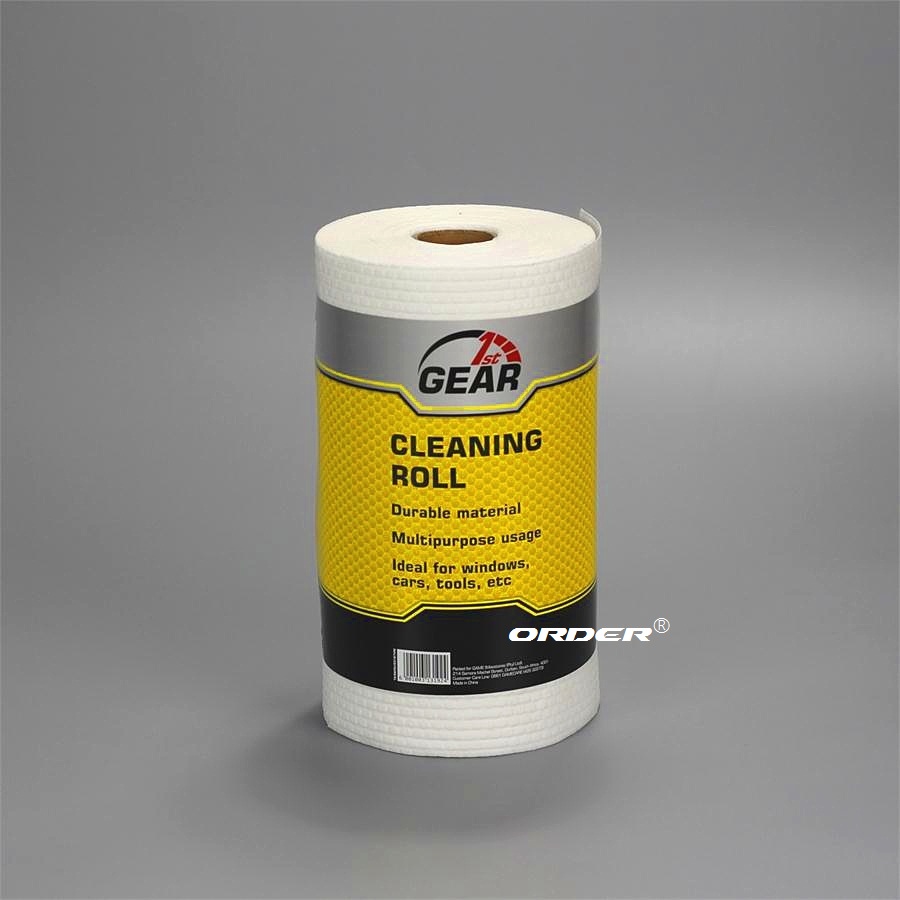
Perforated rolls let an operator tear off exactly the length needed, which makes them the most economical choice for workshops, maintenance bays, and production lines. When paired with a wall or floor dispenser, jumbo rolls keep cloths clean and accessible while producing less packaging waste per wipe than folded sheets.
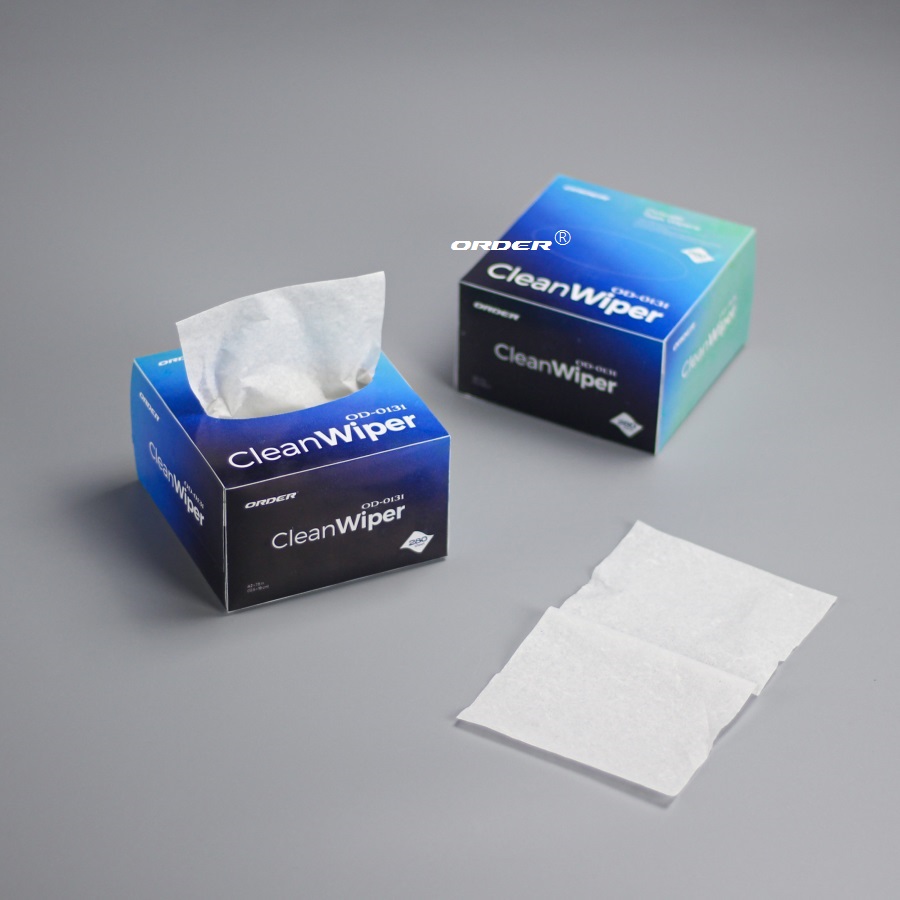
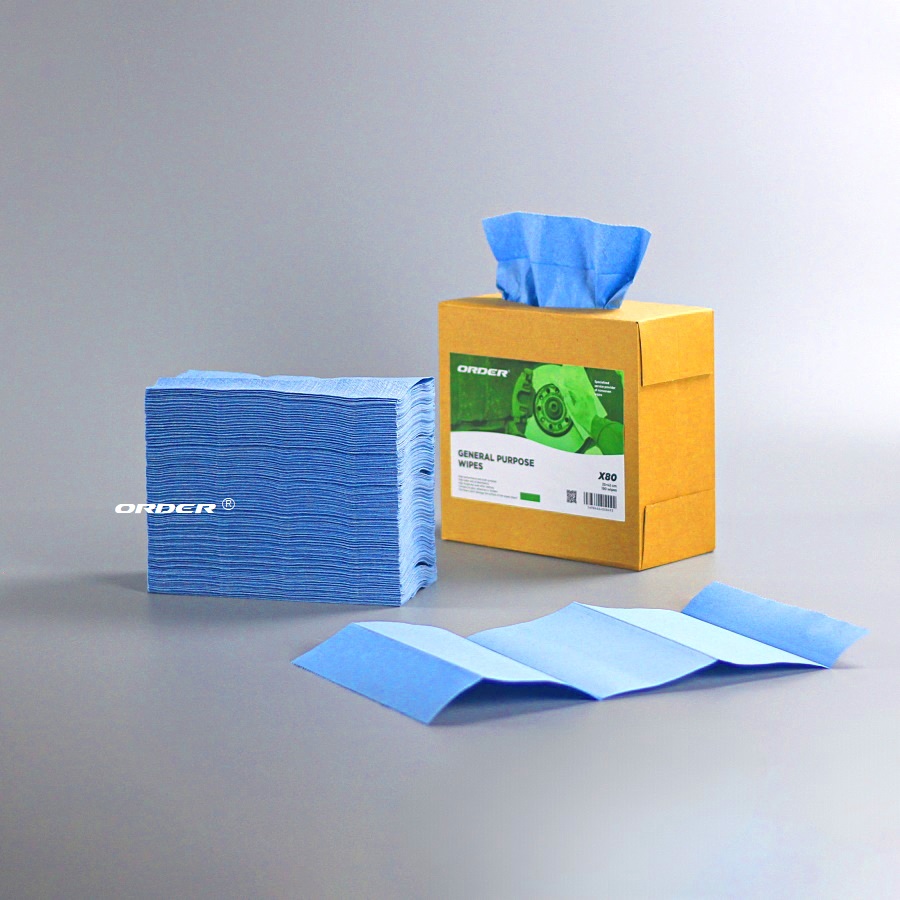
Quarter-fold wipes stacked in a pop-up box dispense one sheet at a time, so a worker takes one wipe instead of pulling a handful. Interfolded stacking also protects the remaining sheets from contamination because only the next wipe is exposed. This format suits labs, electronics workbenches, food preparation areas, and beauty stations where controlled usage and hygiene matter more than raw sheet volume.
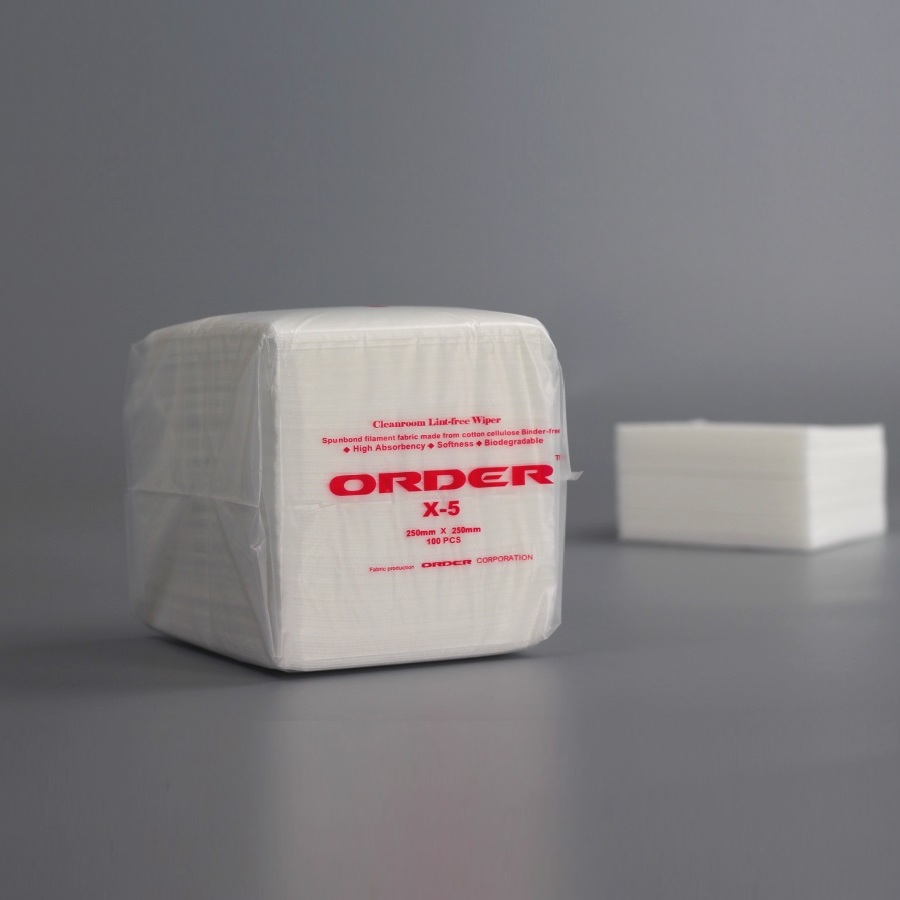
Flat sheets are pre-cut wipes packed in precise counts for tasks that demand consistent size and cleanliness, such as optical or medical cleaning. They avoid the variability of tearing from a roll but usually cost more per wipe because of extra handling and packaging.
After choosing a material family and format, test them against the real conditions on your floor. The wipe that performs well on an engine block can fail on a printed circuit board. Breaking selection down by environment is the fastest way to narrow the options.
Facilities that handle machining fluids, grease, release agents, and solvent-based inks should start with meltblown polypropylene. The fiber structure pulls oil off surfaces and holds it in the web, and the wet strength keeps the cloth intact even with aggressive chemicals. Production floors typically standardize on meltblown polypropylene oil-absorbent wiping cloths because they absorb heavy oil quickly, resist tearing, and leave surfaces dry enough for the next process step.
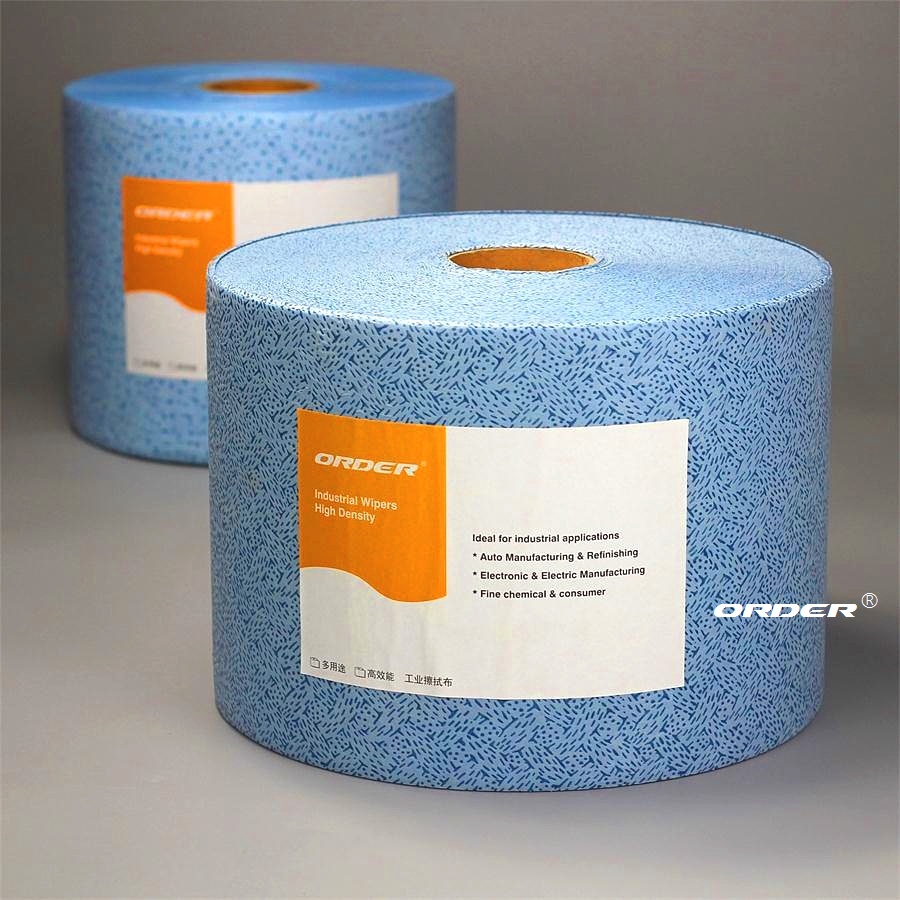 Wholesale ORDER® X-3331B Meltblown Oil Absorbency industrial multi purpose cleanSuzhou Order Cleanroom Material Co., Ltd is China wholesale ORDER® X-3331B Meltblown Oil Absorbency industrial multi purpose cleaning Clo...View Product →
In electronics assembly, semiconductor support, and optical manufacturing, the failure mode is not a greasy residue but a loose fiber landing on a contact or a lens. Cleanroom operators therefore specify low-linting wipers with controlled particle release rather than general shop towels. Many of these use spunlace or thermally bonded cellulose-polyester and are processed and packaged with contamination control in mind. Lint-free cleanroom nonwoven wipers in this class are chosen for their high absorbency, low particle shedding, and compatibility with cleaning agents used in controlled environments.
 Wholesale ORDER®WIP-0609 lint free highly absorbent cleanroom non-woven dust-freSuzhou Order Cleanroom Material Co., Ltd is China wholesale ORDER®WIP-0609 lint free highly absorbent cleanroom non-woven dust-free clean...View Product →
Kitchens put wipes through a demanding cycle: soak up water, scrub a greasy countertop, wipe stainless steel, rinse, and repeat. The cloth needs high water absorbency, enough wet strength to survive scrubbing, and a structure that rinses out instead of shedding debris near food. Cellulose-polyester spunlace wipes answer this requirement in light-duty and heavy-duty weights. Heavy-duty food service wipes in a quarter-fold format are a common choice for busy kitchens because they combine scrubbing strength with controlled dispensing.
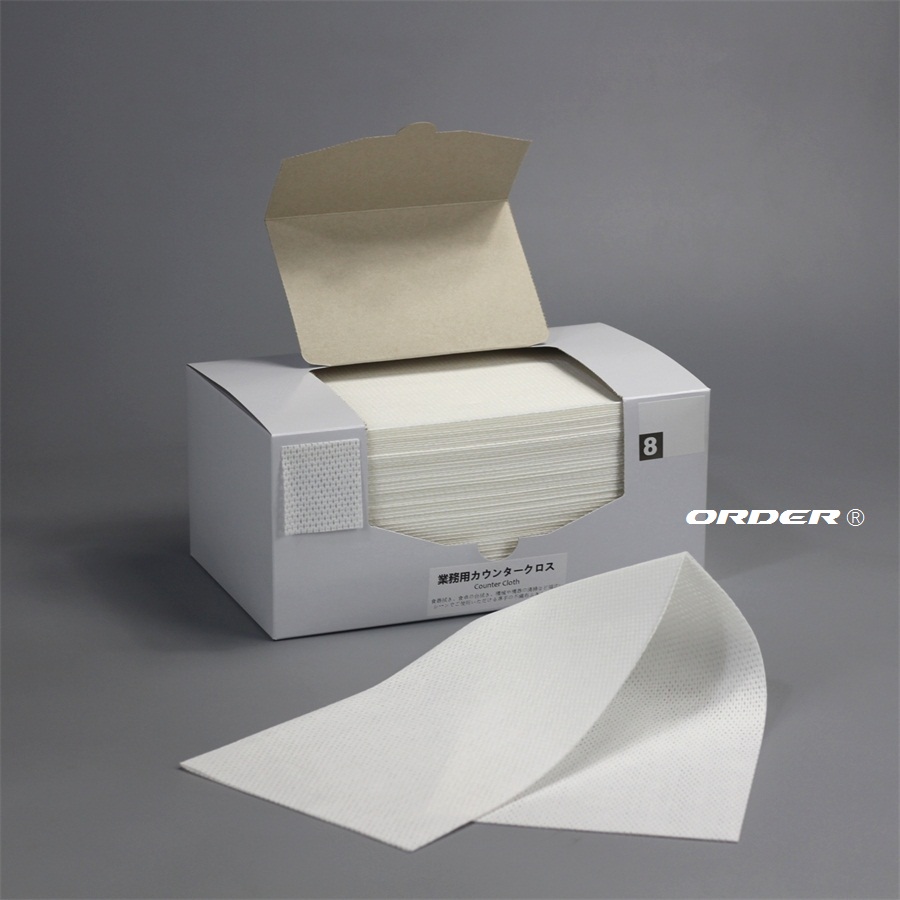 Wholesale Food Service Industry Wipes 60PCS Heavy-Duty,13.7”x24” Suppliers, FactSuzhou Order Cleanroom Material Co., Ltd is China wholesale Food Service Industry Wipes 60PCS Heavy-Duty,13.7”x24” suppliers and Food Ser...View Product →
Medical and beauty applications add two more criteria: skin compatibility and precision. Medical cleaning wipes may need to be sterile, dry, or compatible with disinfectants, while beauty and nail care requires small, soft, lint-free wipes in controlled sizes for tasks such as gel polish removal and adhesive cleaning. These products are usually supplied as flat sheets or in small pop-up boxes rather than large rolls.
Once the material and format are settled, the commercial details deserve as much attention as the fabric itself. These five points determine whether the product in the sample box is the product that arrives by the pallet.
Our guide on how to select industrial cleaning wipes expands each of these points with practical examples from real facilities.
The difference between buying disposable wiping cloths from a distributor and buying from a manufacturer becomes obvious the first time you need something changed. A distributor can only offer what is on the shelf; a manufacturer can adjust the fiber blend, basis weight, folding pattern, sheet size, color, and packaging to fit the way your team works.
Facilities with demanding applications increasingly source directly from nonwoven manufacturers that operate their own converting lines and quality systems. A manufacturer with a dedicated wiping product range, clean production environment, and OEM/ODM capability can supply private-label products, customized sizes, and application-specific grades under one roof. In volume, those adjustments show up in the cost per effective wipe, not just in the unit price.
If your facility faces a specific wiping problem or has a custom specification in mind, discuss your requirements with the production team and get a recommendation based on materials and test data rather than a catalog page.
Choosing a disposable wiping cloth comes down to three decisions, in order. Define the cleaning task and the fluid being removed. Select the material family that matches the fluid and the surface. Then choose the format and packaging that controls consumption and contamination. Add basis weight, sheet size, solvent compatibility, and food-contact suitability to your specification, and the result is a wiping program that lowers both cost and risk.
Facilities that run clean, efficient operations do not leave wiping cloths to habit. They specify them with the same care as gloves, filters, or any other consumable that touches the product. It is a small decision with a measurable impact on cleaning efficiency, product quality, and spend.
If you are interested in our products, please consult us

 contact us


 English
 日本語
日本語
 简体中文
简体中文