2026.09.10
 Blog
Blog
Content
A production engineer notices dark residue on a SMT stencil after a routine cleaning cycle. The wipe is leaving more than it removes. This is a common symptom of using a general-purpose cloth in a cleanroom environment. Cleanroom wipes differ from ordinary cleaning cloths in measurable ways: fiber shedding, extractable levels, and absorbency are all documented and controlled. The right choice depends on your ISO class, the cleaning task, and the chemical compatibility of the wiper material. A decision that seems simple on paper can affect yield, equipment uptime, and the cost of rework.
The core difference between a cleanroom wiper and an industrial cloth is how much it can contaminate the surface it cleans. Every wipe continuously sheds particles during use. A regular shop towel sheds small fibers, dust, and sometimes residues from the manufacturing process. In a cleanroom, these contaminants directly affect particle counts and product yield.
Cleanroom wipes are produced under controlled conditions and are designed to meet specific limits. Their performance is verified by tests that measure particle shedding, extractable levels, and absorbency capacity. Some wipes also receive sterilization for medical or pharmaceutical uses, and they are packaged in ways that avoid contamination before opening.
| Property | Ordinary Wipe | Cleanroom Wiper |
|---|---|---|
| Fiber shedding | High, visible residues | Low to negligible |
| Extractable levels | Uncontrolled | Controlled to defined limits |
| Absorbency consistency | Variable within a batch | Documented from sample testing |
| ISO Class suitability | Not tested | Referenced for ISO 3 to ISO 8 |
| Packaging | Open boxes or bags | Sealed, cleanroom-ready formats |
ISO 14644 cleanroom classifications describe the maximum permitted particle concentration for each cleanliness level. A wipe used in an ISO 5 environment needs to support that classification, not add to the particle load. Leading cleanroom wiper suppliers publish particle data alongside their products. When that data is absent, there is no reliable way to estimate the contamination contribution of the wipe.
For buyers, the practical question is simple: does the wiper have documented test results that match the cleanliness requirements of your process? If it does not, its performance under actual use is uncertain.
The fiber construction of a cleanroom wiper defines how it performs with solvents, how much it absorbs, and how much lint it leaves behind. The following materials are the most common in cleanroom supplies.
Wipes made from cellulose and polyester fibers combine hydrophilic absorption with the mechanical strength of polyester. They are a versatile choice for general cleanroom tasks such as wiping workbenches, cleaning equipment surfaces, and drying parts. A typical example is the Clexia CL6 series, a lint-free wipe designed for electronic and general cleanroom cleaning. These wipes perform well with IPA and other common solvents. For a closer look at how ISO classes and materials connect, this guide on cleanroom cloth material and ISO class selection explains the relationship.
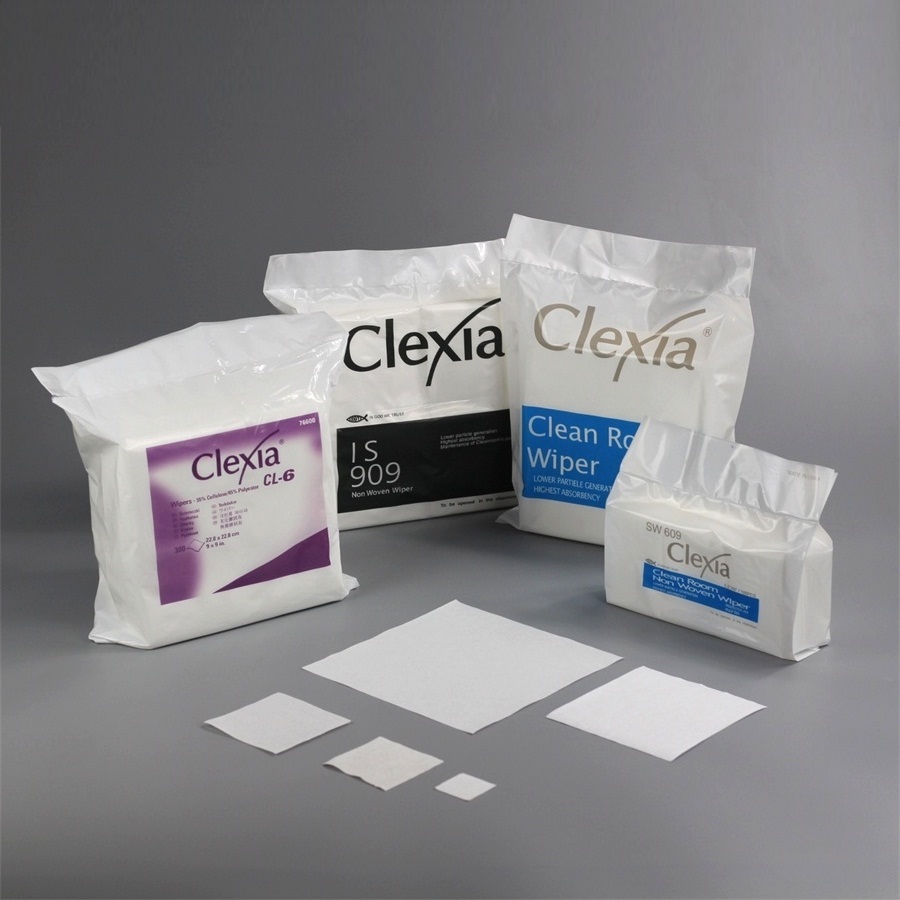 Clexia CL6 Cellulose/Polyester Nonwoven Cleanroom WipesThese wipes combine cellulose and polyester for versatile cleanroom tasks like wiping workbenches and equipment, with low lint and compatibility with IPA and common solvents.View Product →
Viscose and polyester blends are common in cost-sensitive cleanroom environments. They handle mild solvents, water-based cleaning agents, and routine maintenance. The M3 series is an example of a viscose/PET cleanroom wipe built for equipment cleaning and light maintenance tasks. It is an economical choice for environments where absorbency and low lint are more important than extreme chemical resistance.
 ORDER M-3 Viscose/PET Blend Cleanroom Wipes for MaintenanceThe M3 series offers an economical viscose and polyester blend for equipment cleaning and light maintenance, balancing absorbency and low lint without extreme chemical resistance needs.View Product →
For tasks that require minimal particle generation and maximum liquid uptake, low-lint wipers with documented absorbency are necessary. The WIP0609 series is produced as a dust-free, lint-free wipe that is suitable for electronic assembly and laboratory work. It provides a balance between absorbency, solvent compatibility, and fiber contamination control.
 ORDER WIP-0609 Lint-Free Highly Absorbent Cleanroom WipersDesigned for critical applications with solvents and paints, these low-lint wipers provide high absorbency and minimal particle generation, suitable for electronic assembly and labs.View Product →
Meltblown polypropylene wipes are designed for oil absorption and heavy solvent use. They are not a first choice for optical work, but they find strong use in SMT stencil cleaning and maintenance tasks where oil and grease are present. These wipes are also common in industrial cleanrooms that handle surfactants or oil-based residues.
Some applications also require pre-saturated wipes. These are packaged with a measured amount of isopropyl alcohol or another solvent, which reduces handling steps and improves process consistency. They are particularly useful in optical and medical workflows where solvent composition must be controlled.
When selecting a material, consider the chemical compatibility of the wiper with your cleaning agent. Cellulose/polyester blends work well with IPA, acetone, and most water-based solutions. Meltblown PP resists many degreasers but may not handle aggressive polar solvents as effectively. A useful approach is to request sample wipes and test them with your actual solvent before committing to a full order.
Different cleanroom tasks have different contamination budgets. The wiper that works for a workbench might be unsuitable for optics or stencil cleaning.
Stencil cleaning wipers must remove solder paste without leaving fibers or contaminating the stencil surface. Rolls designed for DEK, MPM, Panasonic, and Yamaha printers are typically made from low-lint nonwoven fabrics. The cleaning process uses solvent continuously, so the wiper needs to retain its integrity and absorbency during the entire cycle.
Optical cleaning demands nearly zero particle shedding and no chemical residue. Wipes for lenses, optical fibers, and coatings are usually made from low-lint cellulose/polyester or specialized nonwoven blends. Pre-saturated options with isopropyl alcohol are also available. In this environment, the wipe is not just a tool. It is part of a controlled procedure where every fiber matters.
Laboratories and pharmaceutical cleanrooms often work with small volumes of liquids and require wipes that do not release extractables into the workspace. Some applications need sterile wipes for critical zones. Packaging can include canisters or pull-out boxes that keep the wipes protected during use.
Workbench cleaning in electronics uses wipes on surfaces, fixtures, and tools. The wiper must be low-lint and compatible with standard cleaning solvents. Pop-up boxes and flat packs are convenient because they let operators grab a wipe with one hand without breaking the rest of the sheet.
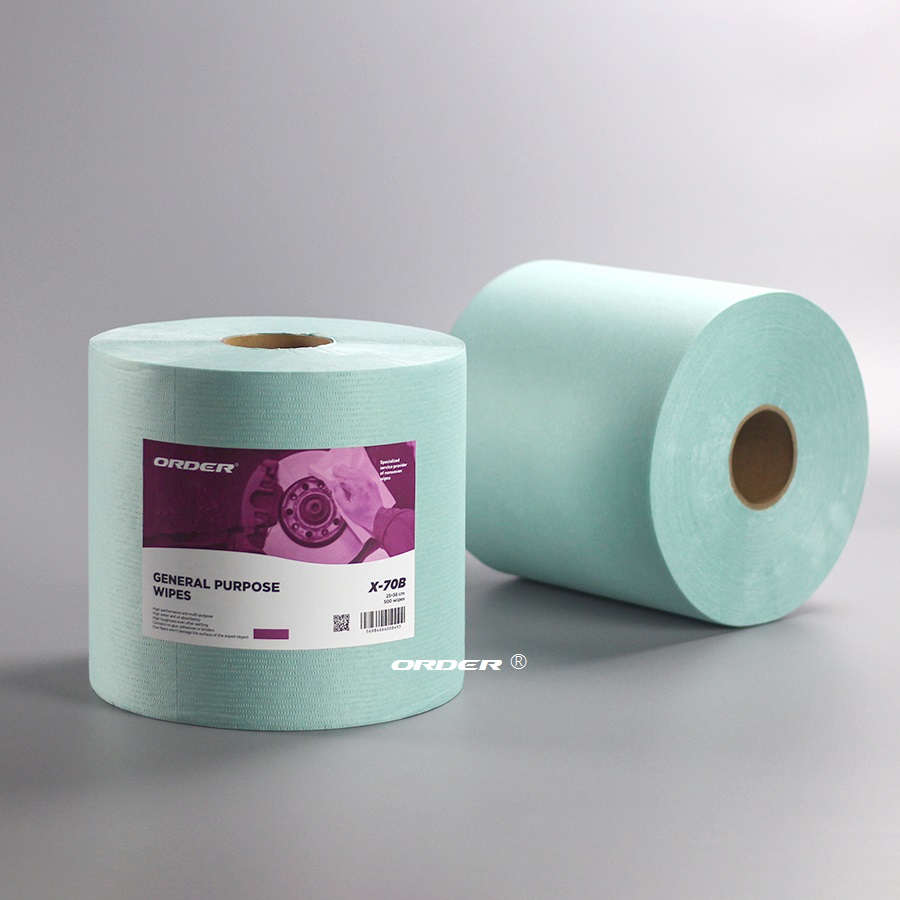
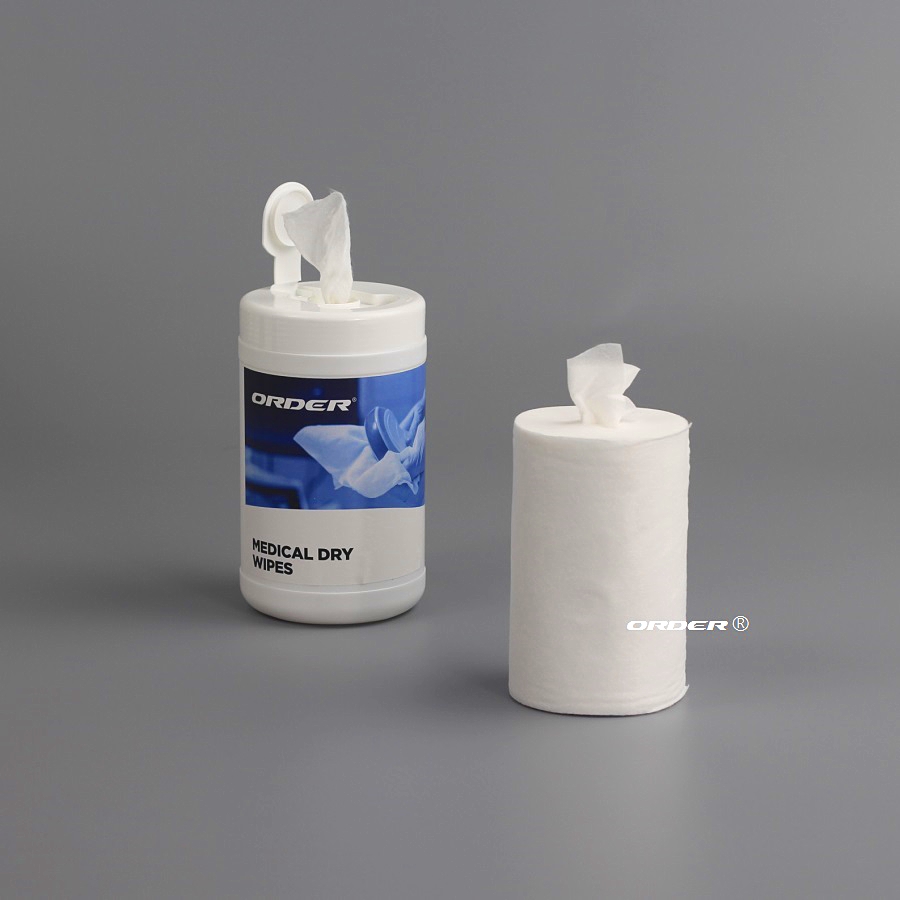
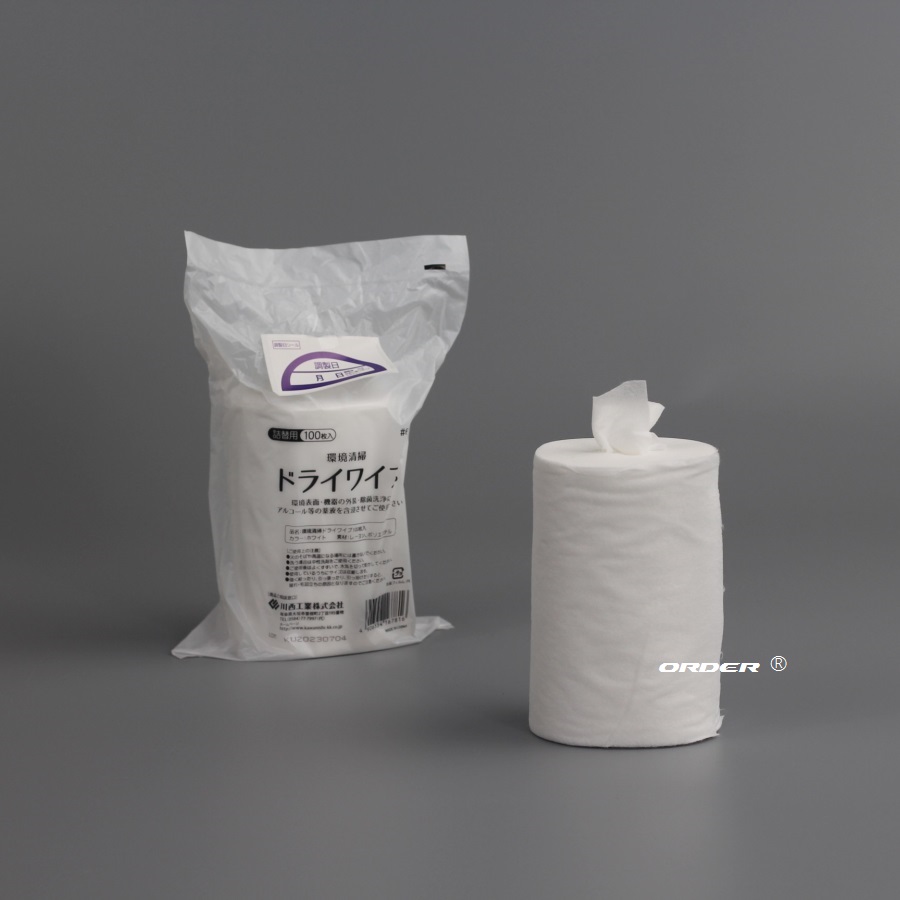
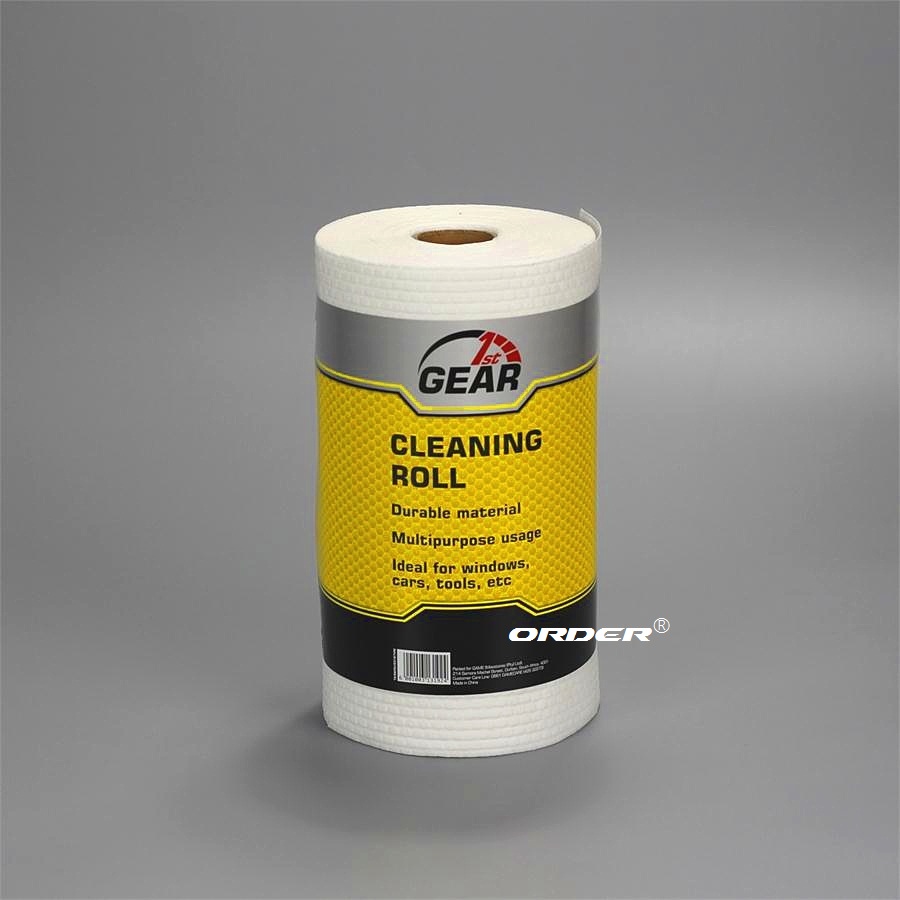
The way wipes are packaged affects how clean they stay. Pop-up boxes let operators remove a single wipe without touching the sheet next to it. Flat packs are compact and useful for small work areas. Roll formats are common where large amounts of wipes are used in one shift, especially when the roll is mounted on a dispenser. Choose a format that fits the workflow and keeps the remaining wipes protected from contamination.
The cleanliness claims of a wiper are only useful if they are supported by data. Buyers should ask for the following information before considering a supplier:
Ask the supplier for the test methods used. Particle shedding is often measured with a liquid bath and particle counter. Extractable levels are measured by soaking wipes in deionized water or IPA and analyzing the extract. Absorbency is reported in milliliters per gram of fabric. These three data points form the basic performance profile of the wipe.
Also verify the packaging. Cleanroom wipers should arrive in sealed, dust-free packaging that prevents particulate contamination during storage and dispensing. For a full framework that ties these factors together, this step-by-step guide on selecting the best cleanroom wipes walks through the process in a practical way.
Choosing a cleanroom wiper should be a deliberate technical decision. Match the material to the solvent, the absorbency to the liquid volume, and the lint level to the contamination sensitivity of the process. When a supplier offers documented test results and flexible packaging options, they give you a clearer path to protecting yield. That is the real value of a cleanroom wipe, and it is exactly what you should expect from your next purchase.
If you are interested in our products, please consult us

 contact us


 English
 日本語
日本語
 简体中文
简体中文