2026.08.24
 Blog
Blog
Content
A busy kitchen line leaves little time for careful cleaning decisions. A cook wipes a greasy stainless-steel counter with a rag, then uses the same rag to dry a plate before serving. The counter and the plate both look clean. In reality, the rag has just transferred oils and microorganisms across surfaces that should remain separate.
The conclusion is straightforward: a foodservice wiper is an engineered consumable, not a generic rag. The material, grammage, fold format and packaging determine how well it removes soil, whether it leaves lint behind, and how much it costs per actual clean. Choosing the right wiper means less waste, better hygiene and lower operating cost over time.
Three decisions matter most: the material family, the duty level, and the dispensing format. This guide walks through each one with the specification details you need when talking to a supplier.
The first question most buyers ask is straightforward: what material is a foodservice wiper? The answer is a nonwoven fabric based on one of three main fibre families: cellulose, melt-blown polypropylene, or a spunlace blend of viscose and polyester. Some wipers combine two of these to balance absorbency with strength.
You will rarely find 100% cotton in a foodservice wiper. Cotton is plush, but it holds onto moisture, dries slowly, and becomes a bacterial risk when reused frequently. Nonwoven materials are manufactured for consistent absorbency, controlled lint release and predictable wet strength, which is what a kitchen actually needs.
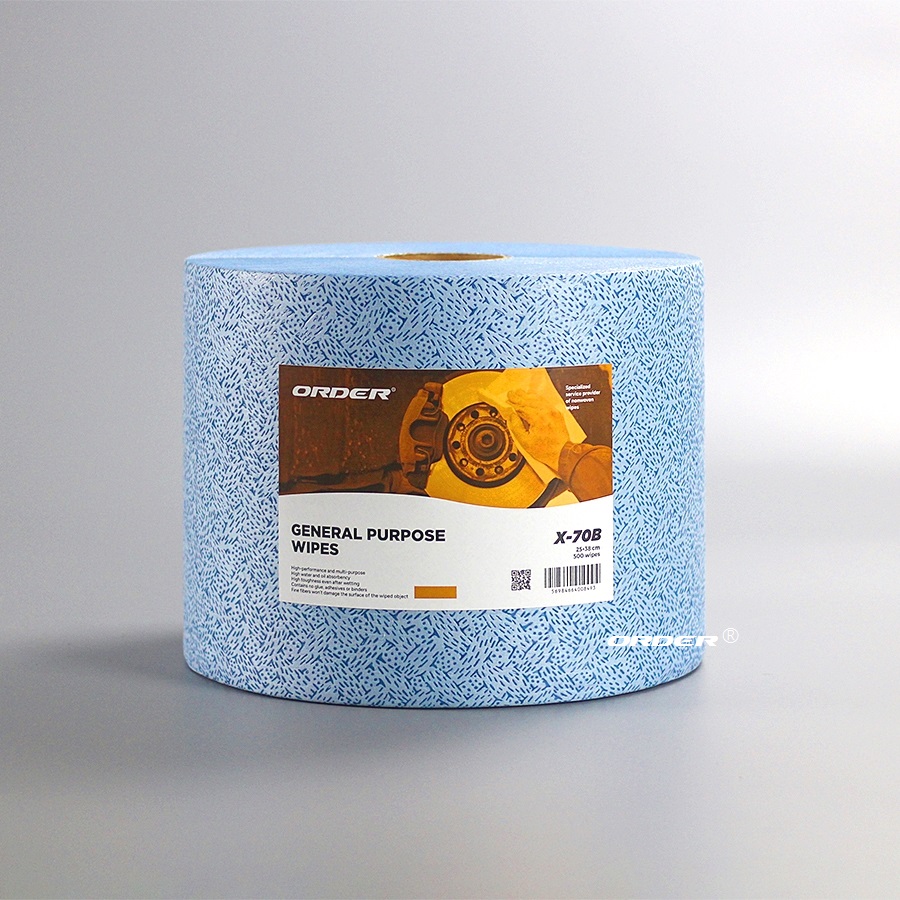
Cellulose wipers are made from plant fibres and deliver excellent water absorption at a low cost. They feel paper-like, soften when wet, and are best suited for light cleaning tasks where disposability matters more than durability.
Melt-blown polypropylene (PP) wipers are made of ultra-fine synthetic fibres. They are highly effective at absorbing oil, grease and solvents, and they resist tearing in heavy wiping. Their lint level is low, which makes them useful in kitchens and food preparation areas where fibres cannot be allowed to settle on food.
Spunlace wipers are produced by entangling viscose and polyester fibres with high-pressure water jets, creating a fabric-like texture and high wet strength. These wipers handle repeated wiping without falling apart and are a common choice for food-contact surfaces, stainless steel equipment and utensils.
| Material | Key characteristics | Best suited for |
|---|---|---|
| Cellulose / wood pulp | High water absorption, soft, economical, moderate wet strength | Tables, counters, light spills, one-time use |
| Melt-blown polypropylene | Strong oil absorption, solvent resistance, low lint, high durability | Greasy surfaces, range hoods, oil and sauce spills |
| Spunlace viscose / polyester | Fabric-like feel, high wet strength, low linting, reusable | Food-contact surfaces, utensils, stainless steel |
| Cellulose + PP blend | Balanced water and oil absorption, improved wet durability | General kitchen cleaning and dining area upkeep |
The terms light-duty and heavy-duty are not arbitrary marketing labels. They usually reflect the base weight of the nonwoven fabric, measured in grams per square metre (gsm), and the material composition behind it.
Light-duty wipers typically sit between 40 and 55 gsm. They are soft, easy to handle and inexpensive per sheet. Use them for wiping tables, trays, glass doors, front-of-house surfaces and minor spills where a strong scrubbing action is not needed.
Heavy-duty wipers start around 70 gsm and move upward to 100 gsm or more. The higher weight brings more fibre per sheet, better oil absorption and significantly higher tear resistance. These wipers can be used for repeated wiping on greasy equipment, heavy food residue, cleaning cloths and high-traffic areas.
For a demanding kitchen environment, a good starting point is a heavy-duty foodservice wiper in an 80 gsm fabric. A 60-piece pack at 13.7 by 24 inches gives each sheet enough surface area for large wiping tasks while maintaining strength under pressure. heavy-duty food service wipes at 80 gsm provide a practical reference for how this spec performs during a busy shift.
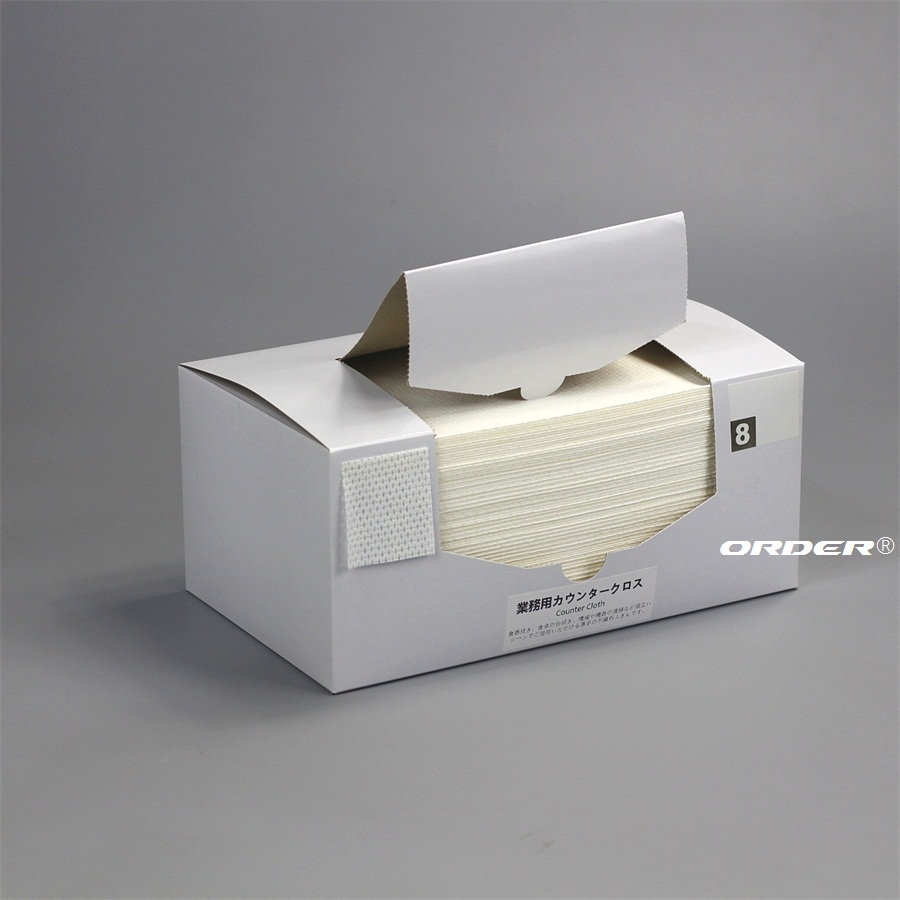 Wholesale Food Service Industry Wipes 60PCS Heavy-Duty,13.7”x24”,80gsm SuppliersSuzhou Order Cleanroom Material Co., Ltd is China wholesale Food Service Industry Wipes 60PCS Heavy-Duty,13.7”x24”,80gsm suppliers and Fo...View Product →
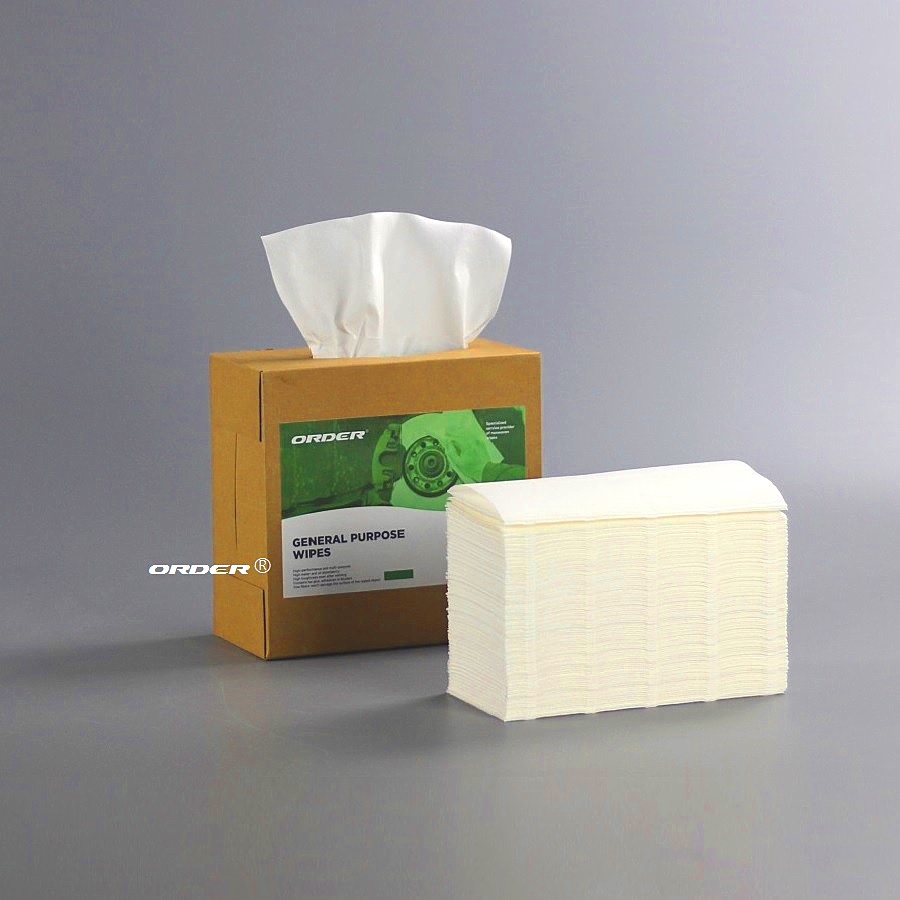
How a wiper is folded matters more than many buyers expect. The most common format in the foodservice category is the 1/4-fold, often called quarterfold. A sheet is folded twice, and then the folded sheets are stacked so that one sheet can be pulled out at a time.
Quarterfold wipers in pop-up boxes allow staff to pull out one sheet without touching the rest of the stack. This reduces the risk of contaminating the remaining wipes with dirty hands or food residue. A pop-up pack also keeps unused wipers protected from grease splashes, moisture and airborne particles, which is critical in an active kitchen.
Colour is another practical element. Blue wipers can be assigned to food-contact surfaces, green to general counter cleaning, red to raw protein zones and yellow to equipment or chemical use. Selecting colour-coded foodservice wipers helps enforce cleaning habits without adding more training.
When you need the convenience of a pop-up format combined with the strength of a spunlaced fabric, custom quarterfold food service wipes are worth considering. They give you the absorbency of a heavy-duty nonwoven while keeping the one-at-a-time dispensing that reduces waste.
 Wholesale Direct factory wholesale custom quarter-fold food service industry SpuSuzhou Order Cleanroom Material Co., Ltd is China wholesale Direct factory wholesale custom quarter-fold food service industry Spunlaced ...View Product →
If you are comparing product lines for the first time, the difference between formats becomes clearer when you look at how the product is used per shift. The process of choosing the best food service wipes for your business follows a logical sequence: define the task, select the material, then confirm the packaging. Most operational problems come from reversing that order.
Dry foodservice wipers remove physical soil, grease and moisture, but they do not disinfect. A sanitizing wipe, by contrast, is saturated with a chemical agent designed to kill pathogens on hard, non-porous surfaces. These are two different product categories with two different jobs.
For food-contact surfaces such as cutting boards, preparation tables and utensils, a dry wiper should be used to remove debris and moisture. If sanitizer is required, it should come from a separately labelled chemical wipe or spray applied according to the dwell time and dilution instructions. Expecting one wipe to do both jobs usually leads to either under-cleaning or chemical residue on food surfaces.
In a food environment, lint is not just a cleaning annoyance. Loose fibres can settle on food, equipment or open ingredients. Low-linting constructions, such as melt-blown PP and spunlace blends, help keep fibres out of the product flow. This is why the material spec matters as much as the price per pack.
Knowing whether food service sanitizing wipes are truly safe in food environments is a necessary check before you add them to your purchasing list; the label must state what the product is designed to do, and the wiper material must be compatible with the chemical being used.
The fastest way to avoid buying the wrong foodservice wiper is to put a specification list together before contacting suppliers. A brief description of the task is useful, but a specification gives the supplier enough information to recommend the right product.
For everyday tasks that do not involve heavy grease, a light-duty option is often the most economical choice. A light-duty food service wipe for general janitorial cleaning keeps the cost per sheet low, which makes it realistic for frequent replacement and reduces the temptation to reuse dirty wipes.
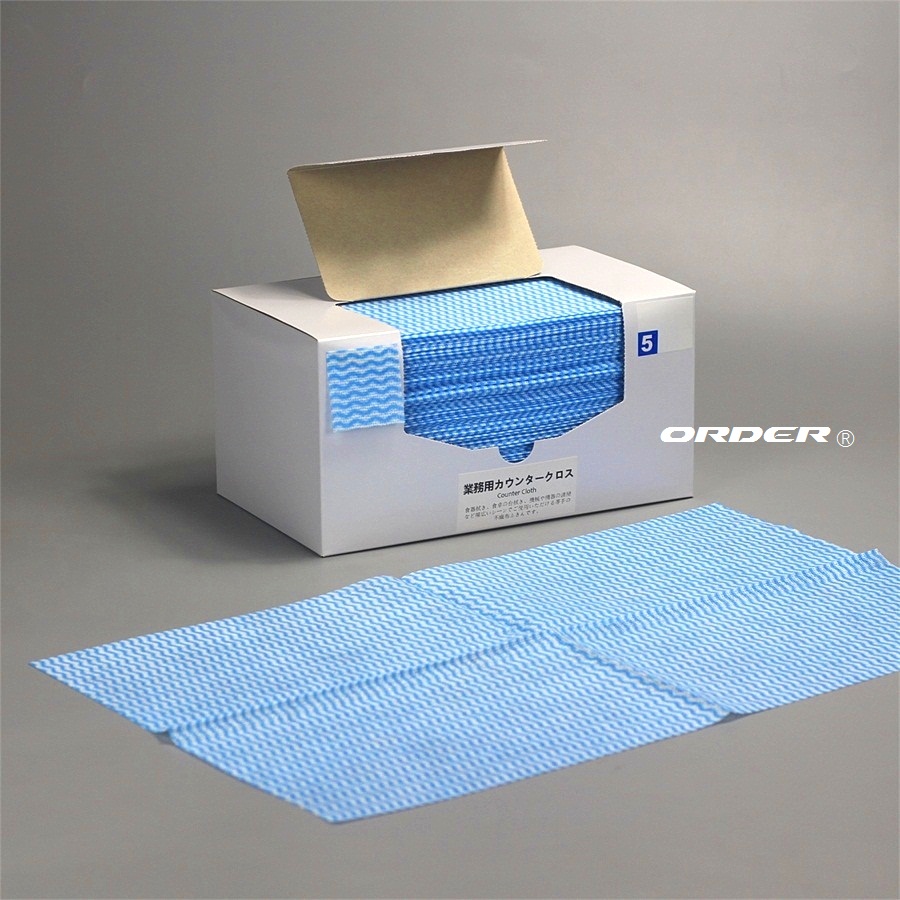 Wholesale Food Service Industry cleaning Wipes,Multi Purpose Janitorial Cloth 10Suzhou Order Cleanroom Material Co., Ltd is China wholesale Food Service Industry cleaning Wipes,Multi Purpose Janitorial Cloth 100pcs Li...View Product →
Absorbency data is especially important. The way a wiper handles water in a laboratory test does not always predict how it behaves with cooking oil or sauce residue, but it still gives you a baseline for comparing different materials before you commit to a full order.
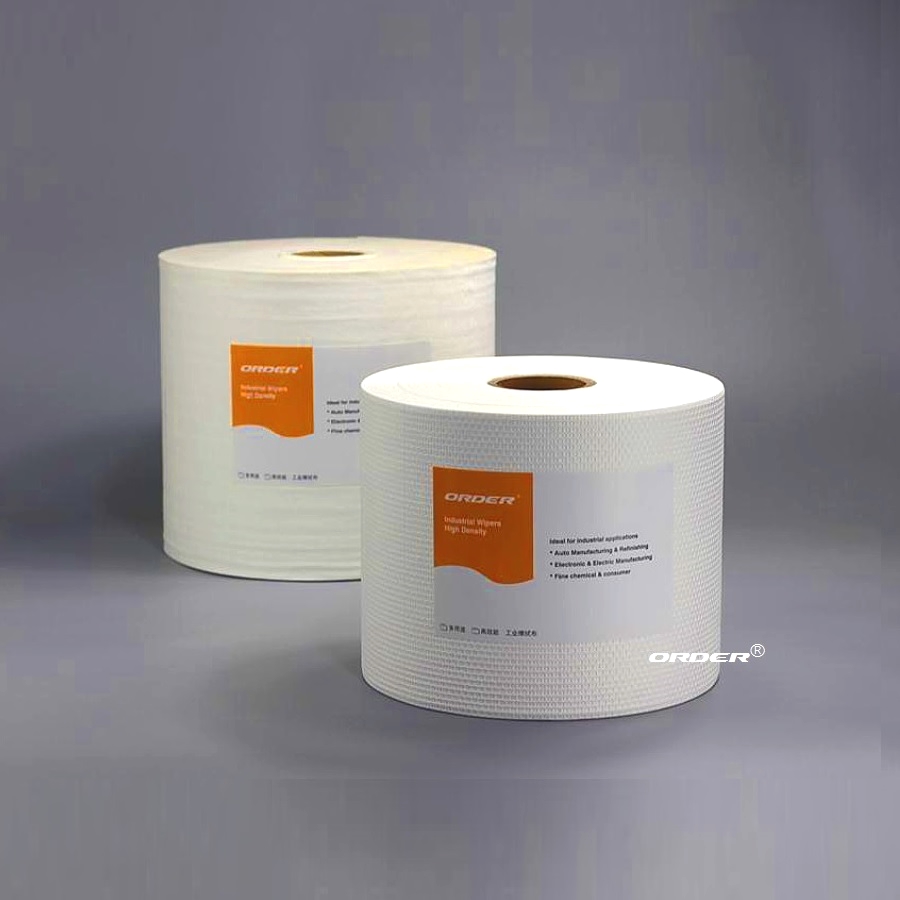
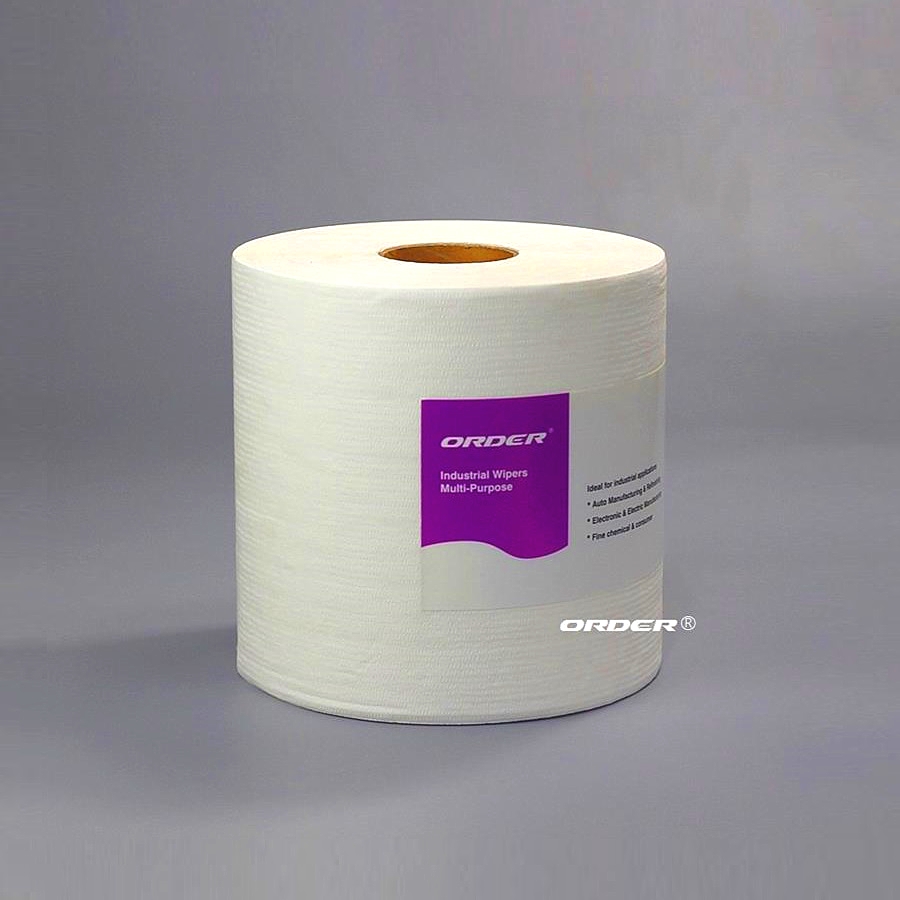
Buying foodservice wipers becomes predictable once the task is defined. For light wiping, use a thinner cellulose or spunlace material and replace it often. For oil, grease and repeated heavy wiping, move to a heavier melt-blown or spunlace construction. Keep the format aligned with how your staff actually use wipers: pop-up boxes for controlled dispensing, rolls for high-volume work, and colour coding for zone separation.
The cheapest wiper is rarely the most economical one once replacement frequency, lint contamination and cleaning time are included. Test a sample in real conditions, measure how many sheets are needed per shift, and then scale up. If your use case is unusual, contact our sourcing team with the surface type, liquid type and cleaning frequency, and we can recommend a material that fits the job.
If you are interested in our products, please consult us

 contact us


 English
 日本語
日本語
 简体中文
简体中文