2026.04.02
 Blog
Blog
Content
Selecting a cleaning wipe for commercial use is not a simple task. Businesses require products that meet strict standards for efficacy, safety, and cost-efficiency. For procurement managers and B2B buyers, the choice must align with specific operational needs. This article provides an engineer-level analysis to guide your decision. We will explore high-search-volume topics to help you understand the nuances of this essential product category.
Before making a bulk purchase, it is crucial to understand the material science behind the product. The base substrate, chemical saturation, and packaging all define performance. For B2B buyers, the primary distinction lies between disposable and reusable options. Each type serves a different purpose and offers a distinct return on investment.
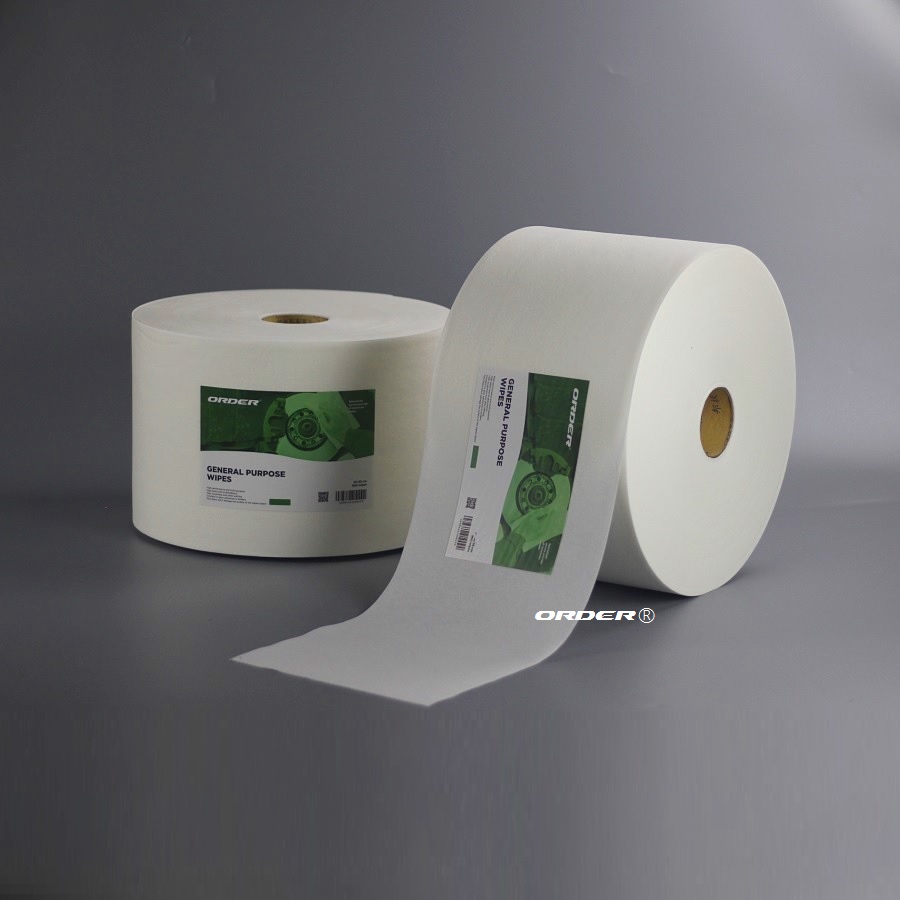
Disposable cleaning wipe products are typically made from non-woven fabrics like spunlace or airlaid pulp. They offer high purity and eliminate cross-contamination risks. Reusable wipes, often made from microfiber or woven textiles, provide superior durability for heavy-duty tasks. The choice depends on your facility's hygiene protocol and labor costs for laundering.
When evaluating these options, consider the total cost of ownership. This includes the purchase price, storage space, and waste disposal or laundry expenses. Below is a comparison of key metrics for procurement specialists.
| Parameter | Disposable Non-Woven Wipes | Reusable Microfiber Wipes |
|---|---|---|
| Cost Per Use | Higher upfront, no laundry cost | Lower per cycle, requires processing |
| Cross-Contamination Risk | Very low (single-use) | Moderate (if not sanitized properly) |
| Absorbency | Variable (depends on GSM) | High (especially for microfiber) |
| Durability | Single use | High (up to 500 wash cycles) |
When sourcing for a facility, you must look beyond the price tag. A cleaning wipe must meet specific physical and chemical standards. Two of the most searched metrics by professionals are "GSM" and "chemical compatibility." Understanding these technical specifications ensures you purchase a product that performs under real-world conditions.
GSM stands for Grams per Square Meter. This is a technical measurement of the fabric's density and weight. For a cleaning wipe, a higher GSM generally indicates a thicker, more durable, and more absorbent product. However, a high GSM also means a higher cost per unit. For light-duty tasks like electronics cleaning, a lower GSM is sufficient. For heavy-duty industrial degreasing, a high GSM wipe is necessary to hold solvents without disintegrating. This is a critical factor in the long search for the best heavy-duty cleaning wipe for grease.
The liquid chemistry is just as important as the substrate. Pre-saturated wipes must have a stable formula that does not degrade the material. For B2B buyers, verifying the shelf life and chemical stability is essential. The interaction between the solvent and the wipe material determines if linting occurs. For tasks requiring high hygiene, a disposable cleaning wipe with alcohol is often the standard, as alcohol provides rapid evaporation and effective disinfection without residue.
Different sectors have unique requirements. A cleaning wipe used in a food processing plant must be food-safe and free from contaminants. In a semiconductor cleanroom, the priority is low particle generation. Understanding these application-specific demands allows for better inventory management and supplier negotiations.
To ensure consistency across bulk orders, procurement professionals must rely on technical data sheets (TDS) and safety data sheets (SDS). These documents provide the empirical data needed to verify supplier claims. When evaluating a potential supplier, ask for specific test results regarding tensile strength and sorption capacity.
Beyond GSM and substrate type, consider the following engineering parameters. These metrics directly impact the operational efficiency of your staff.
For B2B buyers, the goal is to minimize cost without sacrificing quality. Volume purchasing, packaging formats, and inventory management play significant roles. The packaging format—whether canister, tub, or refill pack—affects the cost-per-wipe and storage footprint. A common search, bulk cleaning wipes for industrial use, indicates a focus on high-volume, low-cost-per-unit solutions.
Consider the dispensing method. Center-pull rolls reduce waste because only one wipe is dispensed at a time. Pop-up canisters offer convenience but can lead to "nesting,g" where multiple wipes come out, increasing consumption. Analyzing your facility's usage patterns helps select the most economical format.
Selecting the right cleaning wipe involves balancing technical specifications, application requirements, and total cost of ownership. By focusing on material science (GSM, substrate), chemical compatibility, and industry-specific certifications, B2B buyers can make informed decisions. Whether you need hospital-grade cleaning wipes for a medical facility or a bulk cleaning wipe for industrial use, rigorous testing and supplier verification are essential for operational success.
A cleaning wipe is designed to remove soil, dirt, and organic matter from surfaces. It may not kill bacteria or viruses. A disinfectant wipe, however, contains specific EPA-registered chemicals designed to inactivate pathogens. To be classified as a disinfectant, the wipe must pass efficacy tests against specific organisms. For B2B healthcare or food service applications, verifying the EPA registration number on the label is mandatory.
Cost-per-wipe is calculated by dividing the total price of the case by the total number of wipes in that case. However, for a true operational cost, you must factor in the "wetness" or saturation level. If a wipe is undersaturated, workers use two wipes instead of one, effectively doubling the cost. Always request a sample to test the liquid-to-substrate ratio before committing to a large bulk order.
Lint-free is a term used to describe wipes that shed minimal fibers. Technically, it refers to a low particle count measured via liquid particle counting (LPC) or gravimetric analysis. This is critical in cleanrooms, automotive painting, and electronics assembly because loose fibers can cause product defects, contaminate sensitive equipment, or ruin high-gloss finishes. Non-woven technologies like hydroentangling or thermal bonding are used to create lint-free edges.
Only wipes specifically labeled as "flushable" according to industry guidelines (like the IWSFG or INDA/EDANA standards) should be flushed. Most cleaning wipes are made with plastic-based fibers (polyester, polypropylene) or blends that do not break down in water. Flushing non-flushable wipes leads to significant municipal sewer blockages and pump damage. For sustainability, look for wipes made with certified compostable plant-based fibers, but note these are typically not suitable for heavy-duty industrial degreasing.
If you are interested in our products, please consult us

 contact us


 English
 日本語
日本語
 简体中文
简体中文