2026.04.15
 Blog
Blog
Content
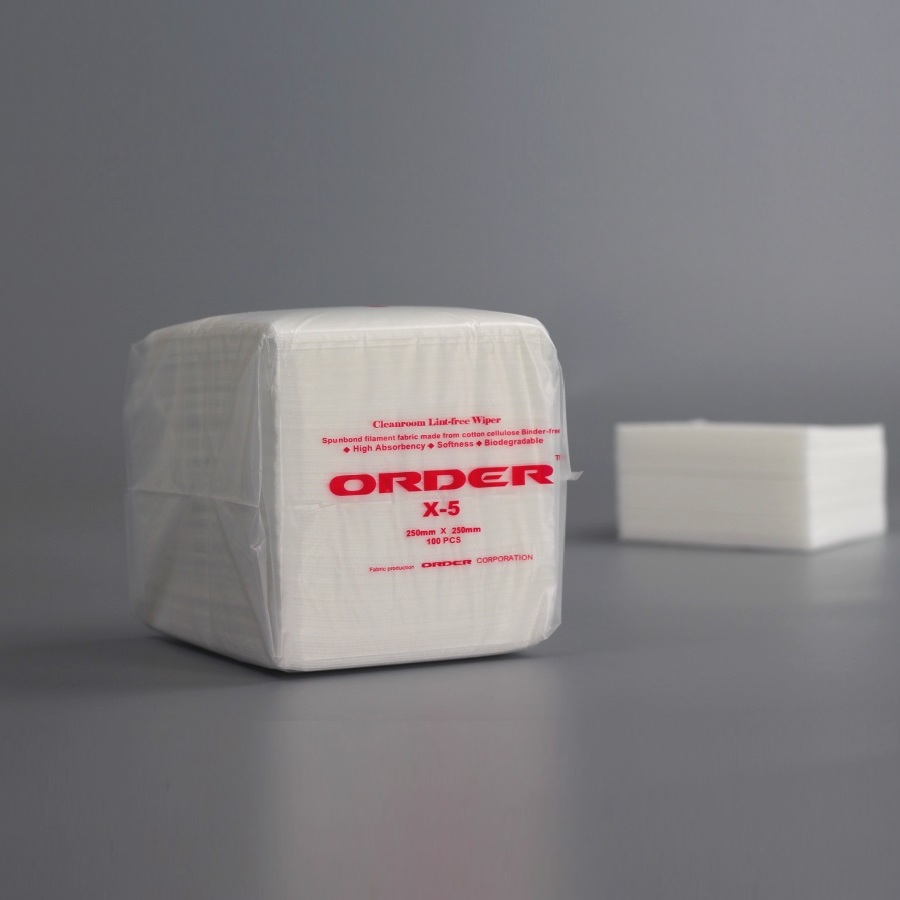
In the landscape of controlled environments, maintaining particulate and molecular cleanliness is a rigorous engineering challenge. A wiper cleanroom grade product serves as a primary tool for removing contaminants from critical surfaces. Unlike standard industrial rags, these specialized textiles are engineered to minimize particle generation while maximizing the pickup of foreign materials. Engineers and facility managers must understand that the wrong choice of wiper can introduce more defects than it removes. The selection process directly impacts yield rates in semiconductor manufacturing, pharmaceutical production, and aerospace assembly.
Regulatory compliance is the foundation of any contamination control strategy. The ISO 14644 wiper requirements classify cleanrooms based on the concentration and size of airborne particles. While ISO 14644 primarily addresses air quality, the IEST (Institute of Environmental Sciences and Technology) provides the testing standards (such as IEST-RP-CC004) that define wiper performance. Buyers must verify that a wiper meets the stringent limits for particles and non-volatile residue (NVR) appropriate for their specific ISO class. For instance, an ISO Class 5 environment demands a wiper with significantly lower particle release than an ISO Class 8 environment.
The substrate of the wiper dictates its physical and chemical properties. Engineers must analyze the fiber structure to determine suitability for specific tasks.
Most high-performance wipers utilize synthetic fibers due to their superior strength and low particle generation. Polyester is a common choice because of its chemical resistance and thermal stability. However, natural fibers like cotton are sometimes used in less critical applications due to their high absorbency, though they shed significantly more. The manufacturing process, whether knitted, woven, or non-woven, further defines the wiper's integrity. A tightly knitted polyester wiper will have durable edges that prevent fraying during rigorous scrubbing.
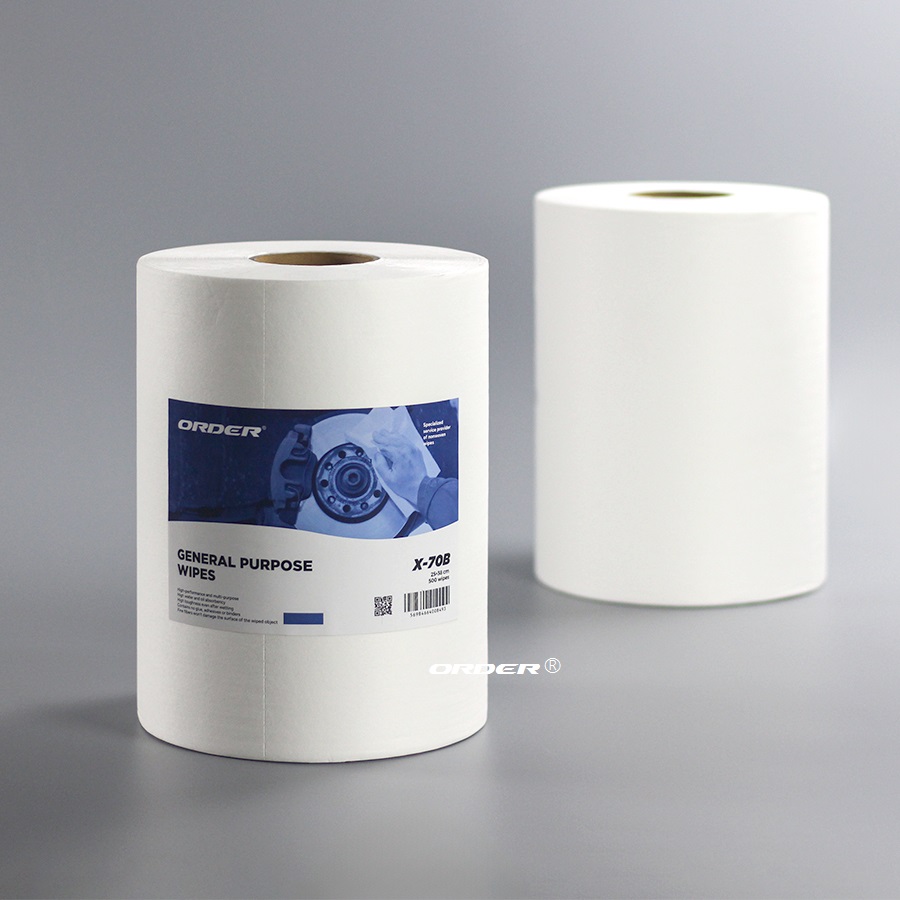
Choosing the correct material requires a detailed understanding of the trade-offs between absorbency, purity, and cost. A thorough cleanroom wiper material comparison is essential for optimizing operational budgets without compromising quality. Polyester offers the highest purity but lower water absorbency compared to cellulose blends. Nylon provides excellent abrasion resistance for scrubbing stubborn residues but comes at a higher price point.
The following table compares the key attributes of common cleanroom wiper materials.
| Material Type | Particle Generation | Absorbency (Water) | Chemical Resistance |
| 100% Polyester (Knitted) | Very Low | Low | Excellent |
| Polyester/Cellulose Blend (Non-woven) | Medium | High | Good |
| 100% Nylon (Knitted) | Low | Medium | Good |
| 100% Cotton (Woven) | High | Very High | Poor |
Technical specifications on datasheets can be overwhelming. Engineers need to focus on the metrics that directly affect their process yield.
The term "lint-free" is often misunderstood as a marketing term, but it has a technical basis. In reality, no textile is completely free of particles. However, lint free wipers for cleanroom applications are engineered to minimize fiber release to near-zero levels. This is achieved through laser-cut sealed edges and ultrasonic sealing. If a wiper releases fibers, these particles can deposit on sensitive substrates like silicon wafers or optical lenses, causing catastrophic defects. B2B buyers should request particle count data generated via the "black drum" test or liquid particle count methods.
Efficiency in spill control and surface wiping depends on how quickly and how much liquid a wiper can hold. The cleanroom wiper absorbency rate is typically measured in milliliters of water per square meter or gram. Hydrophilic materials like cellulose blends absorb water rapidly, making them ideal for aqueous cleaning agents. Hydrophobic materials like pure polyester may repel water but absorb solvents like isopropyl alcohol effectively. Matching the absorbency characteristics to the specific solvent used in the process is vital for safety and economy.
In electronics manufacturing, Electrostatic Discharge (ESD) is a silent killer of components. Standard synthetic wipers can generate static charges when rubbed against surfaces. Static dissipative cleanroom wipers incorporate conductive carbon or carbonized polyester fibers into the weave. These fibers create a path for static charges to dissipate safely to the ground. Engineers working in ISO Class 3 to Class 5 electronics environments must prioritize these carbon-laden wipers to prevent latent damage to microcircuits.
The physical environment dictates the constraints of the wiper. A wiper used in a chemical spill station differs from one used on a microscope stage.
The wiper cleanroom selection must account for the chemical compatibility of the fiber. Aggressive solvents like acetone or methanol can degrade certain cellulose blends, causing the wiper to disintegrate during use. This disintegration leaves residues on the surface. Conversely, strong acids used in etching processes require wipers with exceptional chemical inertness. Engineers should consult chemical compatibility charts provided by the manufacturer to ensure the wiper substrate will not degrade or release harmful byproducts when exposed to process chemicals.
For procurement officers, the supply chain reliability is as important as the product itself. Validating the cleanroom laundry process for reusable wipers or the packaging integrity for disposable ones is critical.
Reputable suppliers provide certificates of analysis (CoA) for each batch. These certificates verify performance metrics such as extractables, ions, and particle counts. B2B buyers should insist on double-bagged packaging with an outer bag that is not cleanroom rated and an inner bag that is. This prevents introducing contamination from the warehouse into the cleanroom during the transfer process.
The selection of a wiper cleanroom product is a multi-faceted decision that impacts the entire manufacturing ecosystem. By analyzing cleanroom wiper material comparison data and understanding ISO 14644 wiper requirements, engineers can make informed choices. Whether the priority is high cleanroom wiper absorbency rate for spills or ESD protection from static dissipative cleanroom wipers, the right tool ensures process integrity. Professional procurement requires looking beyond the price tag and focusing on technical validation and quality certification.
If you are interested in our products, please consult us

 contact us


 English
 日本語
日本語
 简体中文
简体中文