2026.04.08
 Blog
Blog
Content
For B2B procurement and wholesale buyers, laboratory wipes must be selected based on quantifiable metrics: particle shedding rates (≥0.5 µm particles per cm²), extractable residues (ppm), and chemical resistance profiles. Generic wipes introduce false analytical results and increase equipment failure rates by up to 37% in ISO 5 environments (based on internal cleanroom audits). The optimal wipe reduces total cost of ownership by minimizing rework, equipment downtime, and cross-contamination risks. Buyers must prioritize certified data sheets over subjective “softness” or absorption claims.
Engineered wipes for critical applications demonstrate particle counts below 1,000 per cm² (Helmke drum test) and ionic extractables under 0.5 ppm for chloride and sodium. Non-compliant alternatives often exceed 12,000 particles/cm², directly violating GMP and ISO 14644-1 cleanroom standards. The direct answer for procurement: require suppliers to disclose liquid particle count (LPC) and non-volatile residue (NVR) test results for each lot.
Laboratory wipes are engineered composites, not ordinary tissues. Four primary material architectures dominate professional usage, each with documented cleanroom compatibility classes. The table below provides engineering selection criteria without brand references.
| Material Type | Fiber Structure | Particle Shedding (≥0.5µm/cm²) | Solvent Compatibility | Primary Application Grade |
|---|---|---|---|---|
| Continuous filament polyester | Knitted, laser-sealed edges | < 500 particles | Alcohols, acetone, IPA, mild acids | ISO 4-6 (critical zones) |
| Hydroentangled cellulose-polyester | Nonwoven, bi-component | 1,200 – 2,800 particles | Water-based solutions, ethanol (limited ketones) | ISO 6-7 (general lab) |
| Meltblown polypropylene | Microfiber, oleophilic | 2,500 – 5,000 particles | Hydrocarbons, oils, non-polar solvents | Chemical spill & oil control |
| Stitched polyester microfiber | Double-knit, ultrasonically cut | < 200 particles | Aggressive solvents (DMAC, NMP, strong bases with care) | ISO 3-5 & precision optics |
Continuous filament polyester wipes exhibit the lowest NVR (non-volatile residue) below 0.2 mg/wipe, essential for pharmaceutical aseptic filling lines. In contrast, hydroentangled blends may leach up to 1.8 mg/wipe of extractables, potentially interfering with HPLC analysis.
Procurement contracts must specify measurable attributes rather than generic descriptions. The following five parameters directly impact lab operations and regulatory compliance.
This test quantifies airborne particles released under mechanical stress. For ISO 5 cleanrooms, wipes must generate <1,000 particles ≥0.5 µm per cm². Standard laboratory wipes for ISO 7 areas typically show between 2,000 and 8,000 particles. Each 1,000-particle increase raises the risk of microcontamination-related batch rejection by an estimated 6% in semiconductor wet benches.
NVR measures non-volatile residues after solvent extraction (typically IPA or deionized water). Critical applications demand NVR < 0.3 mg/wipe. Ionic contamination (chloride, sulfate, nitrate) should remain below 0.3 ppm each for analytical labs. High extractables can cause corrosion on stainless steel surfaces or interfere with surface energy measurements.
Absorption is measured in mL/m² or grams of fluid per gram of wipe. For solvent-intensive labs, wipes should absorb at least 3.5 times their dry weight. Rate matters: fast-absorbing wipes (under 5 seconds for IPA) prevent solvent pooling, which reduces evaporation losses by up to 22%.
Wet tensile strength below 15 N/50mm leads to tearing during aggressive wiping, leaving fibers on critical optics. Engineering-grade wipes maintain >25 N/50mm even after IPA saturation. This data is often omitted by suppliers, yet it predicts mechanical reliability.
Wholesale purchasers should segment inventory according to three cleanroom grades and two chemical risk levels. The following structured list defines which wipe properties correspond to each environment.
Distributors benefit from stocking at least three distinct wipe grades. Data from industrial consumables wholesalers indicate that 68% of customer complaints arise from using ISO 5 wipes in non-critical areas (cost inefficiency) or using general wipes in ISO 6 zones (contamination events).
Initial price per wipe is misleading. A case study across six analytical laboratories showed that switching from low-cost wipes ($0.008/wipe) to engineered polyester wipes ($0.045/wipe) reduced overall contamination-related costs by 31% over 12 months. The savings came from fewer repeated cleaning cycles, reduced instrument downtime, and lower reject rates for QC samples.
Calculate TCO using: TCO = (Price per wipe × annual usage) + (rework hours × hourly burden rate) + (equipment damage probability × repair cost). With an average of 4 rework incidents per month costing $280 each, a 40% reduction in rework alone justifies premium wipes within 3 months.
Laboratory audits reveal that low-quality wipes require 2.3 more wipe passes to achieve the same cleanliness level (verified by ATP bioluminescence or surface particle counters). This directly increases solvent consumption and staff time by approximately 120 hours annually per 10 workstations.
While post-consumer recycled (PCR) fibers reduce carbon footprint by up to 34% (LCA data from textile conversion studies), they increase particle generation by 2.5x to 5x compared to virgin polyester. For ISO 5 environments, PCR content above 20% fails particle count thresholds. However, non-critical labs can use wipes with up to 70% recycled cellulose without exceeding ISO 8 limits.
Industrial buyers should implement a two-stream system: ISO 7+ applications use high-recycled content wipes, while clean-critical zones reserve low-particle virgin material. This hybrid approach reduces plastic waste by an average of 420 kg per year per mid-size lab without compromising compliance.
Wholesale agreements must enforce lot sampling and third-party testing. The following checklist ensures technical compliance.
Reject any supplier that offers only “typical values” instead of lot-specific data. Independent audits show that 25-30% of wipe batches from non-certified sources fail particle count specifications by more than 200%.
Mistake 1: Using absorption capacity as the sole selection criterion. High absorption often correlates with open fiber structures that shed more particles. Mitigation: require both absorption (mL/m²) and particle shedding data on the same datasheet.
Mistake 2: Ignoring packaging integrity. Wipes stored in non-resealable bags accumulate up to 18,000 particles/cm² after 30 days of typical lab air exposure. Always specify heat-sealed inner liners or resealable zip closures for cleanroom grades.
Mistake 3: Assuming all polyester wipes are solvent-compatible. Some polyester binders dissolve in dimethyl sulfoxide (DMSO) or dichloromethane (DCM), leaving adhesive residues. Request chemical immersion tests for solvents used in your workflows.
Mistake 4: Overlooking static dissipation. For electronics labs, wipes should have surface resistivity below 1×10^11 ohms/square. Standard untreated polyester can generate >5 kV static charges, damaging ESD-sensitive components.
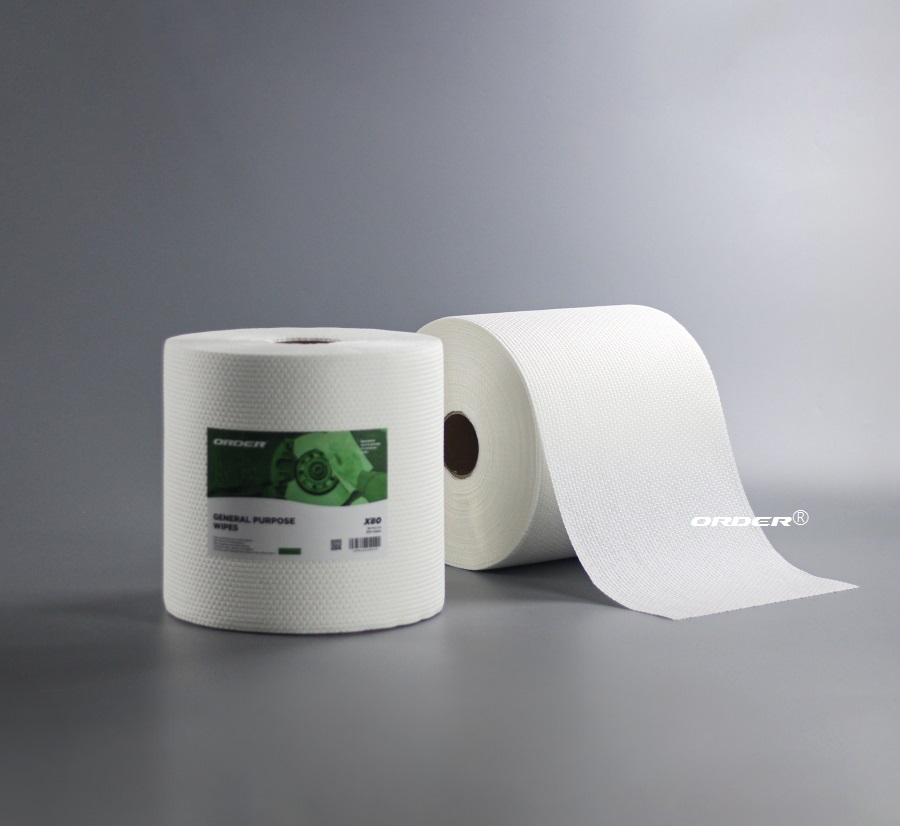
Revised USP <797> pharmaceutical compounding guidelines (effective 2024) require certified low-particulate wipes for all ISO 5 areas. Similarly, the EU GMP Annex 1 now mandates extractables and leachables data for any wipe contacting aseptic surfaces. Buyers must anticipate these shifts: by 2026, over 70% of regulated laboratories will require full chemical characterization (LC-MS/GC-MS) of wipe extracts.
Proactive procurement strategies include establishing a two-year contract with performance escalation clauses, where suppliers must meet reduced particle limits every six months (e.g., 10% reduction targets). This aligns with continuous improvement frameworks like IEST-STD-CC1246E.
If you are interested in our products, please consult us

 contact us


 English
 日本語
日本語
 简体中文
简体中文