2026.08.17
 Blog
Blog
Content
At the end of a shift in a metal fabrication plant, the maintenance cart tells the whole story: a bucket of cotton rags matted with way oil, paper towels shredding under contact cleaner, and recycled t-shirts never designed to absorb hydraulic fluid. Workers wipe the same machine covers three times before they look clean, then add the spent rags to an overflowing bin.
Meltblown oil absorbent wipes eliminate this routine. Made from 100% meltblown polypropylene (PP), they combine high oil pickup, broad solvent resistance, and very low linting in a single disposable product. For oil-heavy tasks they are not a premium alternative to shop rags; they are usually the cheaper option once you count operator time, wipes consumed per task, and disposal weight.
The term "meltblown" describes the manufacturing process. Polypropylene resin is melted, extruded through fine spinneret dies, and blown by high-velocity hot air into microfibers that collect into a random, self-bonding web. The resulting fabric looks like a dense felt but behaves like neither woven cloth nor paper.
Each fiber is only a few micrometers in diameter, so every square meter of fabric contains a large total fiber surface area. When oil contacts the wipe, it spreads across millions of fiber surfaces and gets trapped in the capillary spaces between them. The wipe holds the oil instead of pushing it around the part, which is the difference between wiping and actually cleaning.
Polypropylene is a nonpolar material, so it attracts nonpolar liquids such as gear oil, hydraulic fluid, cutting fluid, and grease. Water, which is polar, is taken up much more slowly. In practice this means a meltblown wipe can lift an oil film from a damp metal surface without becoming waterlogged on the first pass.
The same chemistry that attracts oil also resists common industrial solvents, including isopropyl alcohol, mineral spirits, and many degreasers. That makes meltblown PP wipes suitable for solvent wiping, parts cleaning, and pre-paint degreasing, tasks where paper towels fall apart and cotton rags leave lint behind.
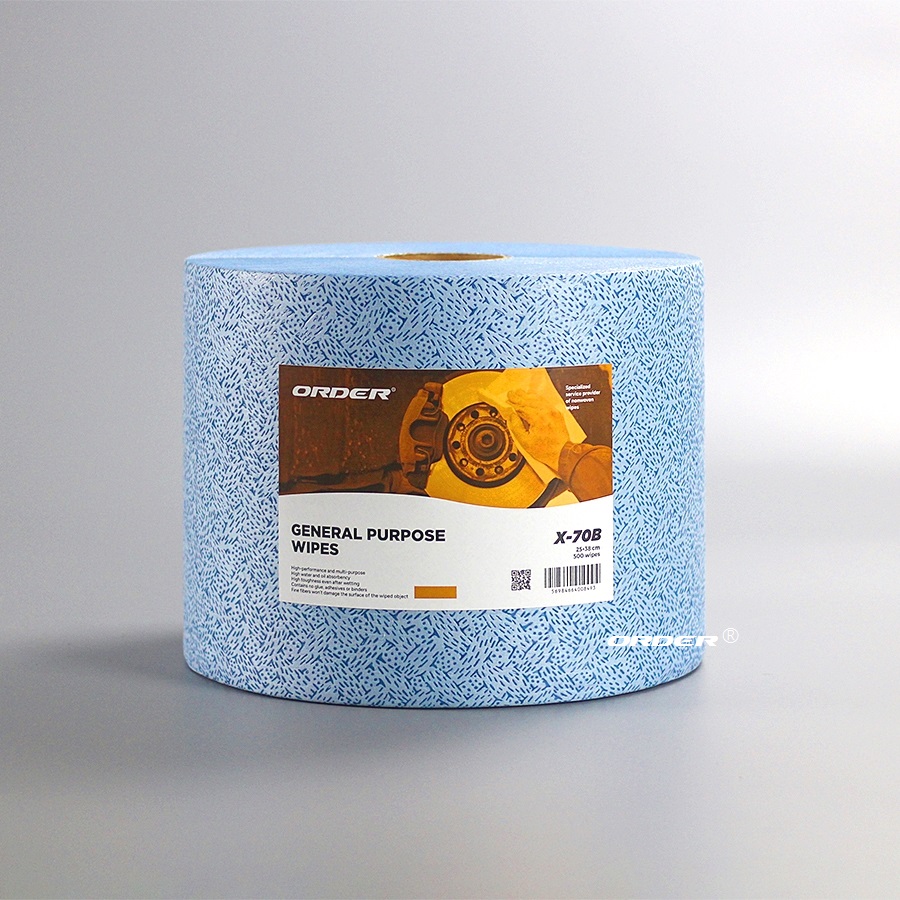
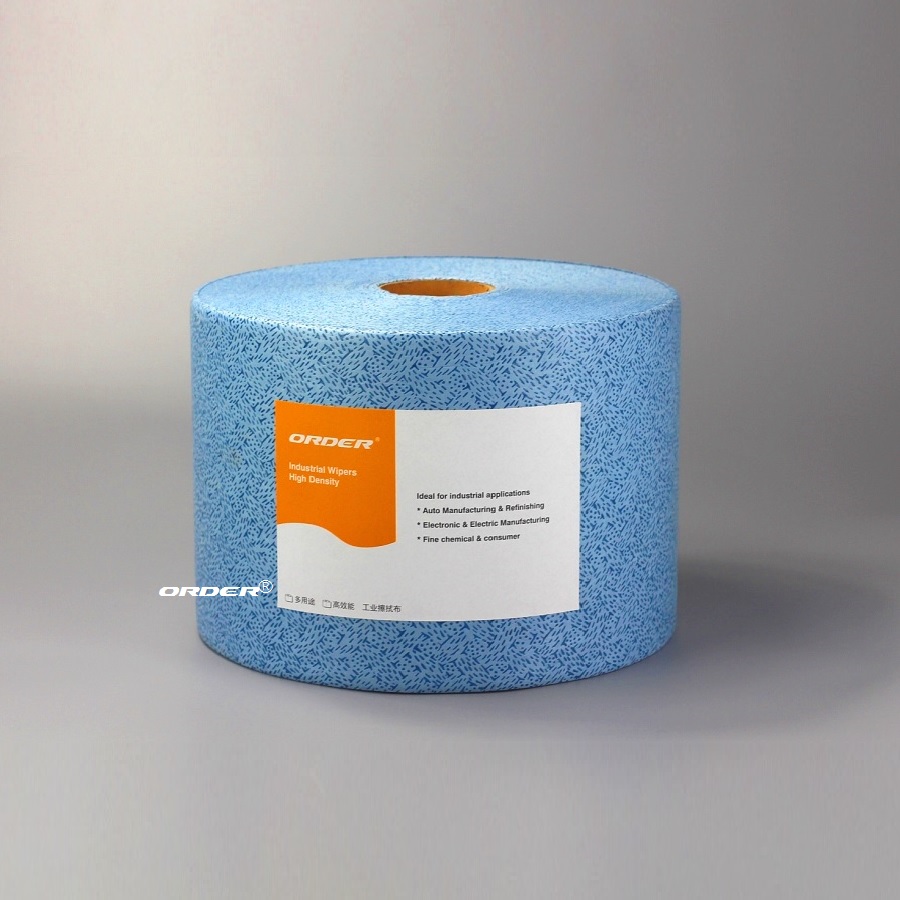
A representative product in this category, the X3331B meltblown oil absorbency industrial wiping cloths, uses a dark blue 100% PP fabric that hides grime and endures repeated heavy wiping.
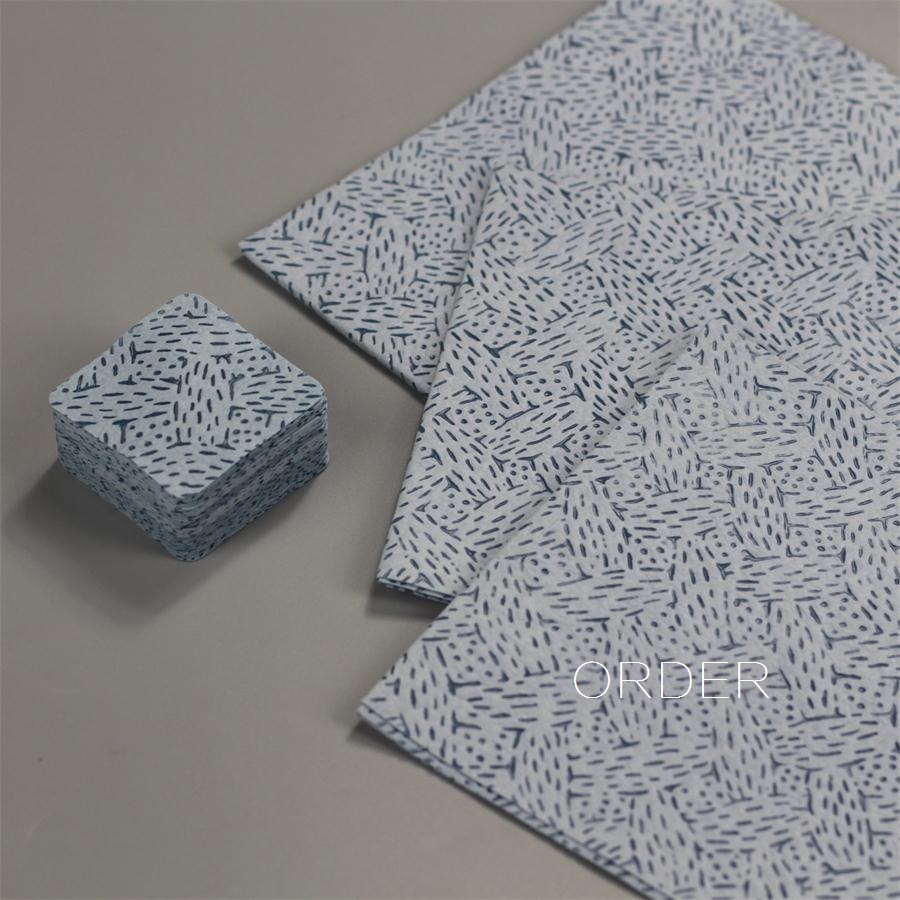 Wholesale Blue Perforated Jumbo Roll Meltblown PP Heavy Duty Oil Absorbent IndusSuzhou Order Cleanroom Material Co., Ltd is China wholesale Blue Perforated Jumbo Roll Meltblown PP Heavy Duty Oil Absorbent Industrial C...View Product →
Meltblown wipes see the heaviest use on machine shop floors and line-side maintenance stations: way oil on lathe beds, grease on fittings, coolant residue on chuck jaws, hydraulic leaks on pumps. Because the fabric does not shed fibers, it can be used near open gearboxes and bearing housings. Because it absorbs oil quickly, operators use fewer wipes per task.
In body shops and paint prep areas, lint is a defect that shows up in the final paint film. Meltblown wipes are strong enough for aggressive solvent wiping yet pliable enough to reach into recessed body panel areas. They are used for degreasing metal before priming, cleaning moldings before adhesive application, and wiping spray gun parts.
Printing plants use meltblown PP for blanket and roller washes, where solvent exposure destroys paper wipes in moments. Parts washers use them for final hand wiping of small components before assembly, and engine rebuild shops use them for degreasing cylinder heads and transmission casings.
As covered in our article on why meltblown oil absorbent wipes became an innovative tool for industrial cleaning, the shift from rags is driven less by absorbency numbers and more by consistency: every wipe behaves the same way, every time.
No single wipe handles every task, so comparing properties honestly matters.
| Property | Meltblown PP wipes | Spunlace cellulose/polyester | Cotton shop rags | Paper towels |
|---|---|---|---|---|
| Oil uptake | High | Moderate | Moderate | Low |
| Water uptake | Low to moderate | High | High | High |
| Linting | Very low | Low | High | High |
| Solvent resistance | Excellent | Good | Good | Poor |
| Wet strength | High | High | Moderate | Low |
| Typical passes per wipe | Several | One to several | Reused | One |
| Main risk with oil tasks | Limited water pickup | Cost per wipe | Contaminant carryover | Tearing and lint |
If the task involves mainly oil, grease, or solvent, meltblown PP is the rational choice. If the task involves large amounts of water-based spills, spunlace cellulose/polyester wipes perform better. Cotton rags deserve the most scrutiny: they carry contaminants from one surface to the next and create fire hazards when oil-soaked rags pile up.
Grams per square meter (gsm) is the first specification to check. Lightweight meltblown wipes around 45 to 60 gsm are economical for frequent light wiping but tear sooner under aggressive use. Heavyweight cloths in the 80 to 120 gsm range hold more oil per wipe and survive repeated passes on rough surfaces. They cost more per piece but usually cost less per completed cleaning task.
For workstations where one-hand access matters, the PX3332B pop-up box oil absorbent meltblown PP solvent wipes are a practical example of a boxed dispenser format in the same material family.
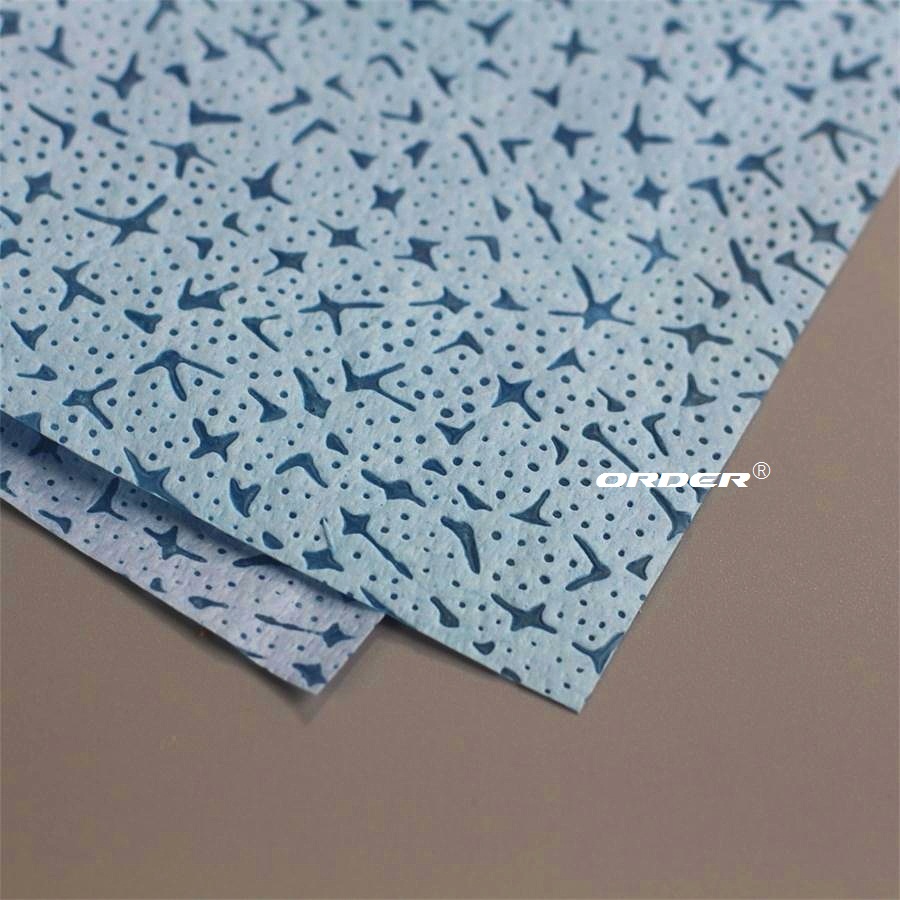 Wholesale ORDER® PX-3332B Pop-Up Box oil absorbent microfiber meltblown PP SolveSuzhou Order Cleanroom Material Co., Ltd is China wholesale ORDER® PX-3332B Pop-Up Box oil absorbent microfiber meltblown PP Solvent Wipe...View Product →
Meltblown PP resists alcohols, mineral spirits, and most aliphatic hydrocarbons. Some aromatic solvents and certain strong degreasers can soften the fibers during prolonged contact. If your application uses a less common solvent, ask the supplier for a compatibility statement and run a small field test before standardizing on one wipe.
Look for four numbers: oil absorbency in grams of oil per gram of wipe, water absorbency, tensile strength in dry and saturated states, and lint or particle level. A product that impresses in a sample photo can tear when saturated with oil or shed fibers into a critical assembly. Our guide on how to select industrial cleaning wipes covers the evaluation criteria in more depth.
Purchasing teams that compare meltblown PP wipes with rags purely by unit price miss the point. The meaningful metric is cost per cleaning event. Take a 100-gram oil spill on a machine platform. With cotton rags, an operator may use three or four, leave an oily film between passes, and end up with oil-soaked fabric that many jurisdictions classify as hazardous waste. With one heavy meltblown wipe in the 80 to 120 gsm range, the same spill is usually captured in a single pass.
Disposal costs compound the advantage. Because meltblown PP wipes pick up oil without soaking up much water, the waste stream contains a higher ratio of oil to fabric. Fewer kilograms of contaminated material leave the facility, and each kilogram carries more contaminant. Labor improves too: machine operators spend less time tearing, folding, and re-wiping.
Once you settle on meltblown PP as the wiping material, the remaining questions are about supplier reliability. Wipes are a low-unit-value item, but inconsistent production creates real problems: basis weight that drifts between lots, interfolded wipes that do not separate cleanly, and counts that run short. Ask every candidate supplier for lot-level gsm tolerances, count verification, and packaging consistency. If you need custom colors, printed branding, or non-standard sizes, confirm the manufacturer operates its own converting lines and supports OEM/ODM programs.
Order Cleanroom, a Suzhou-based nonwoven manufacturer, produces meltblown PP wiping cloths for industrial, automotive, and janitorial customers in more than 30 countries. Its 12,000-square-meter facility handles folding, pop-up boxing, roll perforating, and custom packaging on site. For customers who prefer a folded format on the workbench, the MX3331B heavy-duty meltblown PP oil removing wipes offer the same material family in an interfolded configuration.
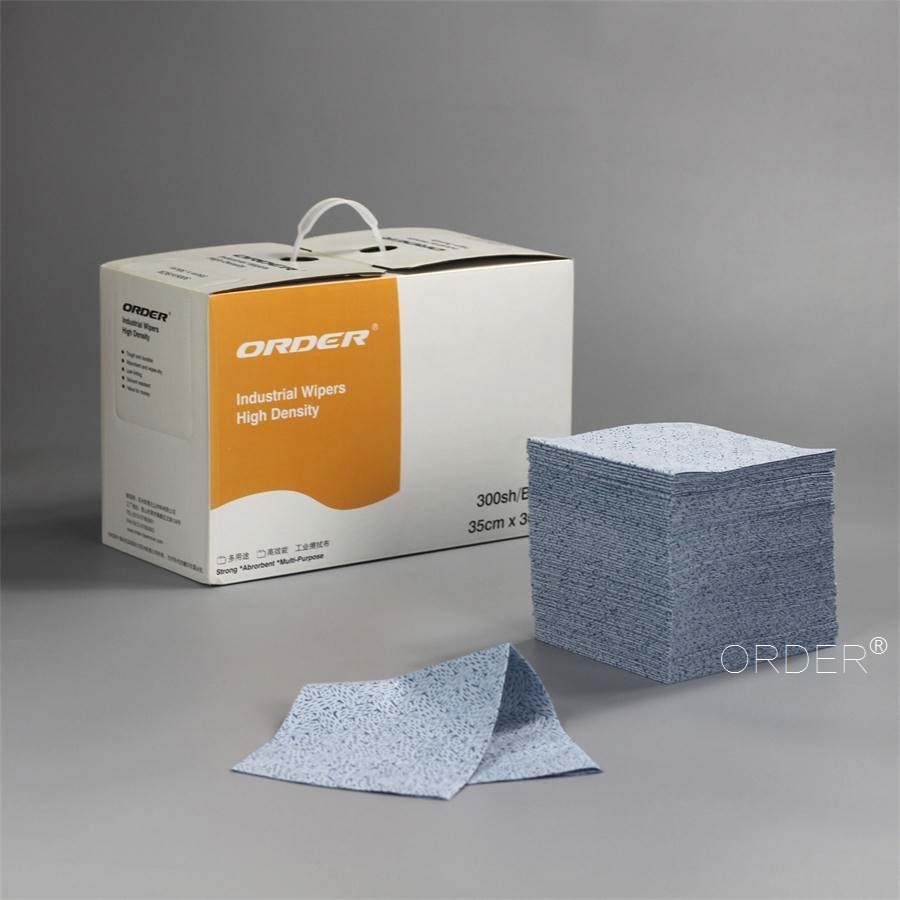 Wholesale ORDER® MX-3331B heavy duty melt blown pp removing oil wiping rags clotSuzhou Order Cleanroom Material Co., Ltd is China wholesale ORDER® MX-3331B heavy duty melt blown pp removing oil wiping rags cloths supp...View Product →
Before standardizing on one product, review your actual oil types, solvent exposure, and task frequency. The right wipe for a CNC shop floor is not necessarily the right wipe for a paint booth or a parts cleaning station. If you are re-evaluating your wiping program, contact our team with your applications and current specifications; matching the wipe to the task is usually faster than you expect.
If you are interested in our products, please consult us

 contact us


 English
 日本語
日本語
 简体中文
简体中文